ENVIRONMENTAL
I design environmental graphics and interpretive experiences that transform spaces into stories. From museum signage to multi-story building identities to donor recognition installations, my work integrates exhibition design principles with architectural collaboration and strategic storytelling.
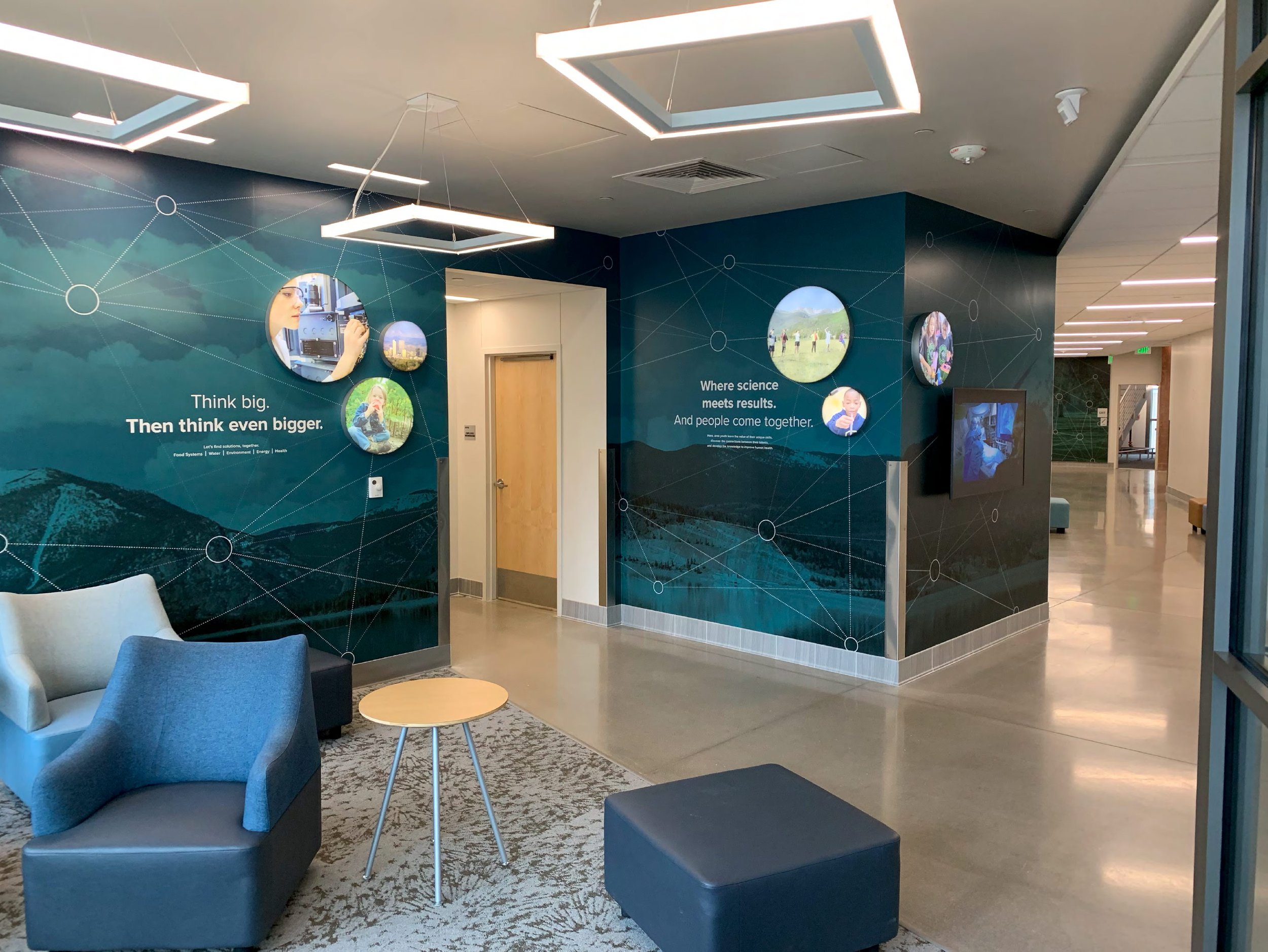
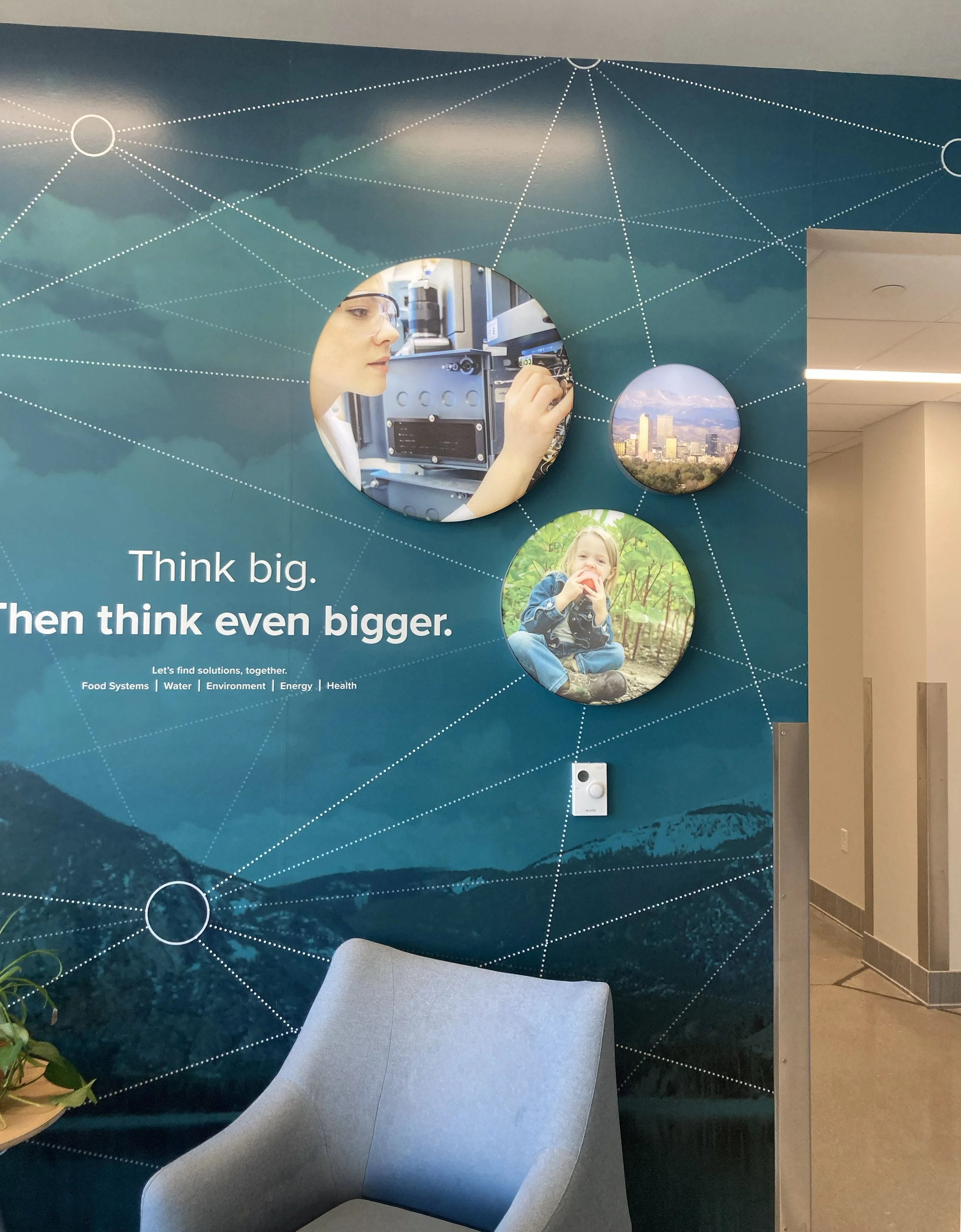
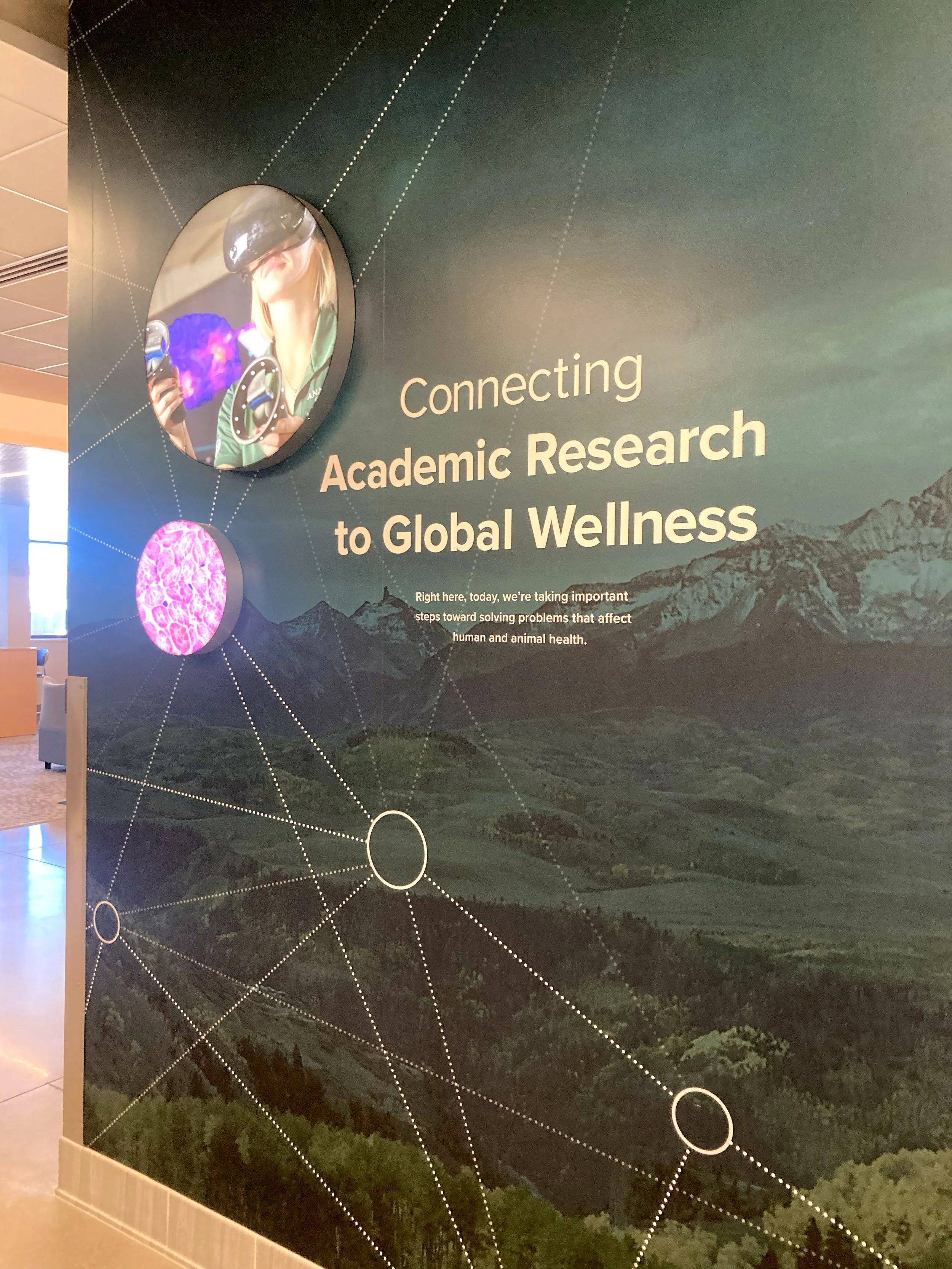
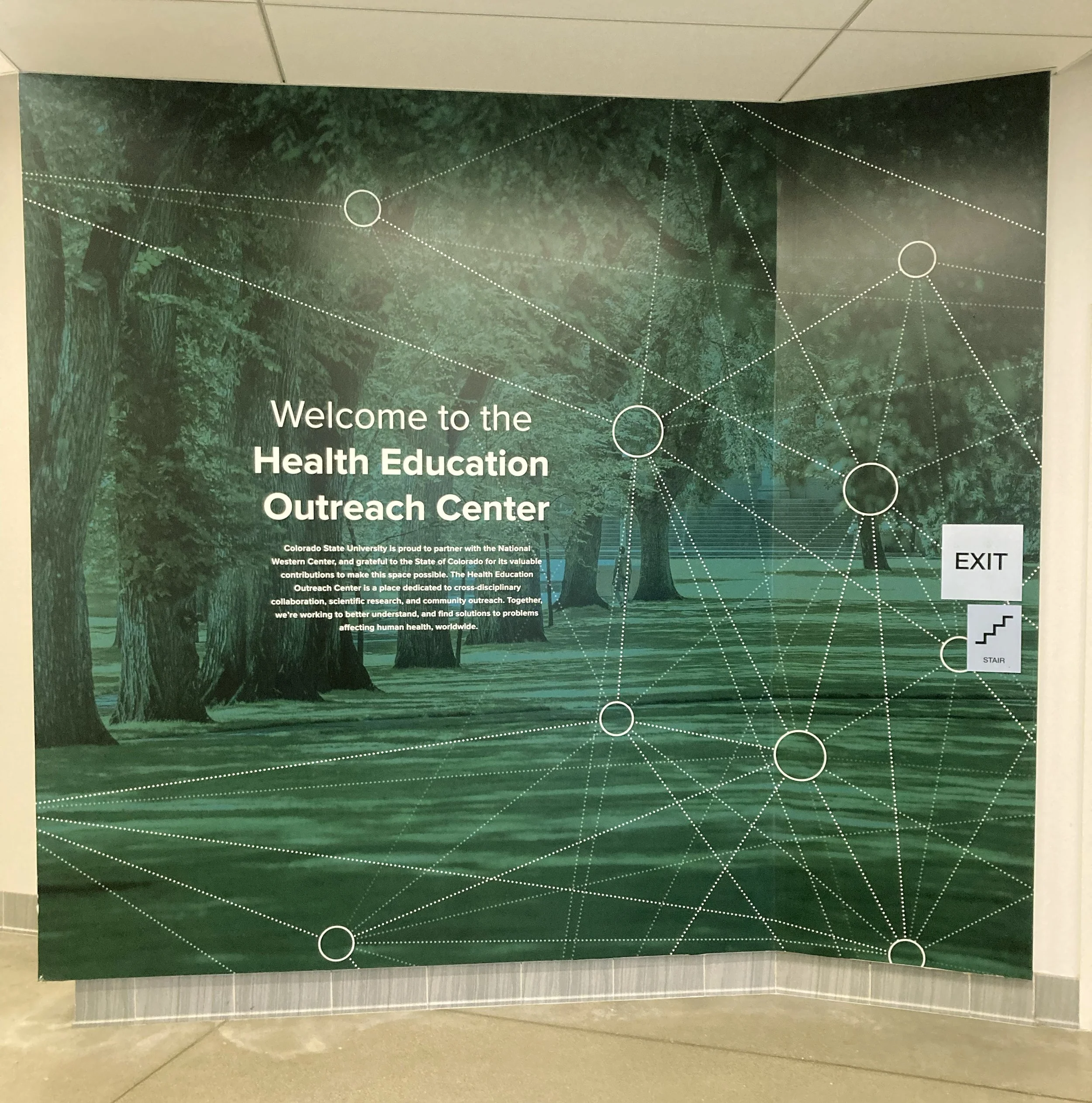
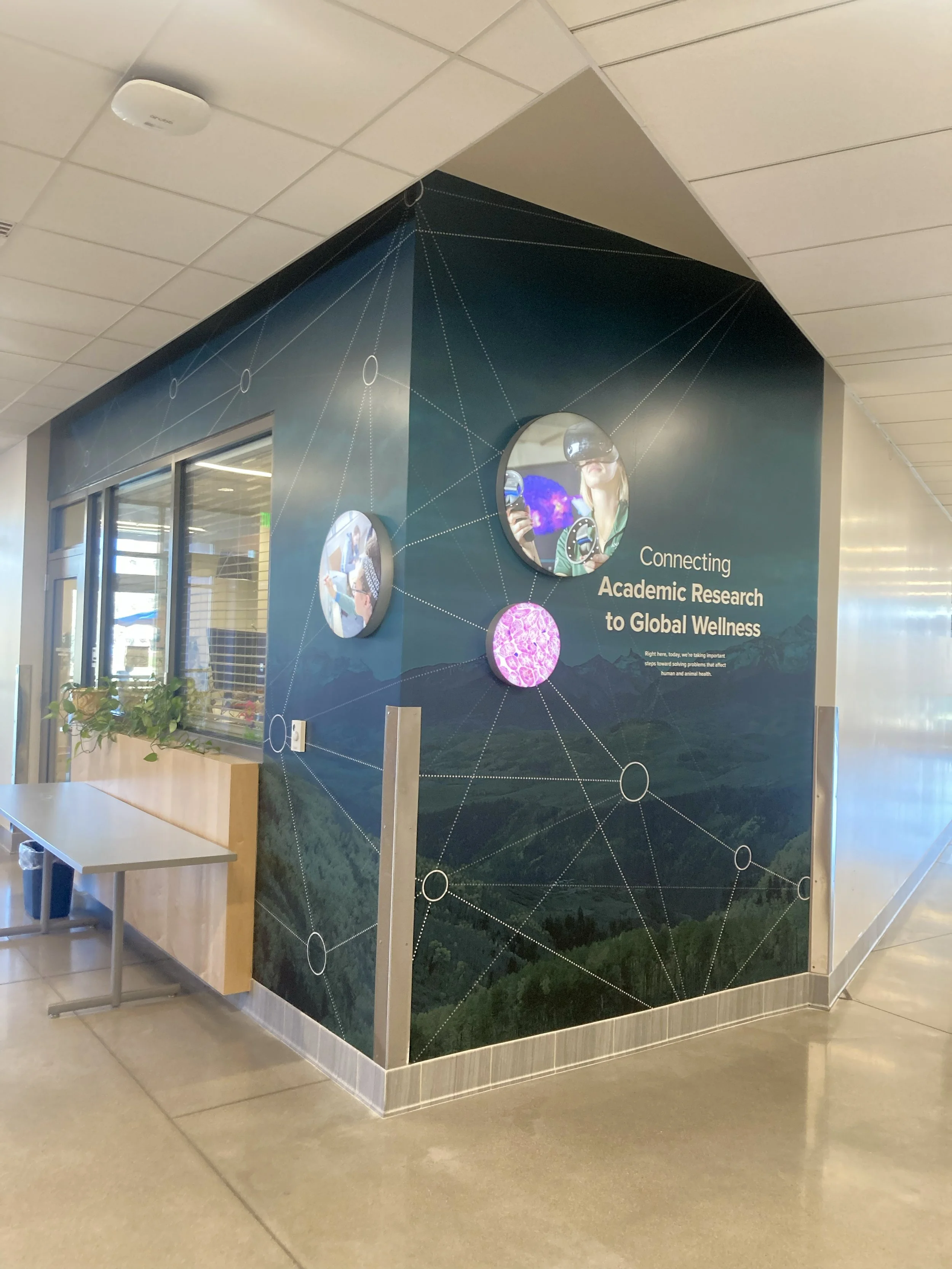
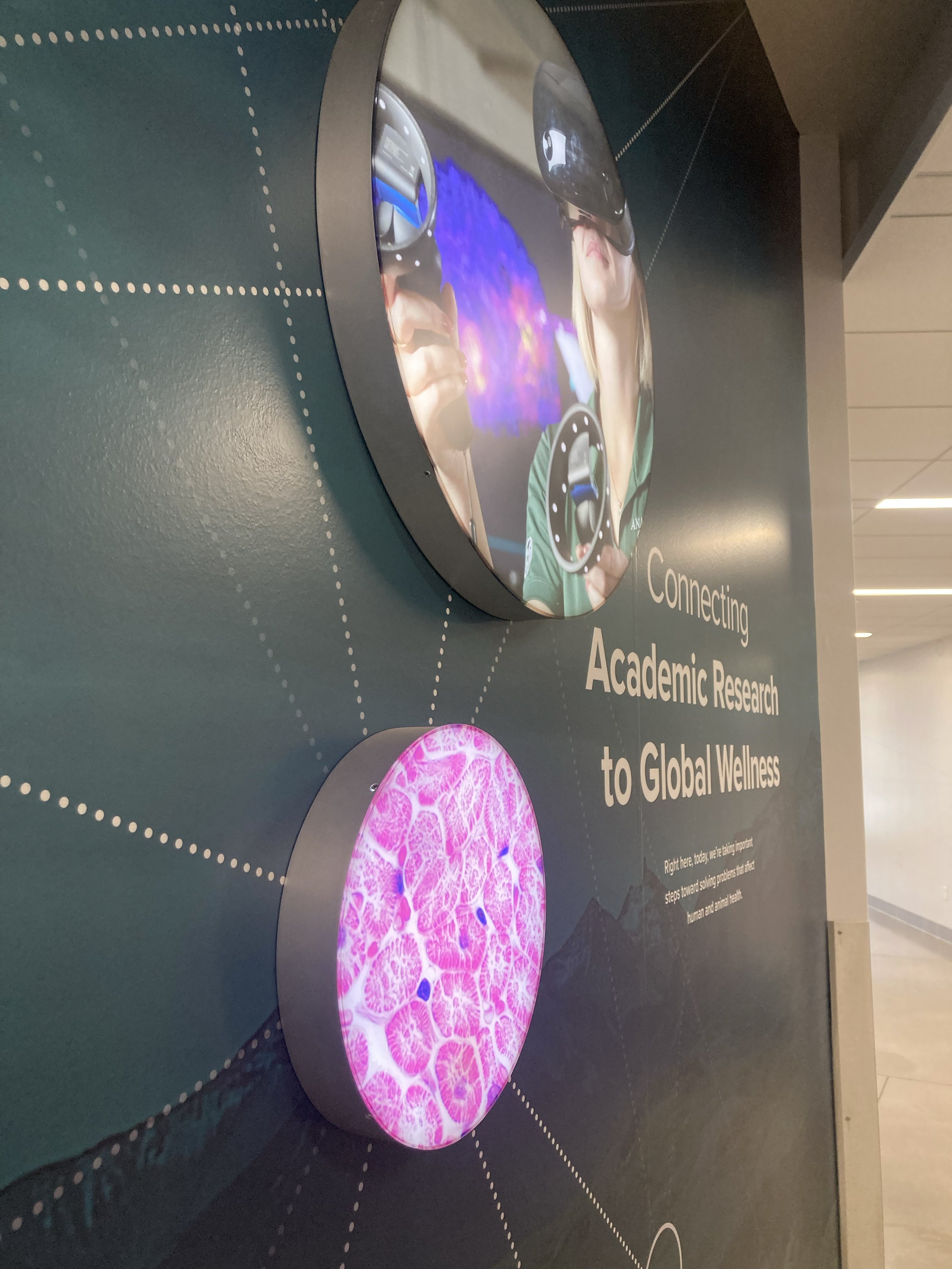
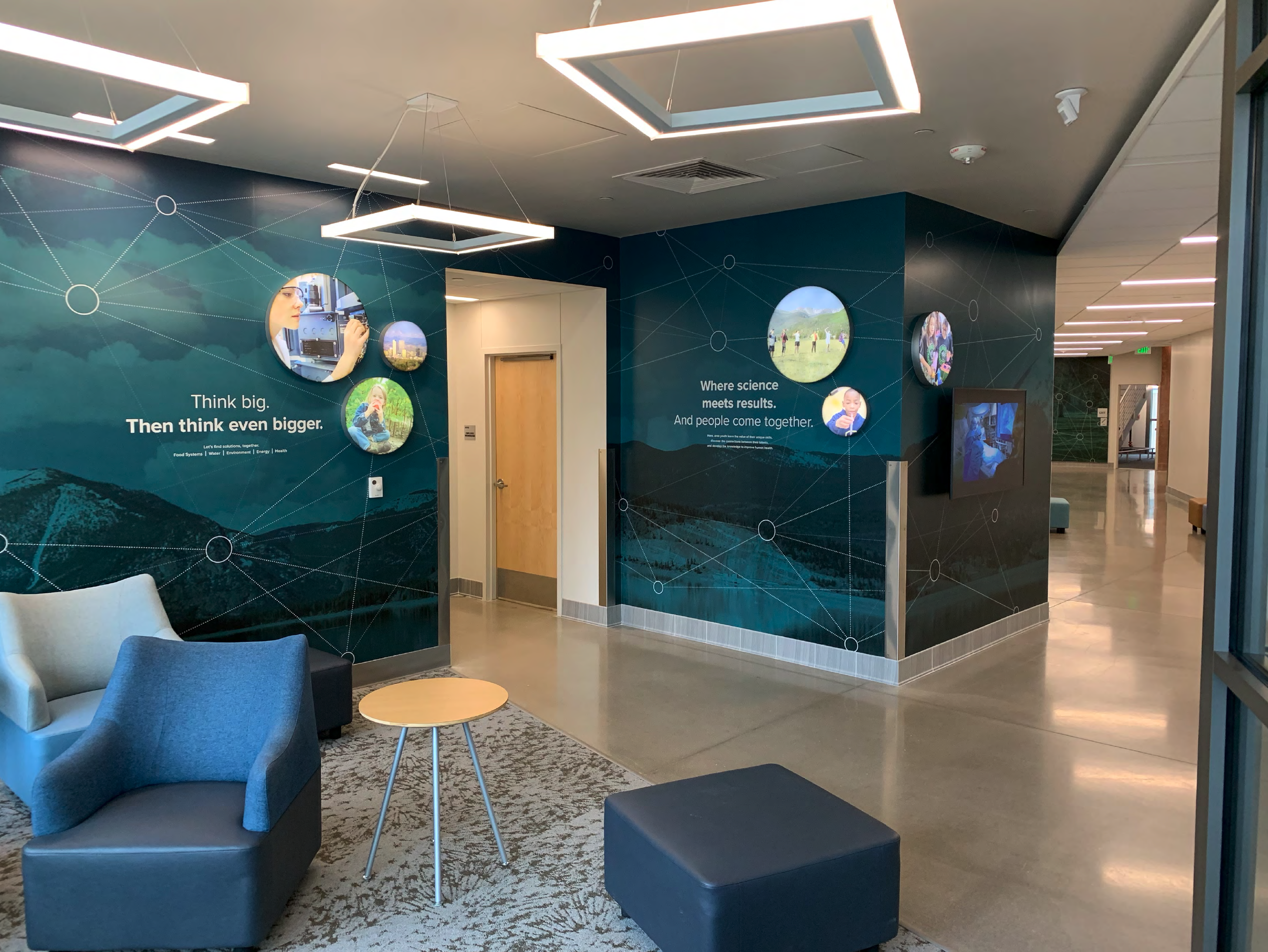
Health Education Outreach Center, Colorado State University main campus
2019
Challenge
Create unified first-floor environmental branding for a new 40,000 sq. ft. multi-use academic building housing three distinct entities (College of Veterinary Medicine and Biomedical Sciences, National Western Center, and STEM Center) while construction was ongoing and the project scope evolved.
Role
Lead graphic designer working with a project manager, interior design intern, writer, architects, fabricators, and installers to develop the environmental storytelling system from concept through installation.
Approach
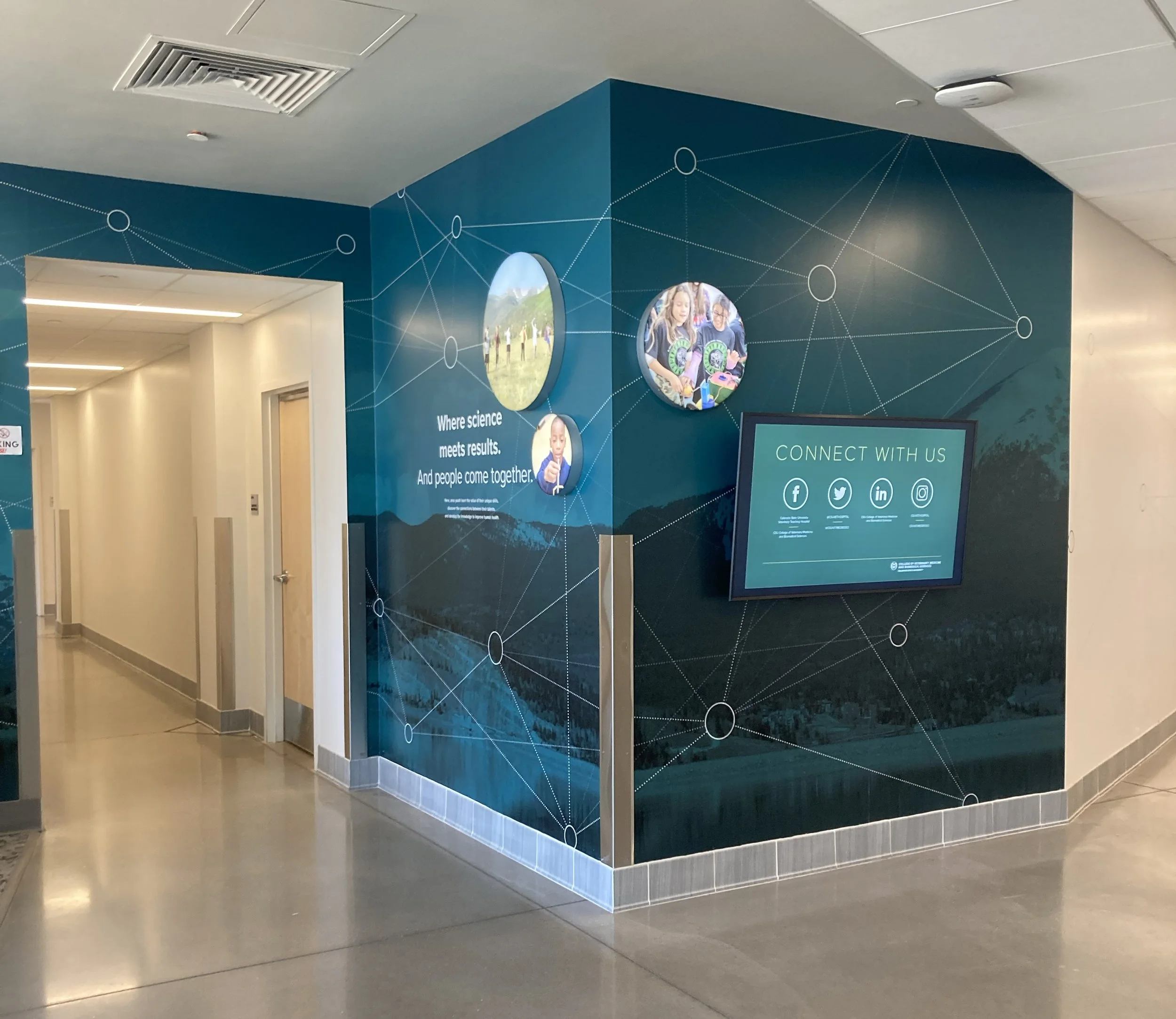
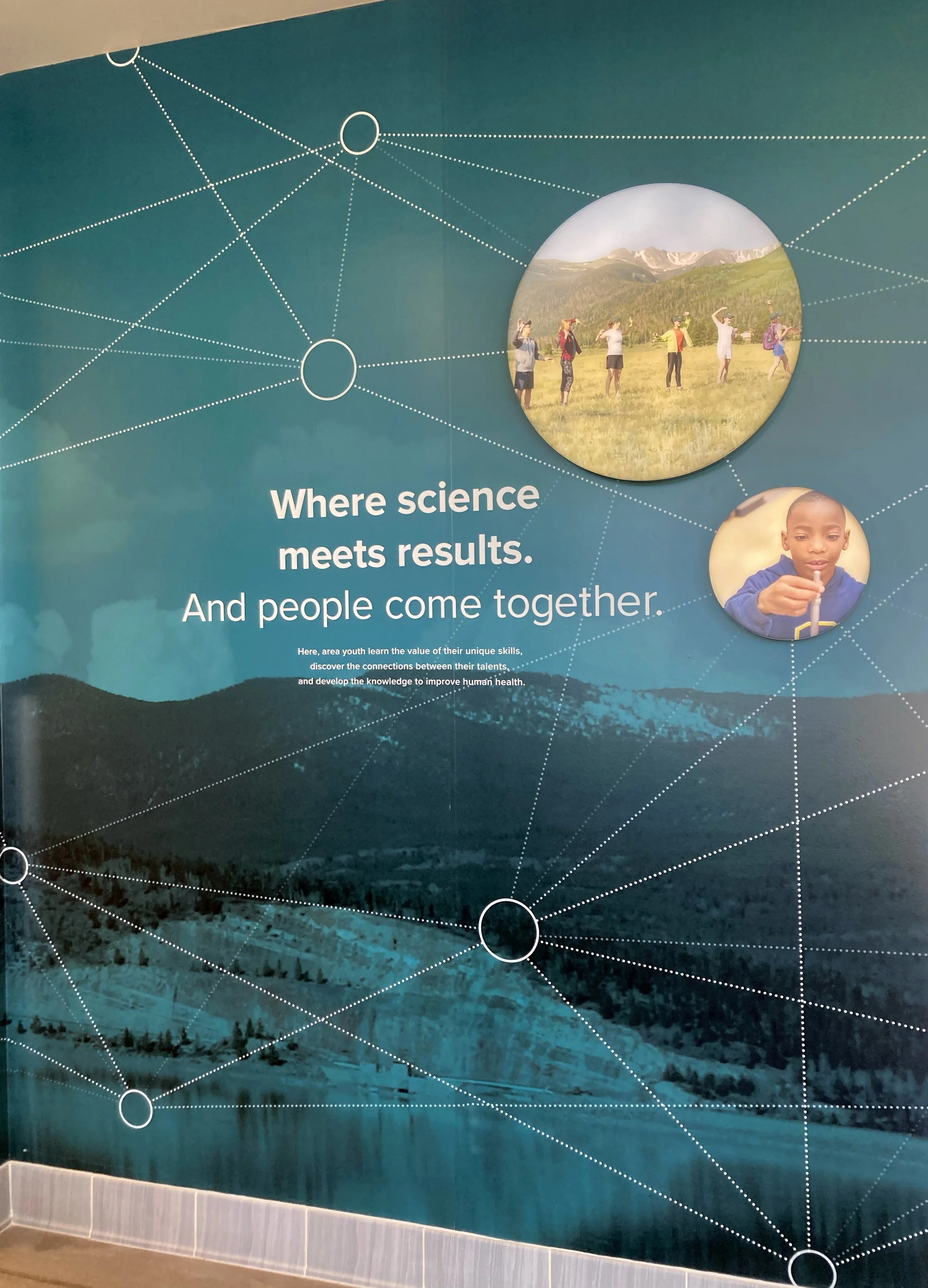
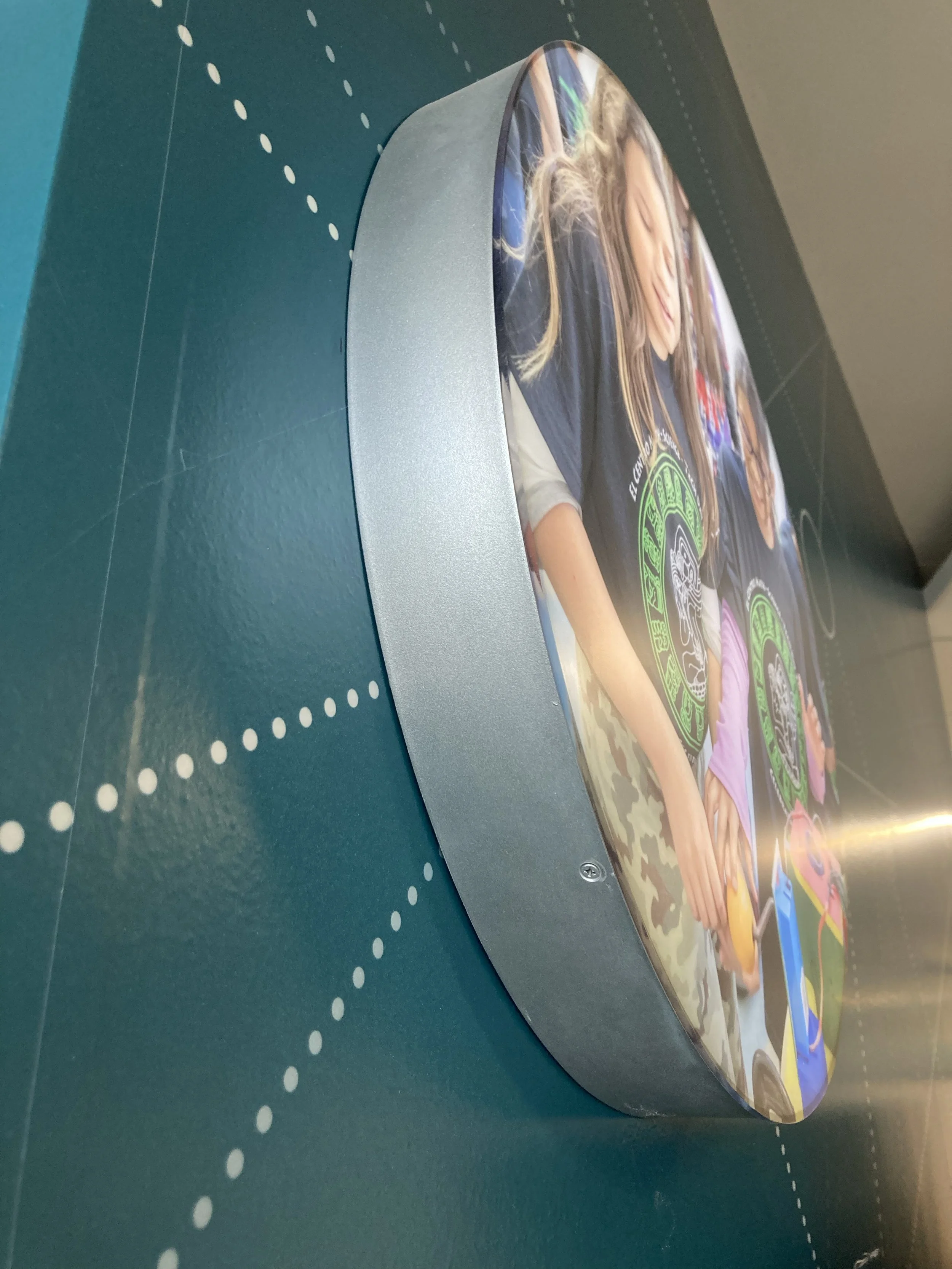
Developed a design system integrating typography, layered Colorado mountain imagery, custom scientific photography in circular lightboxes, and connectivity graphics. Worked with a writer for stakeholder interviews to define the narrative, then managed design decisions on materials, ADA compliance, and installation through a 6-8 month, $44K budget and timeline.
Impact
Delivered a cohesive identity celebrating interdisciplinary connections in science and medicine. Generated inquiries from other campus units and inspired additional environmental graphics within the building.
-
![Wall graphic and TV monitor.]()
Wall graphic, wrapping.
-
![Wall graphic with people doing science.]()
Wall graphic with narrative.
-
![Circle light box.]()
Custom circular light boxes.
-
![Wall graphic and circle light boxes.]()
Custom circular light boxes.
-
![Wall graphic with connecting lines.]()
Biomedical wall.
-
![Wall graphic with connecting lines.]()
Welcome wall to the HEOC building.
-
![Wall graphic corner.]()
Wall graphic wraps the corner.
-
![Light up signs.]()
Custom circular light boxes.
-
![Wall graphics]()
Entryway first floor graphics.
-
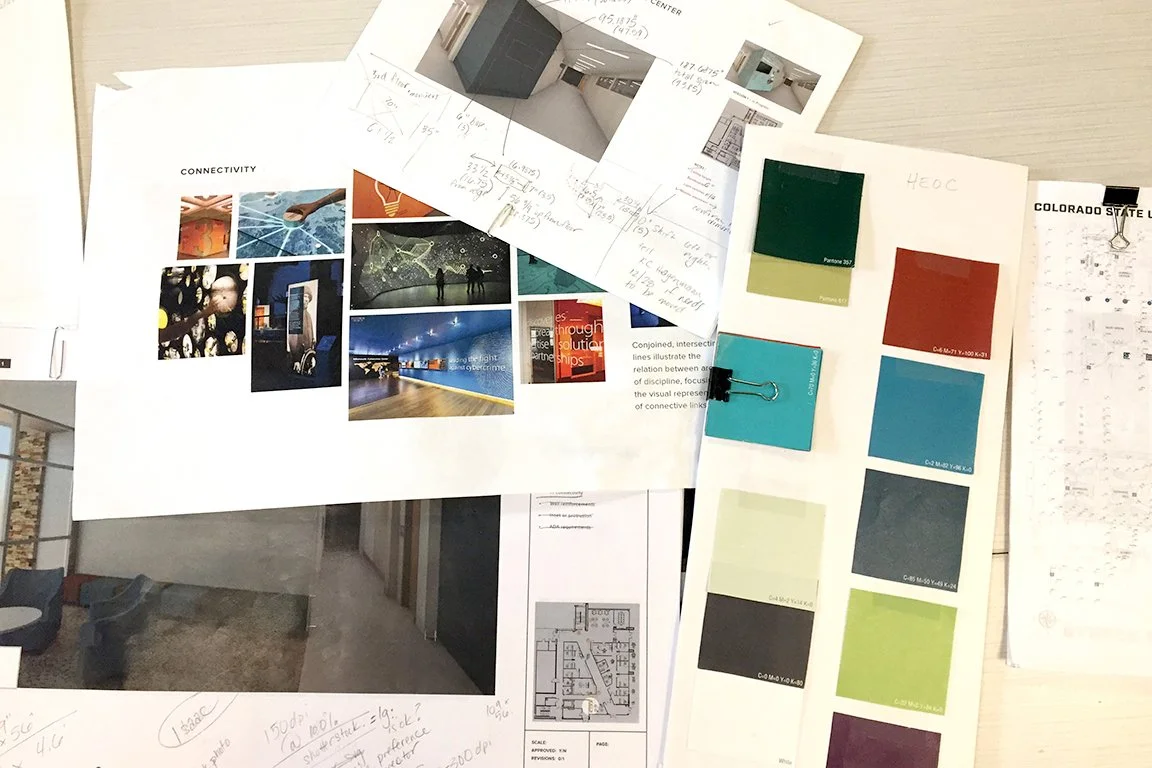
![HEOC sketches.]()
HEOC sketches, inspiration, elevations, interior design references, and floorplans.
-
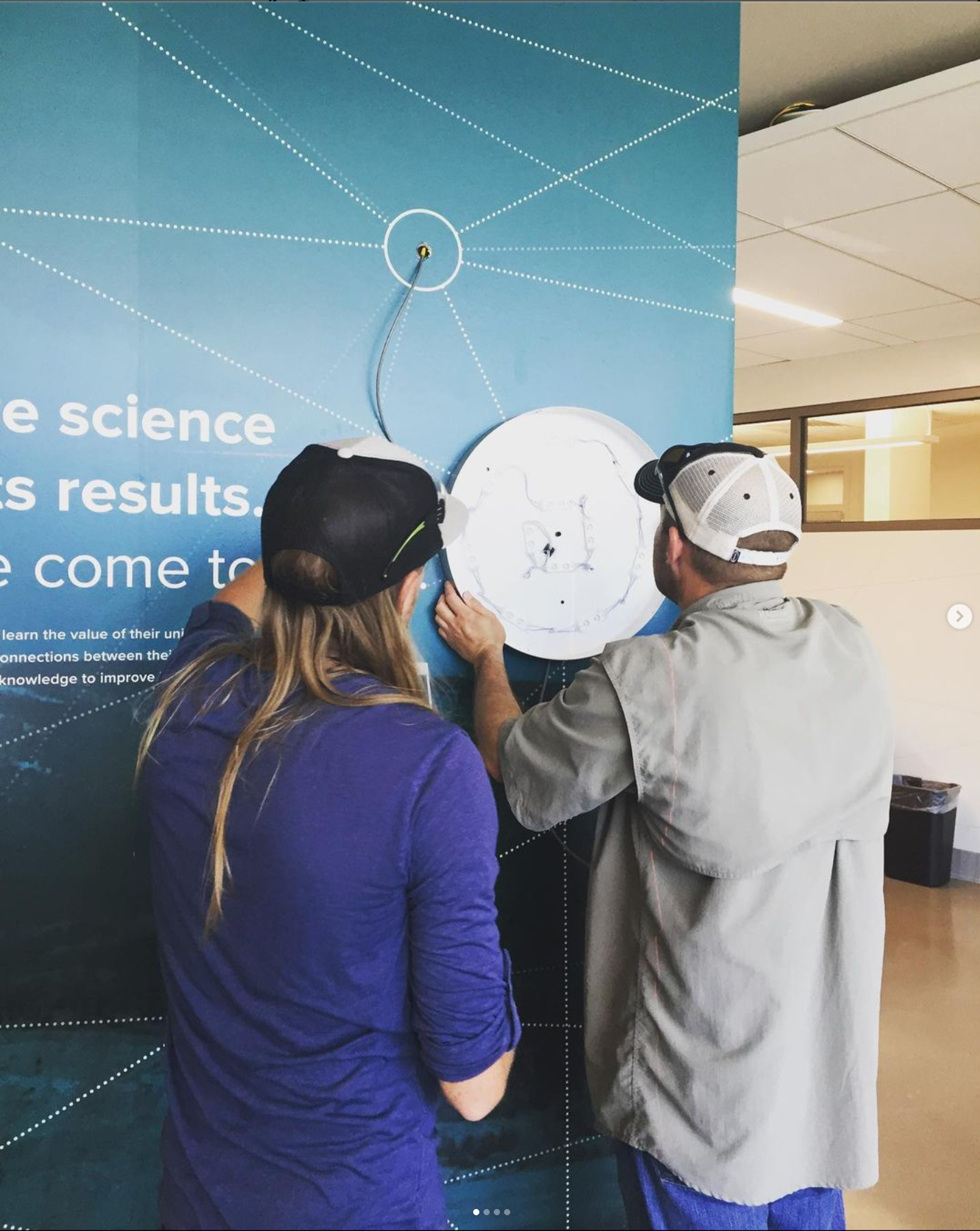
![Installing light box.]()
Installing custom light boxes.
Arizona-Sonora Desert Museum, Interpretive Signage & Graphics, Tucson, Arizona
2002-2004
Challenge
Support a 98-acre living museum integrating zoo, botanical garden, aquarium, and natural history museum – creating interpretive signage that educated visitors about desert ecology, wildlife conservation, and regional natural history.
Role
Graphic Technician: Designed, edited, produced, and installed on-grounds interpretive signage for exhibits and outdoor environments. Collaborated with curators, educators, and exhibit designers to translate complex scientific content into accessible visual narratives. Supervised volunteer activities and supported marketing materials for festivals and fundraising events.
Approach
Created interpretive graphics that balanced educational rigor with visitor accessibility. Worked within museum exhibition standards while accommodating outdoor conditions requiring weather-resistant materials and fabrication techniques. Coordinated production timelines and installation logistics across diverse exhibit environments and ADA compliance.
Impact
Contributed to visitor experiences for one of the nation’s top regional natural history museums (consistently ranked among America’s best zoos and aquariums). Gained foundational experience in museum interpretive design, educational storytelling, and exhibition graphics that has informed my environmental design work ever since.
-
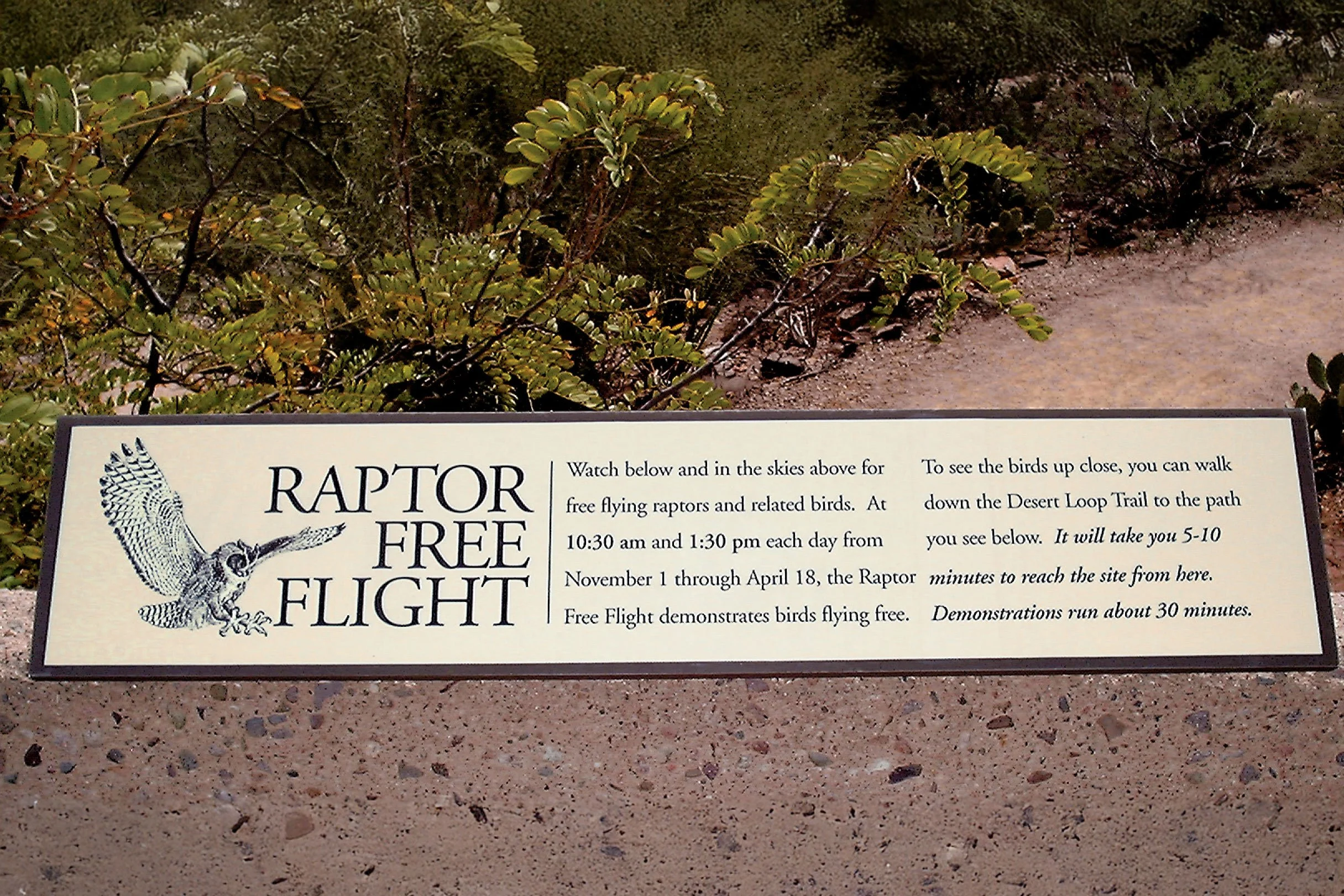
![Raptor Free Flight sign.]()
Raptor Free Flight signage, using scientific illustrations.
-
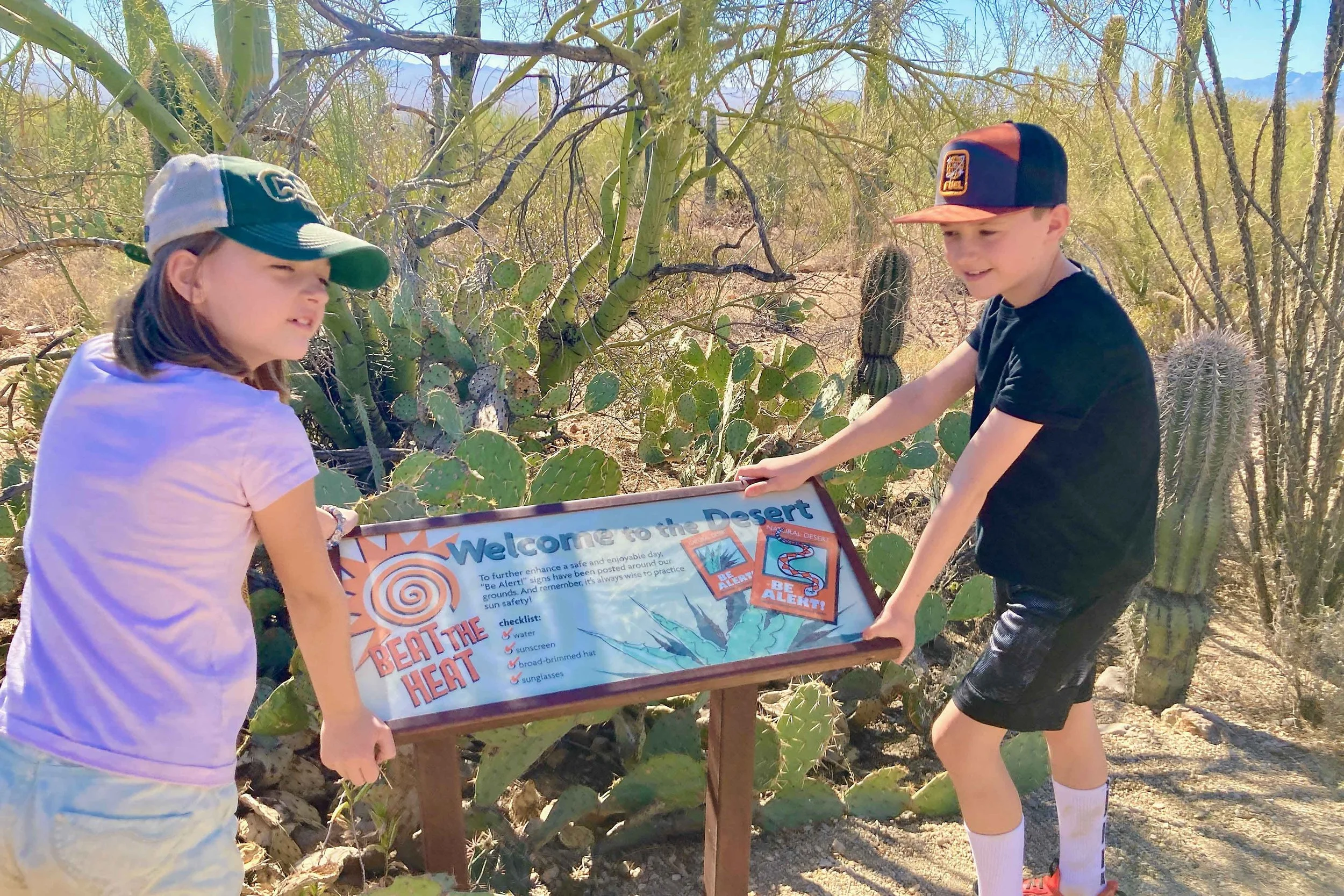
![ASDM Welcome sign.]()
As seen at the Desert Museum, illustrated the “Be Alert” rattlesnake, still used on the welcome sign, nearly 20 years later.
-
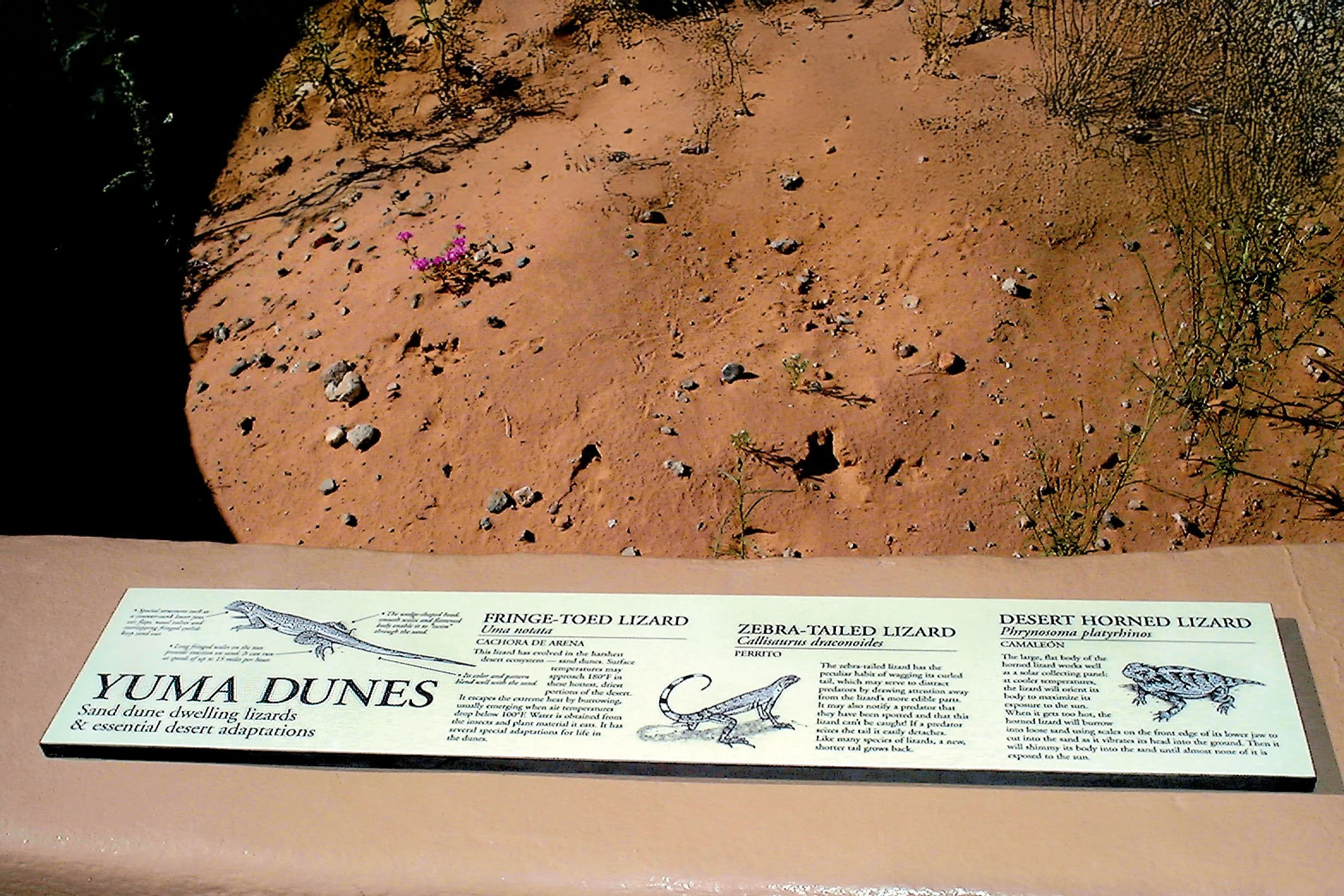
![Yuma Dunes sign.]()
Worked with scientific illustrators on the Yuma Dunes interpretive signage.
-
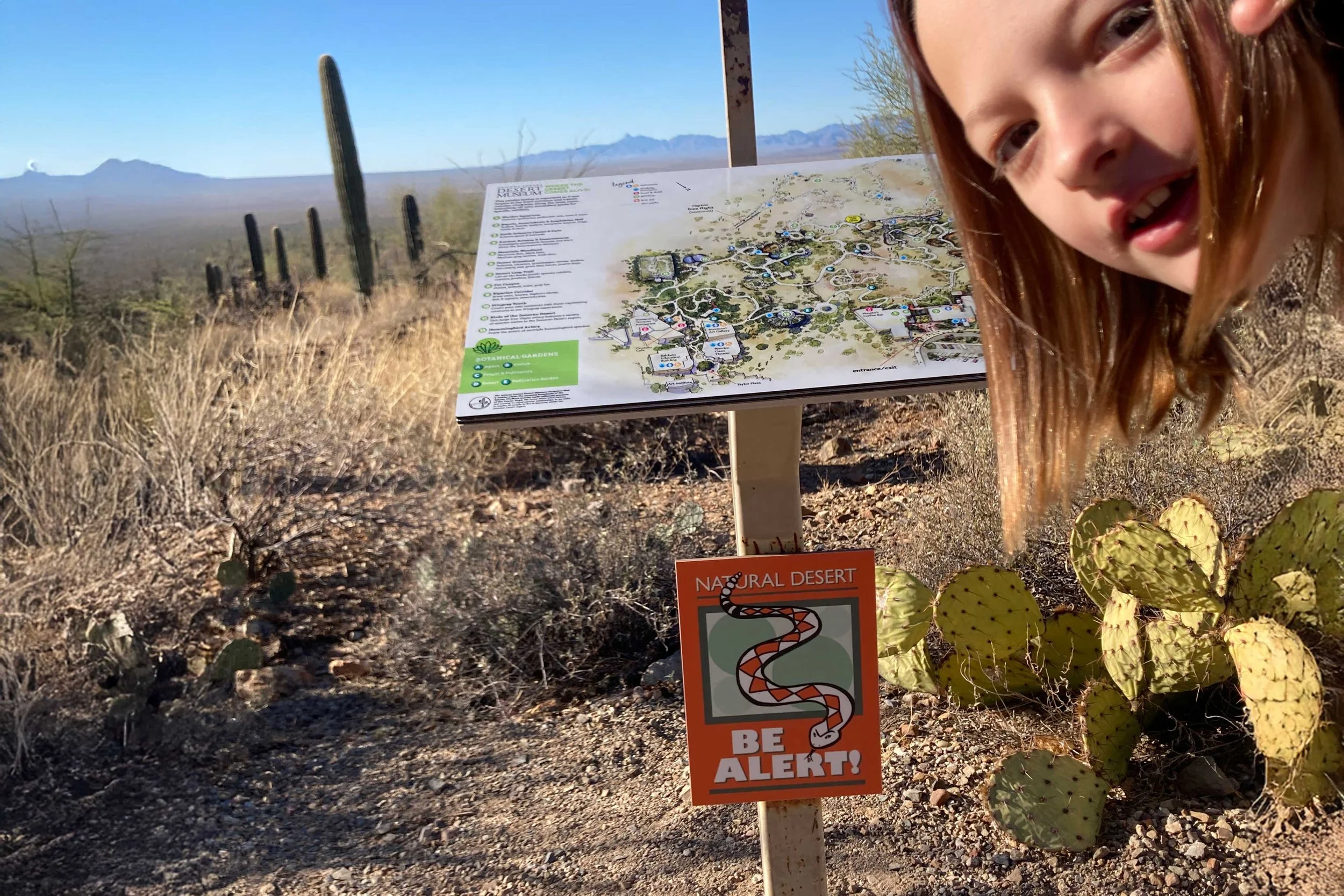
![Be Alert sign]()
The “Be Alert” sign still in use over 20 years later.
-
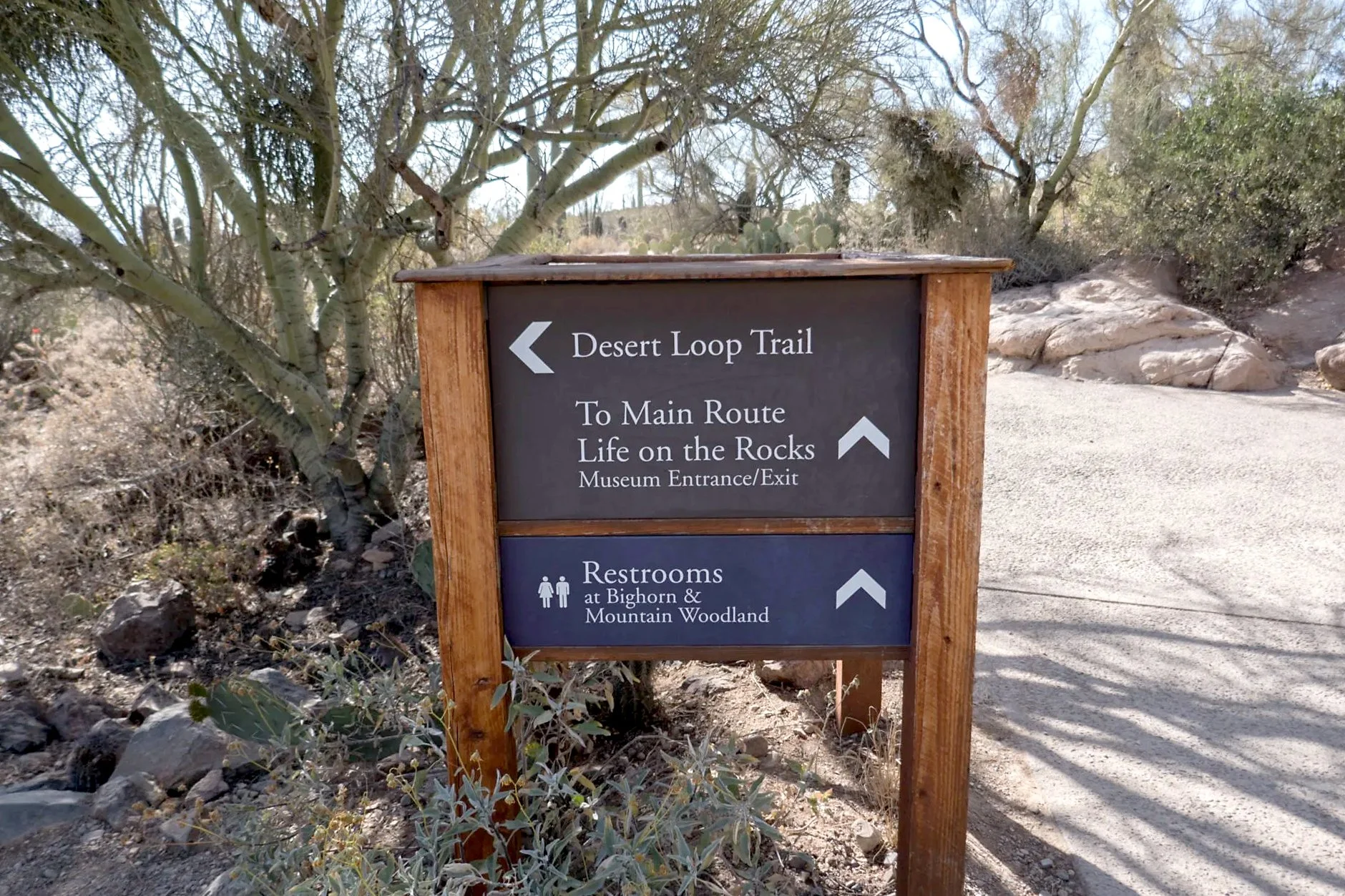
![Directional signage at the desert museum.]()
I maintained the directional signage at the desert museum. Photo courtesy KTNP Blog
-
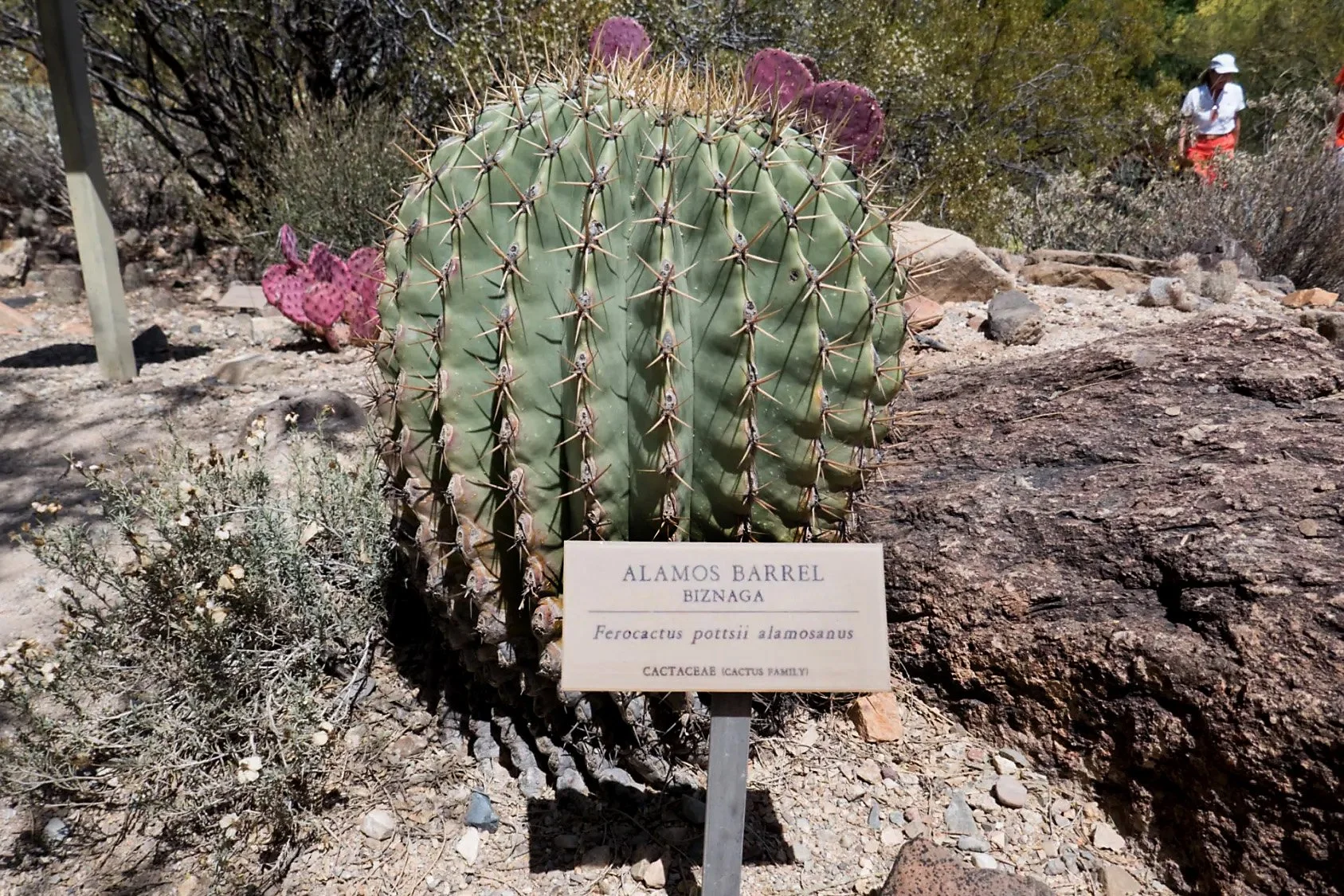
![Engraved plant identifiers.]()
I created and maintained the engraved plant identifiers. Photo courtesy KTNP Blog
-
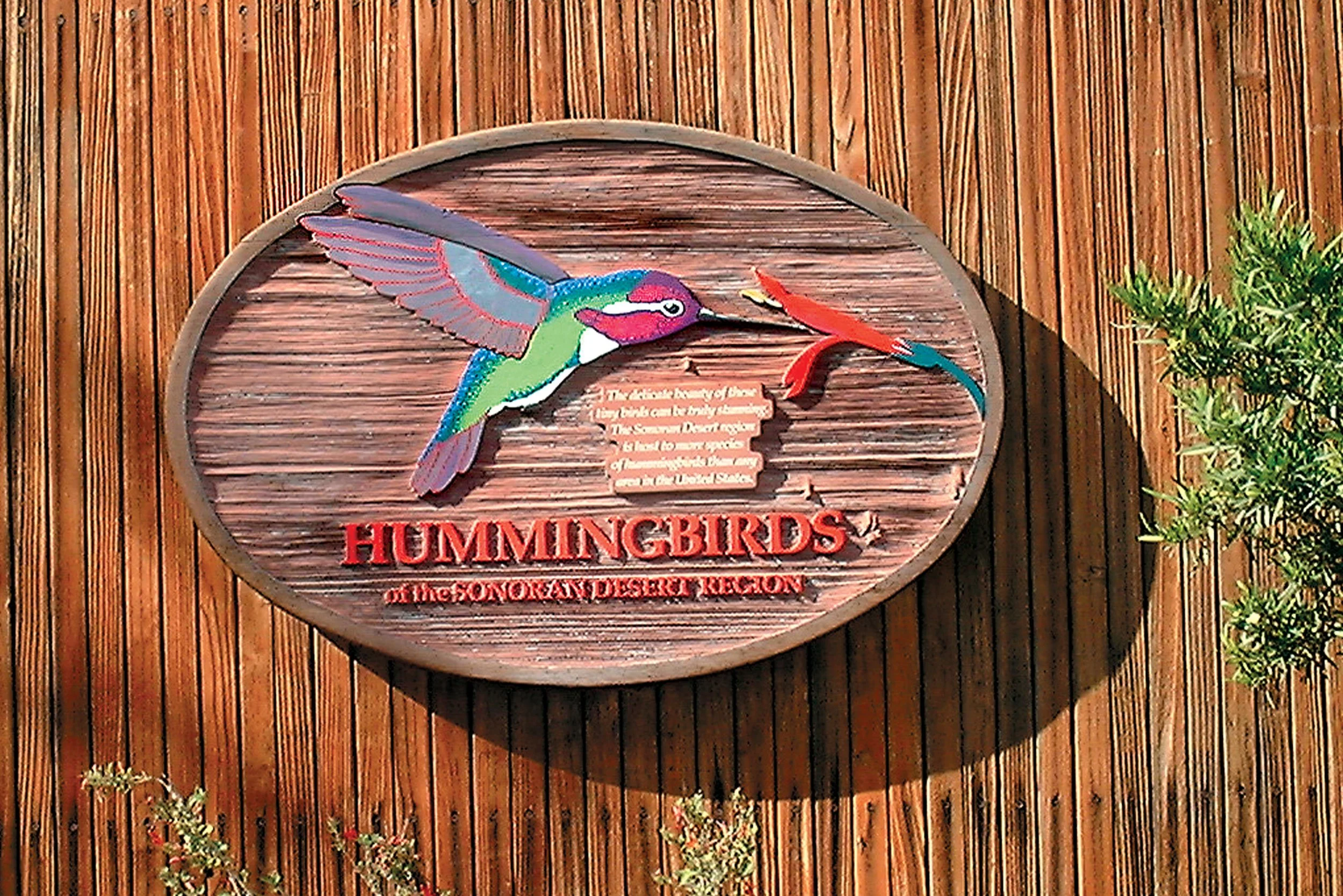
![Painted, engraved wooden sign.]()
I maintained the original wooden signs, like this hand-painted Hummingbird sign.
-
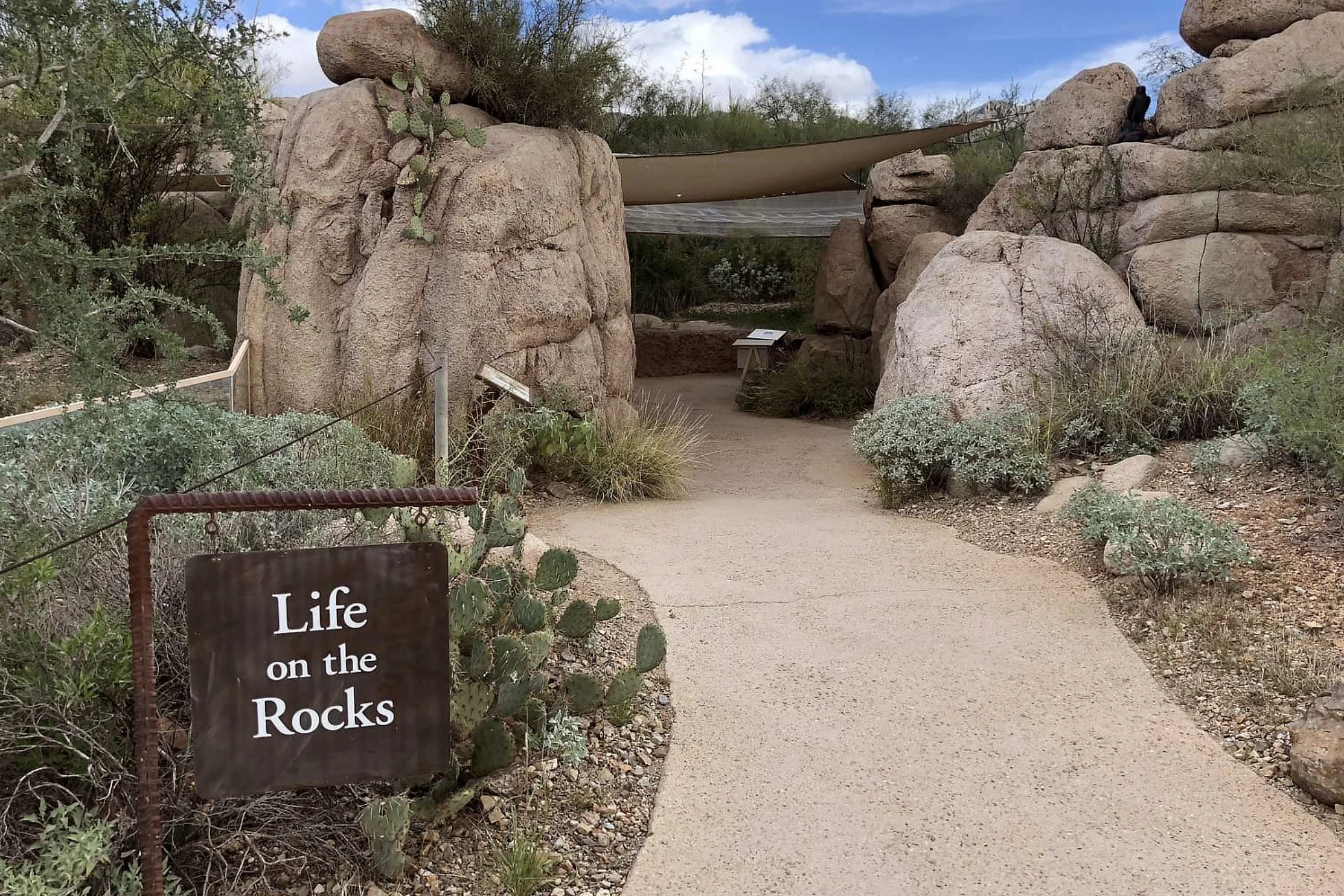
![Life on the Rocks metal sign.]()
I maintained and helped install metal area signs, which indicated different exhibit zones. Photo courtesy ASDM
-
![Backlit snake interpretive signs.]()
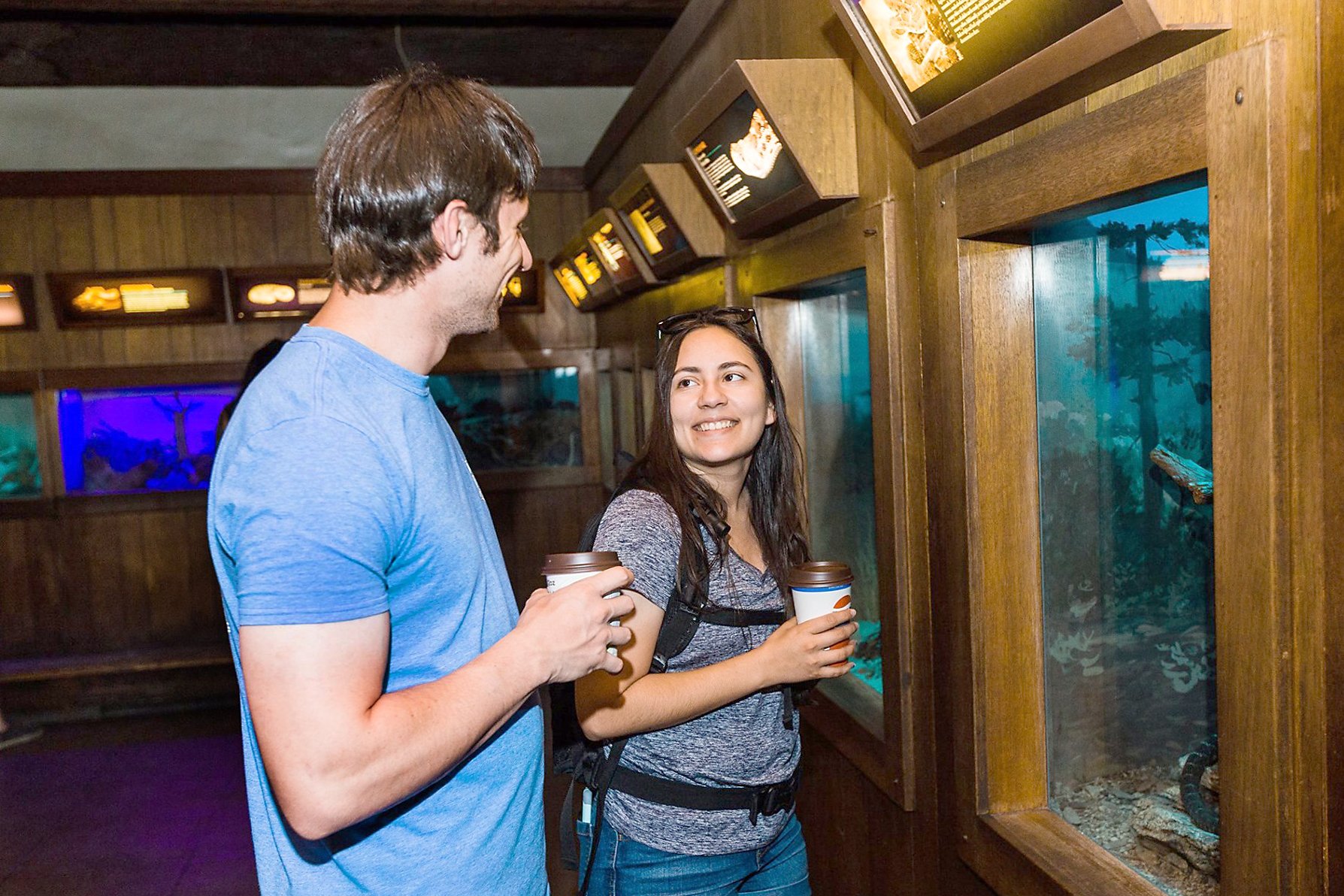
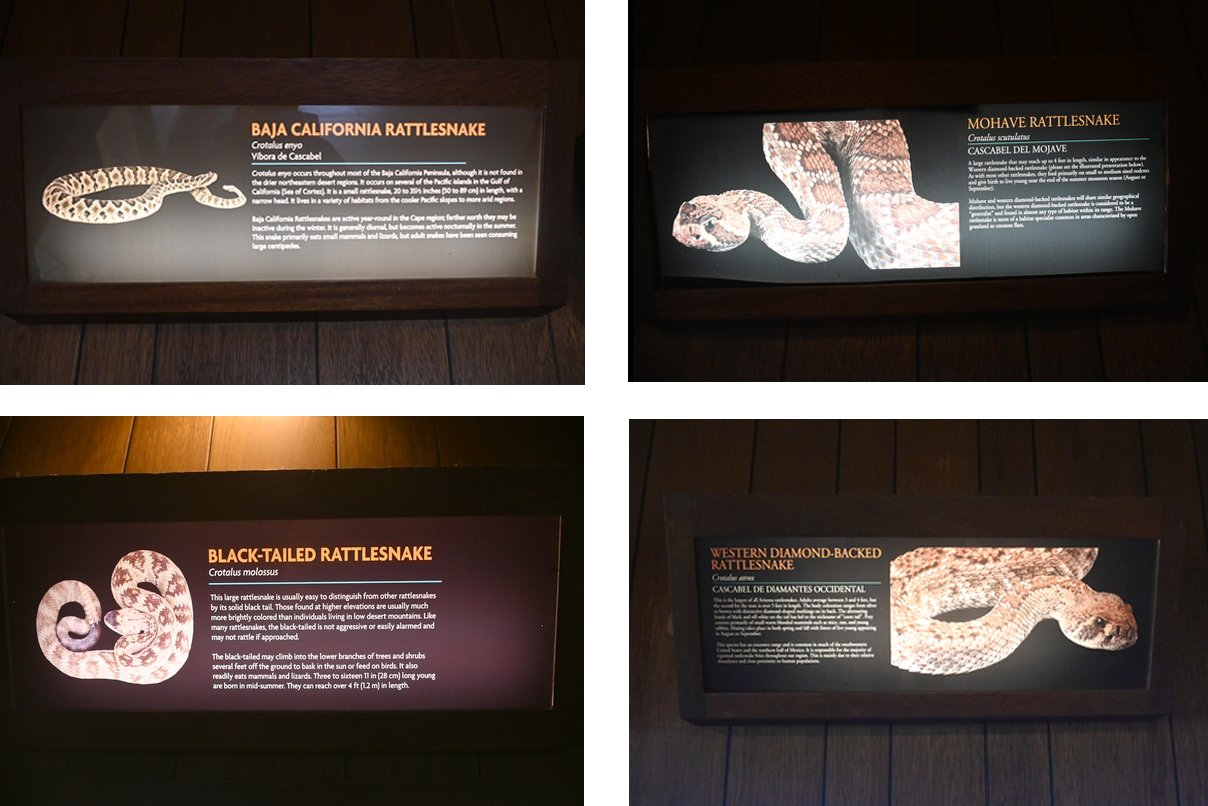
I designed, produced, and installed backlit signage in the snake exhibit. Photo courtesy ASDM
-
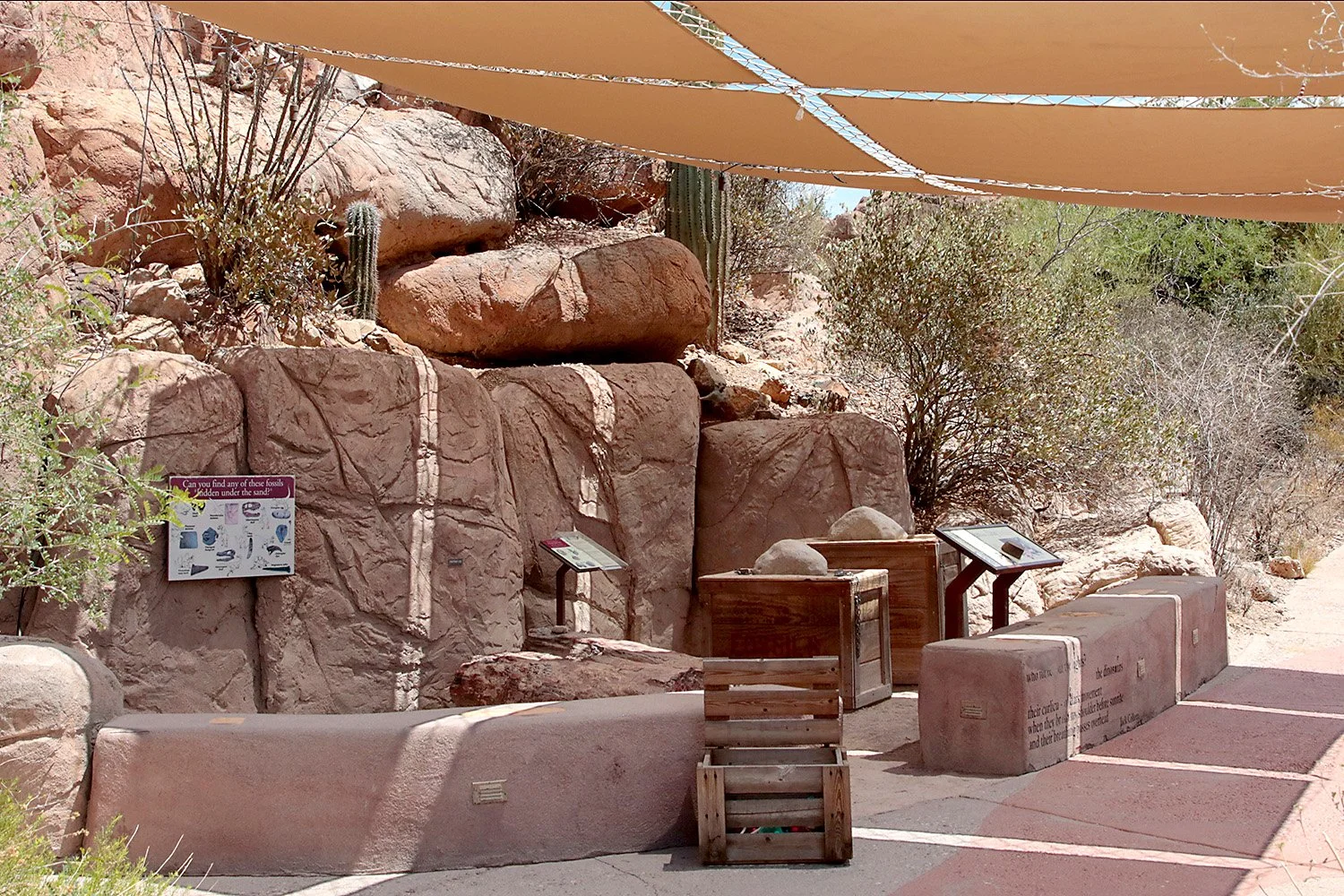
![Ancient Arizona geology exhibit.]()
I helped maintain interactive exhibts like the Ancient Arizona geology exhibit, including signs and digging tools. Photo courtesy ASDM
-
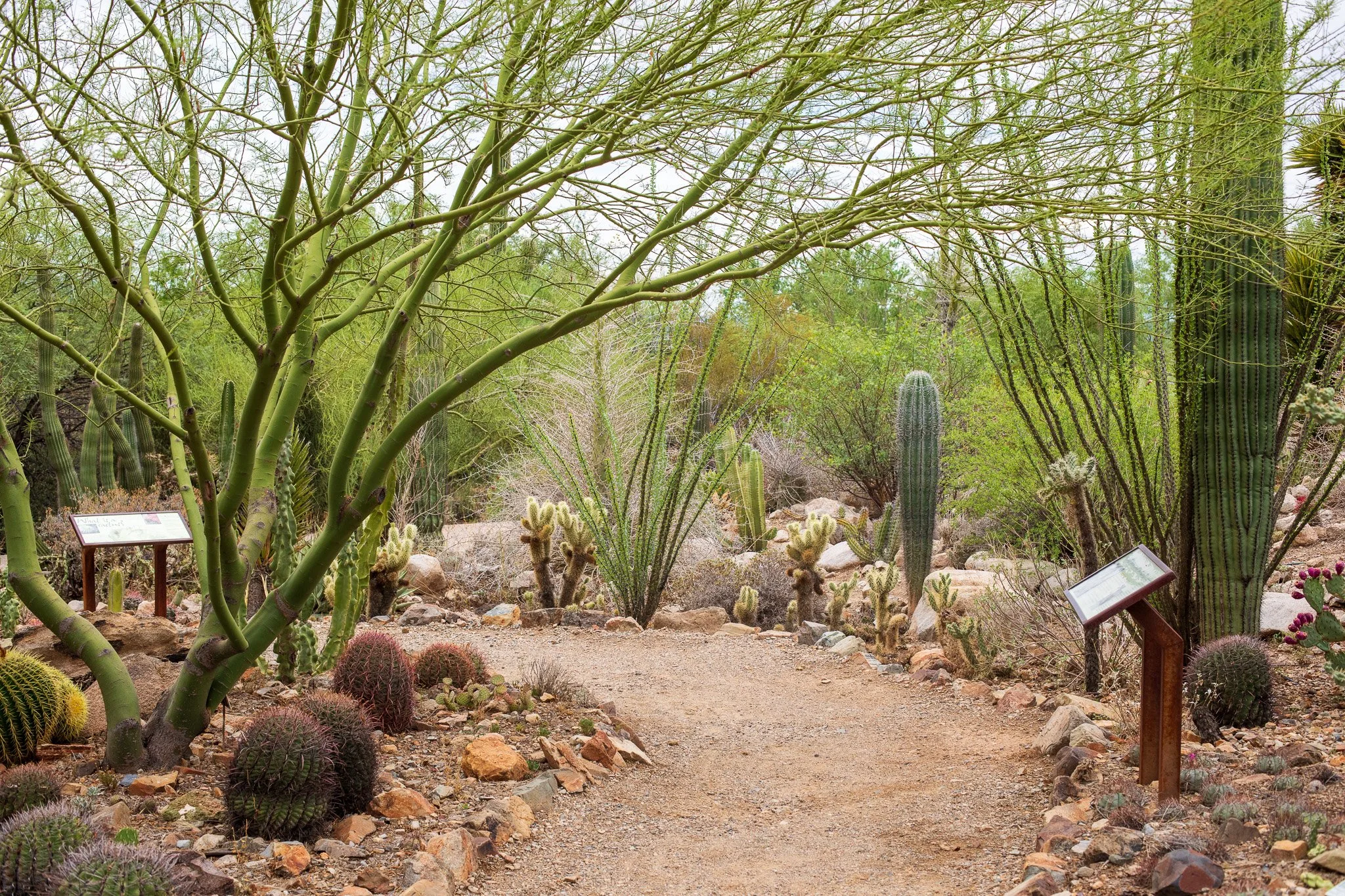
![Signage at the desert museum.]()
I maintained the large interpretive signage throughout the museum. Photo courtesy ASDM
-
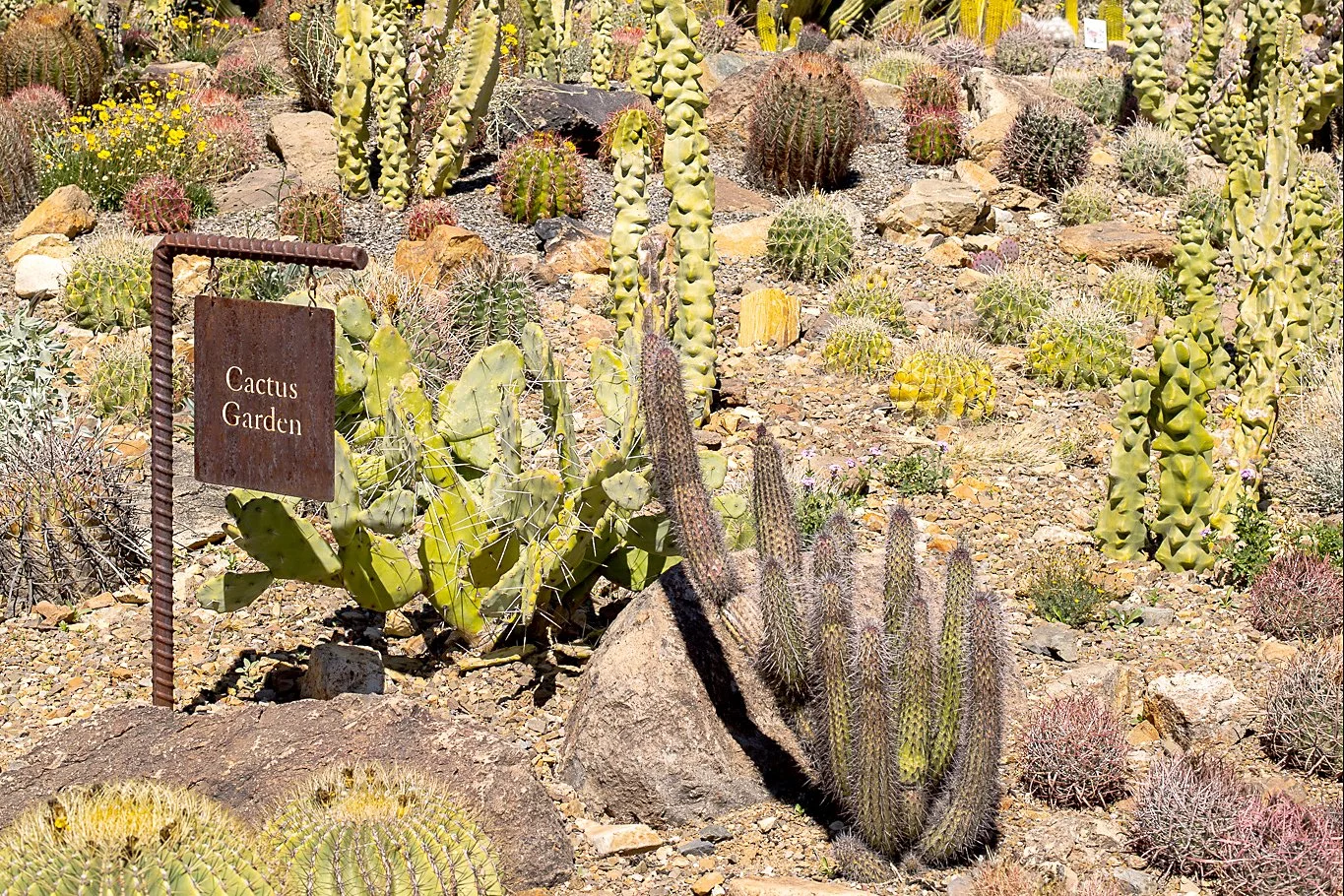
![Cactus Garden signage.]()
Cactus Garden signage. Photo courtesy ASDM
-
![Desert overlook.]()
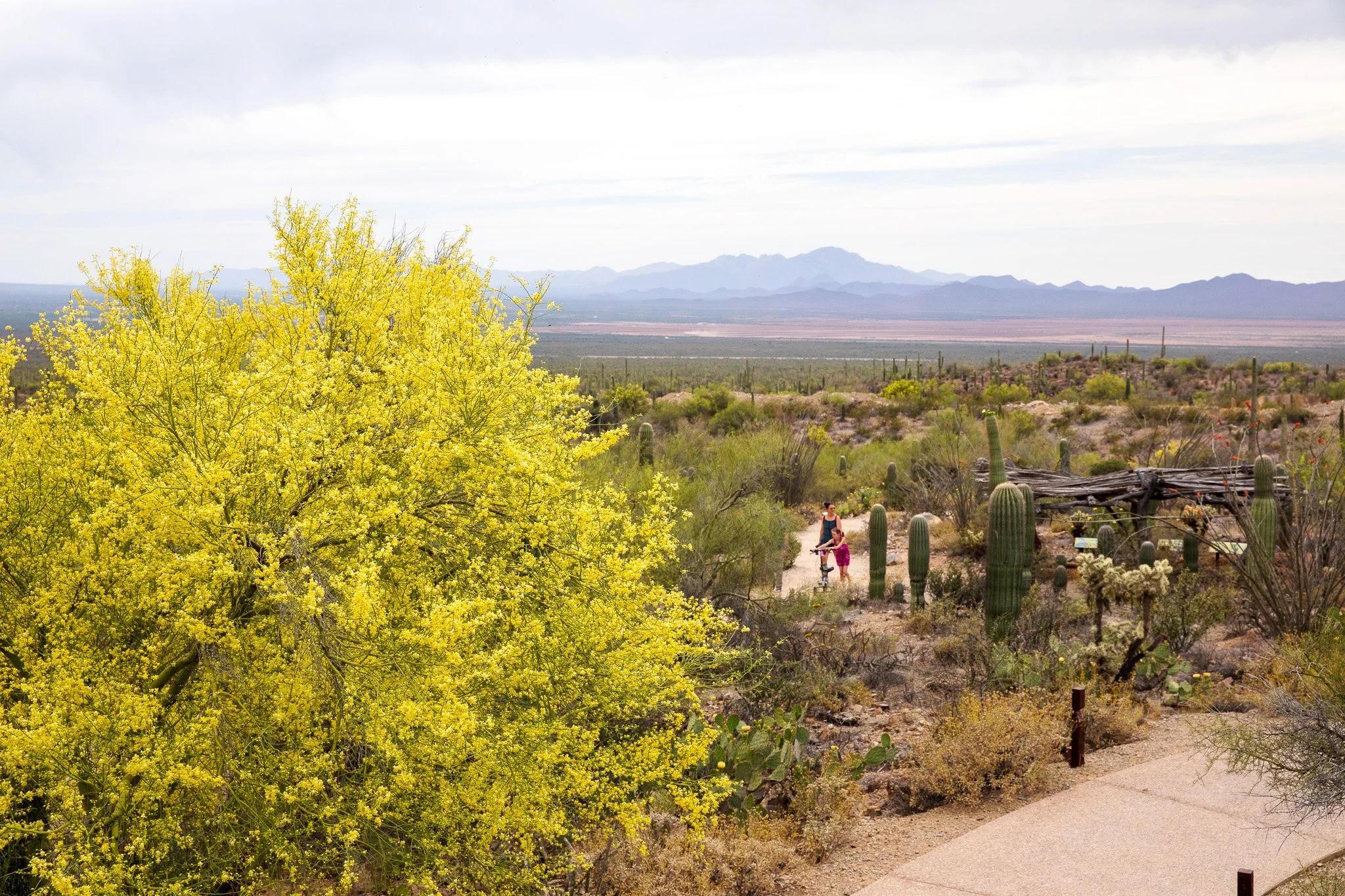
The Desert Overlook. Photo courtesy ASDM
-
![ASDM main entrance.]()
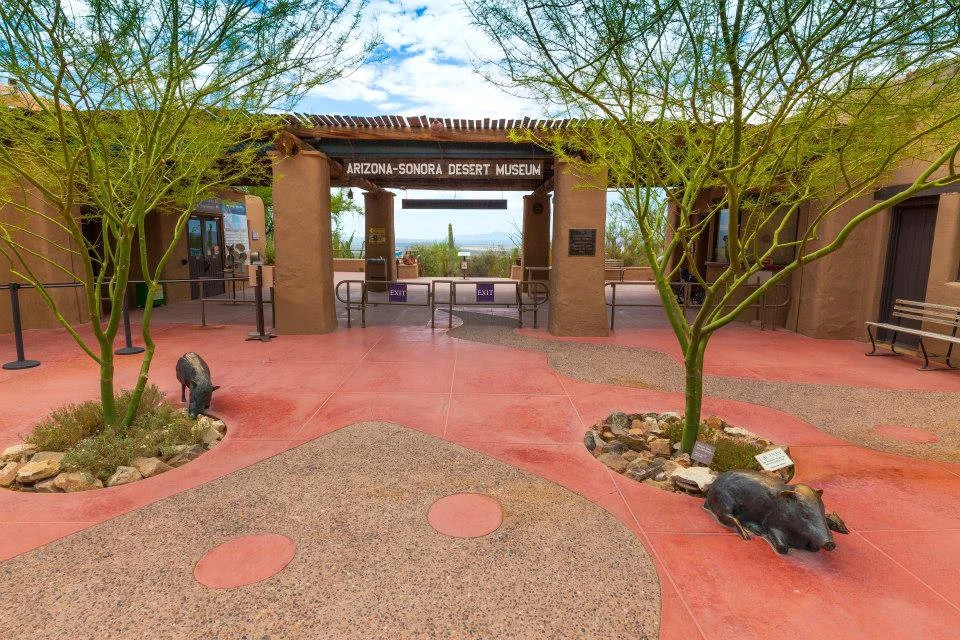
Arizona-Sonora Desert Museum main entrance. Photo courtesy ASDM
-
![Backlit snake signage.]()
I designed, printed, and installed signage like the backlit snake interpretive signs.
Ann Gill Storytelling Booth, Smith Alumni Center, Colorado State University
2026
Challenge
Reimagine a decommissioned recording booth in the Alumni Association – dated technology, bare acoustic paneling, and no visual identity – into a space that captures the warmth of former College of Liberal Arts dean Ann Gill and continues the legacy of Ann and her love of storytelling.
Role
Lead designer and project manager, directing a designer, local artist/maker Allie Ogg, remodel subcontractors, and a sign vendor from concept through installation, with on-site oversight at every phase.
Approach
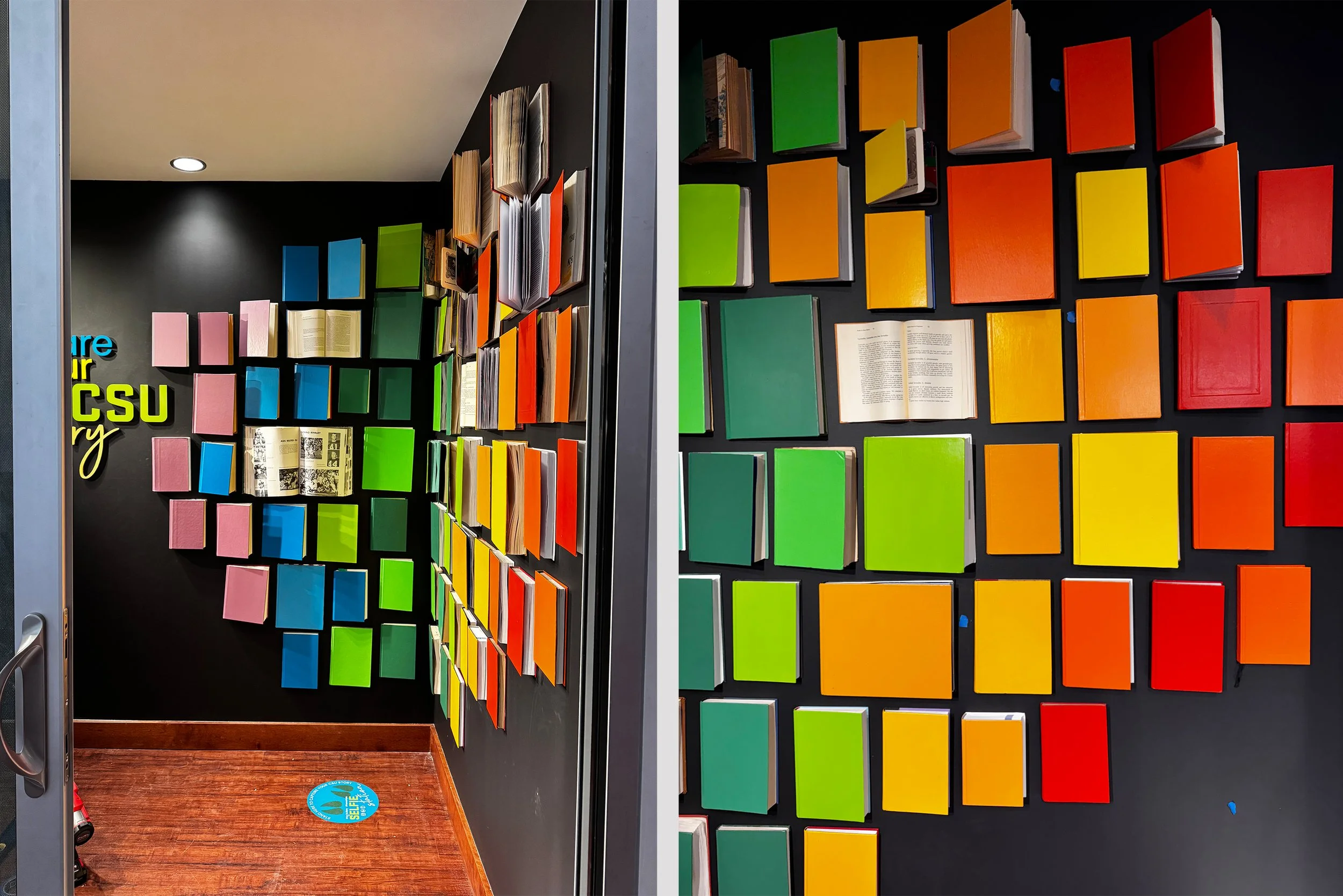
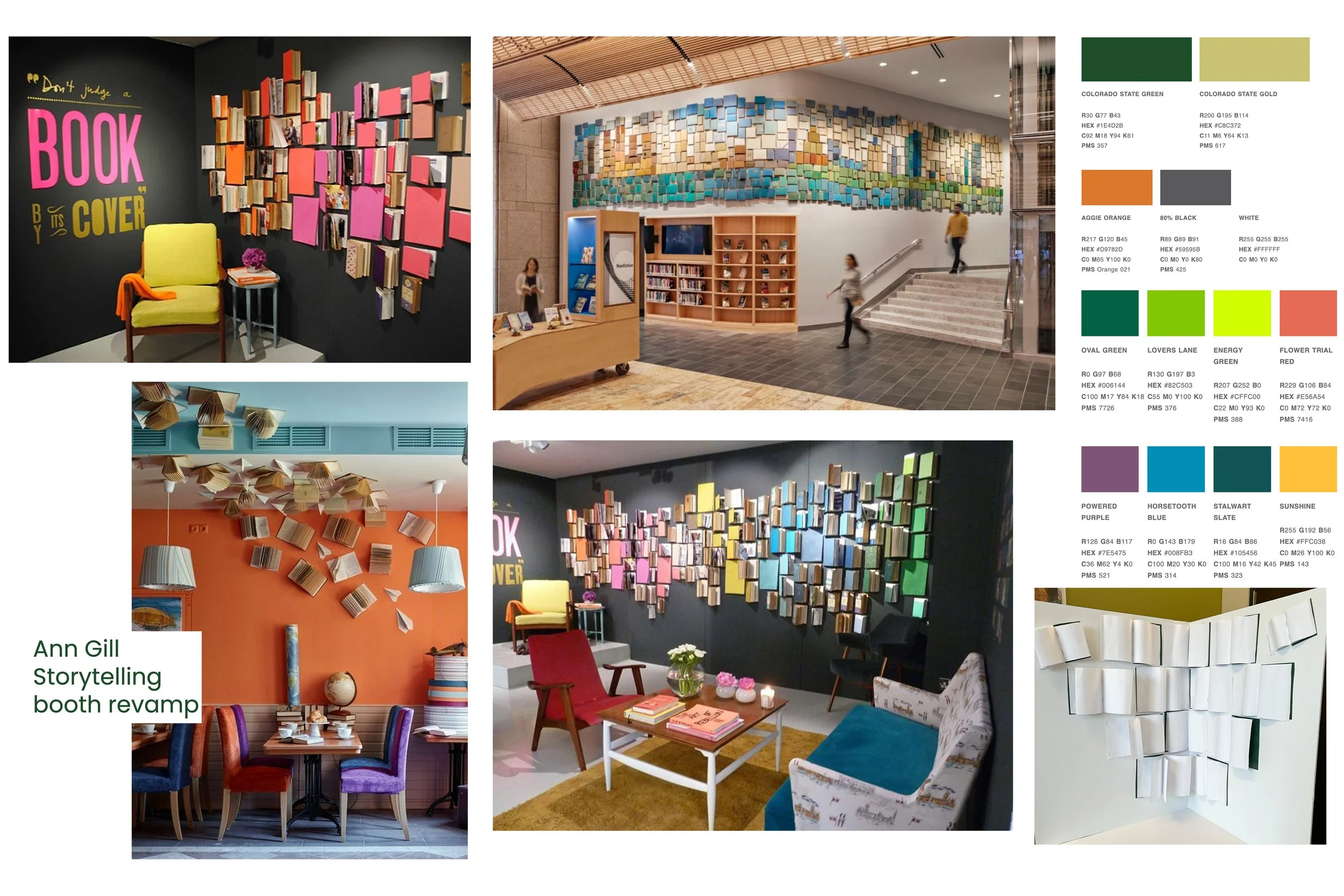
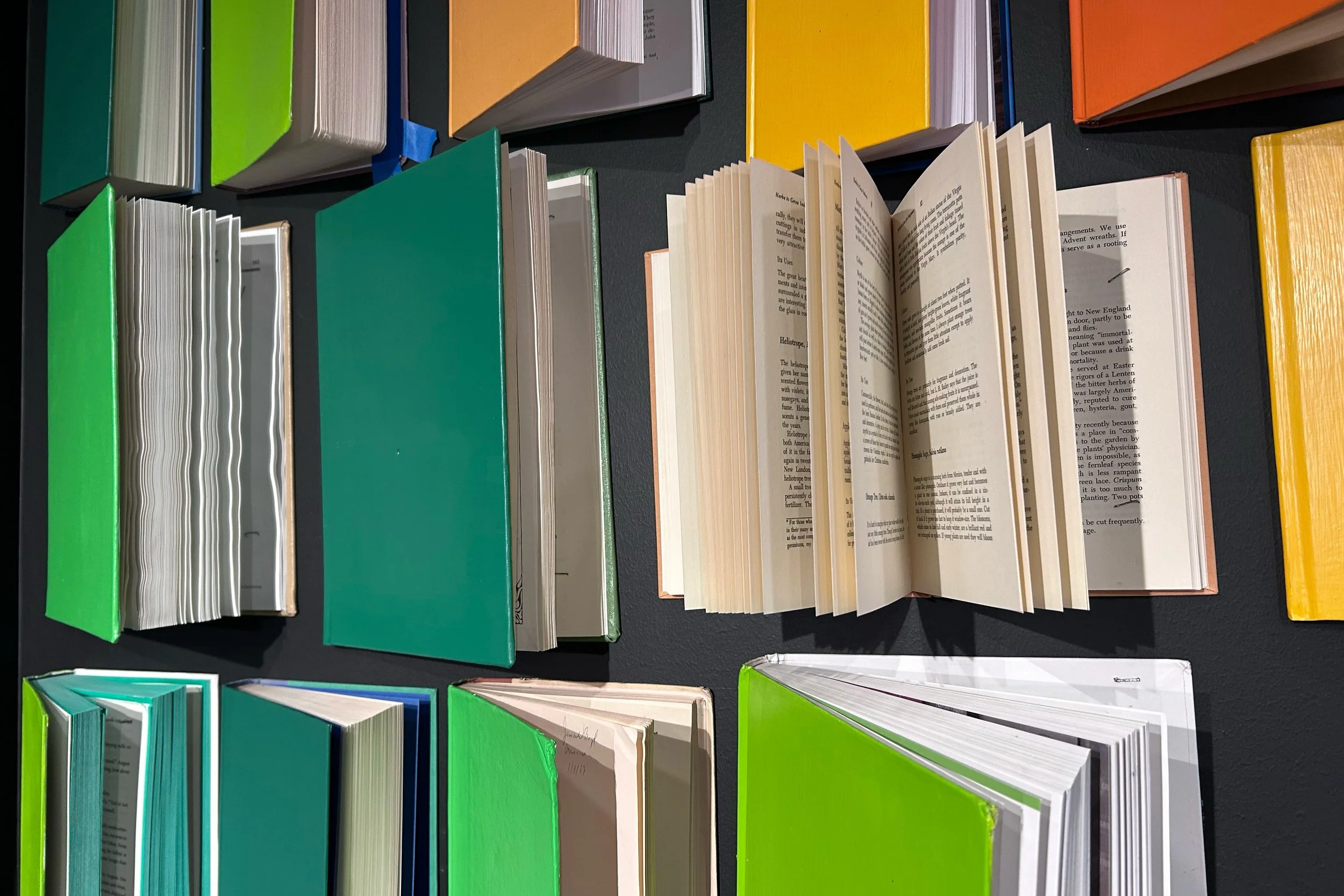
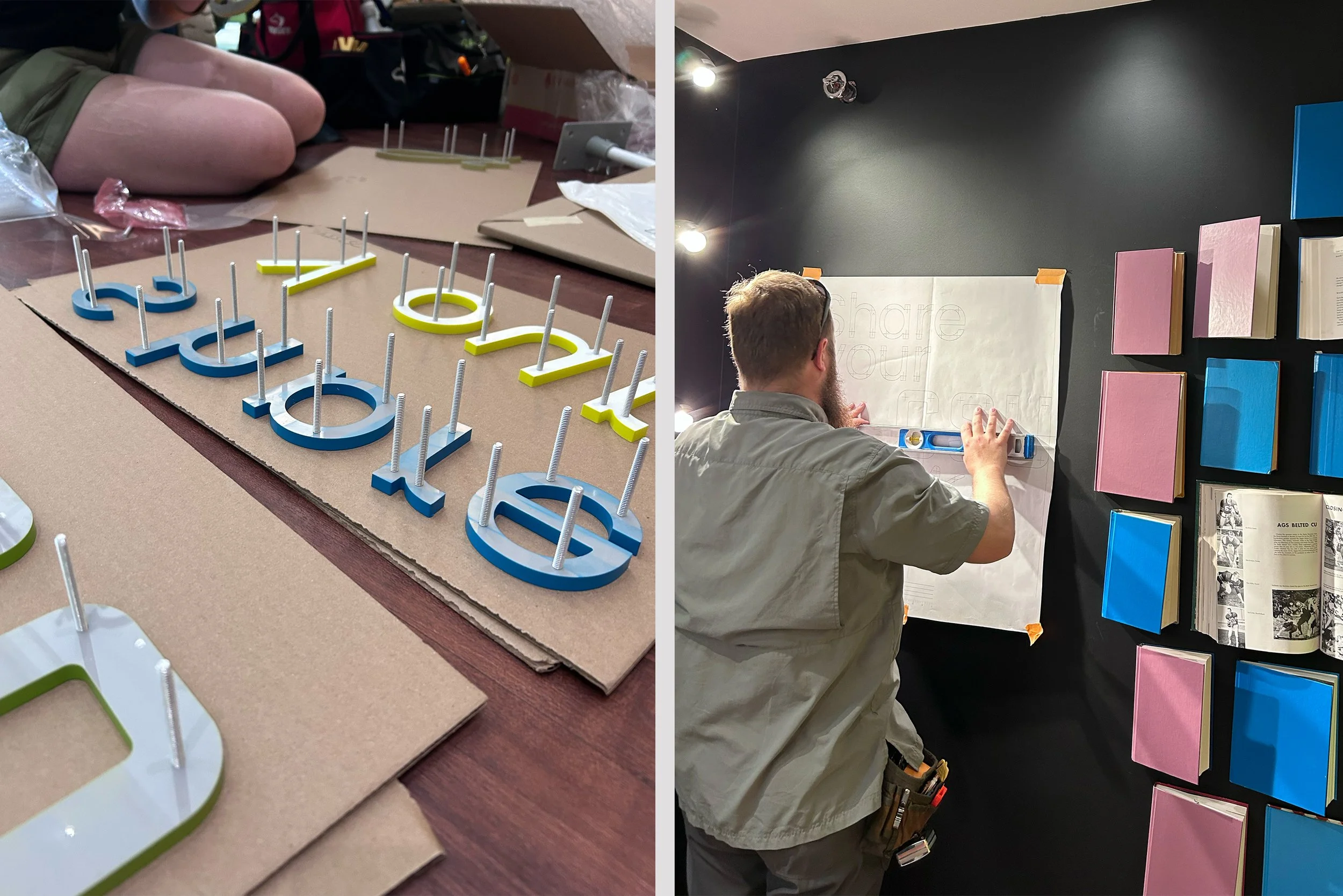
Established a budget, timeline, scope, and concept for the booth, using design thinking to create a physical prototype of a “big hug” concept – a cozy corner of colorful books representing warmth and stories. Arranged a demo of the sound paneling and paint, then hired a local artist to hand-paint vibrant books and mount them into a selfie-ready display. Designed playful signage and a vertical banner for the Alumni Center’s high ceilings to attract visitors, coordinating with a local sign vendor. Sourced books from old textbooks, yearbooks, thrift stores – including CSU gems – and supervised each installation to ensure the layout was cohesive. Managed the project within a $5,000 budget and adjusted for schedule changes due to contractor availability.
Impact
Impact
Transformed a decommissioned booth into a colorful, on-brand destination that reflects Ann Gill’s spirit and invites visitors to stop, engage, and tell their story via selfies and tagging on Alumni social channels.
-
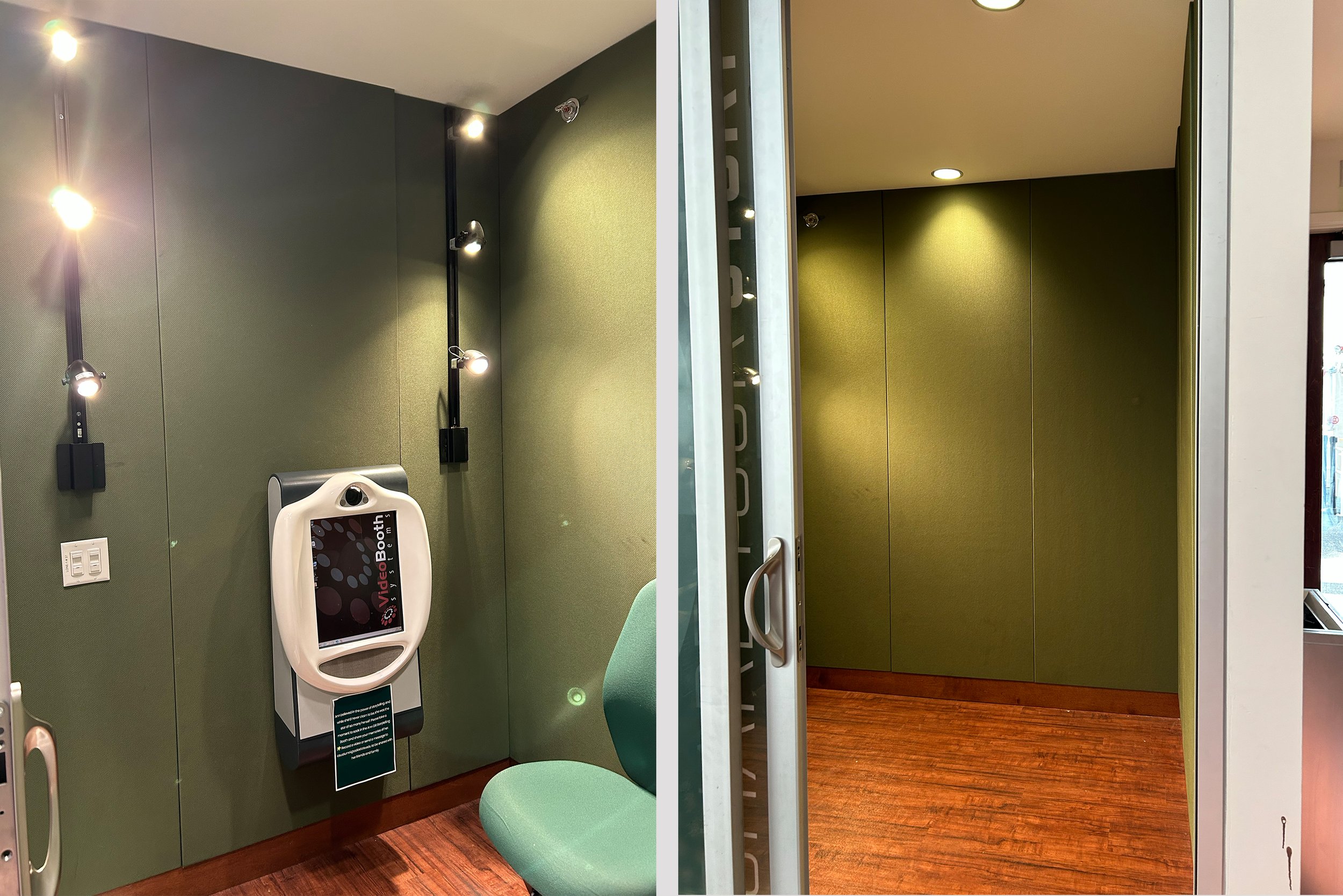
![The Ann Gill Storytelling booth.]()
The Ann Gill Storytelling booth, finished books and signage.
-
![The Ann Gill Storytelling booth before.]()
Outdated decommissioned technology, before the reimagining.
-
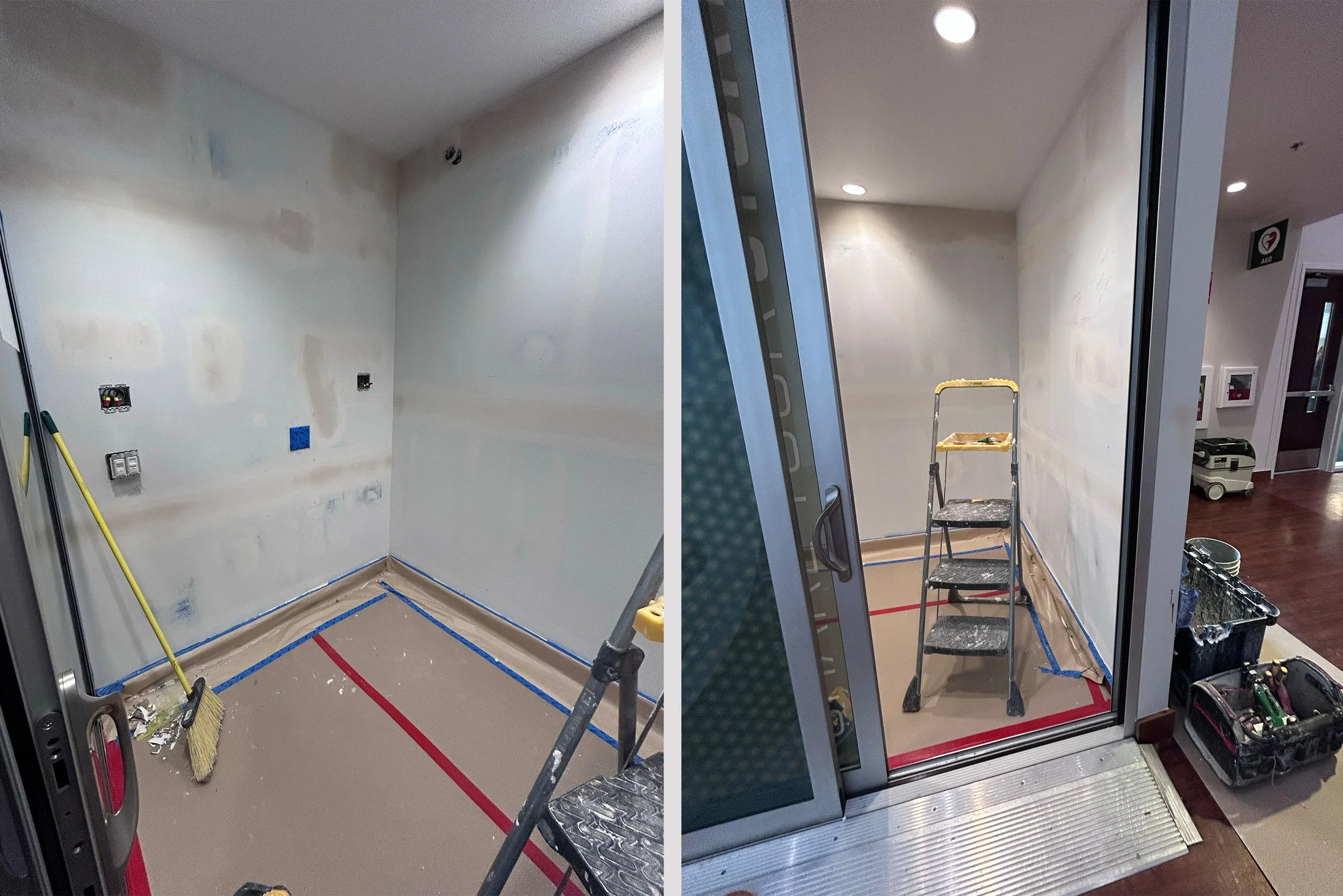
![The Ann Gill Storytelling booth.]()
Demo work, removing sound panels, re-installing lighting, patching, and painting.
-
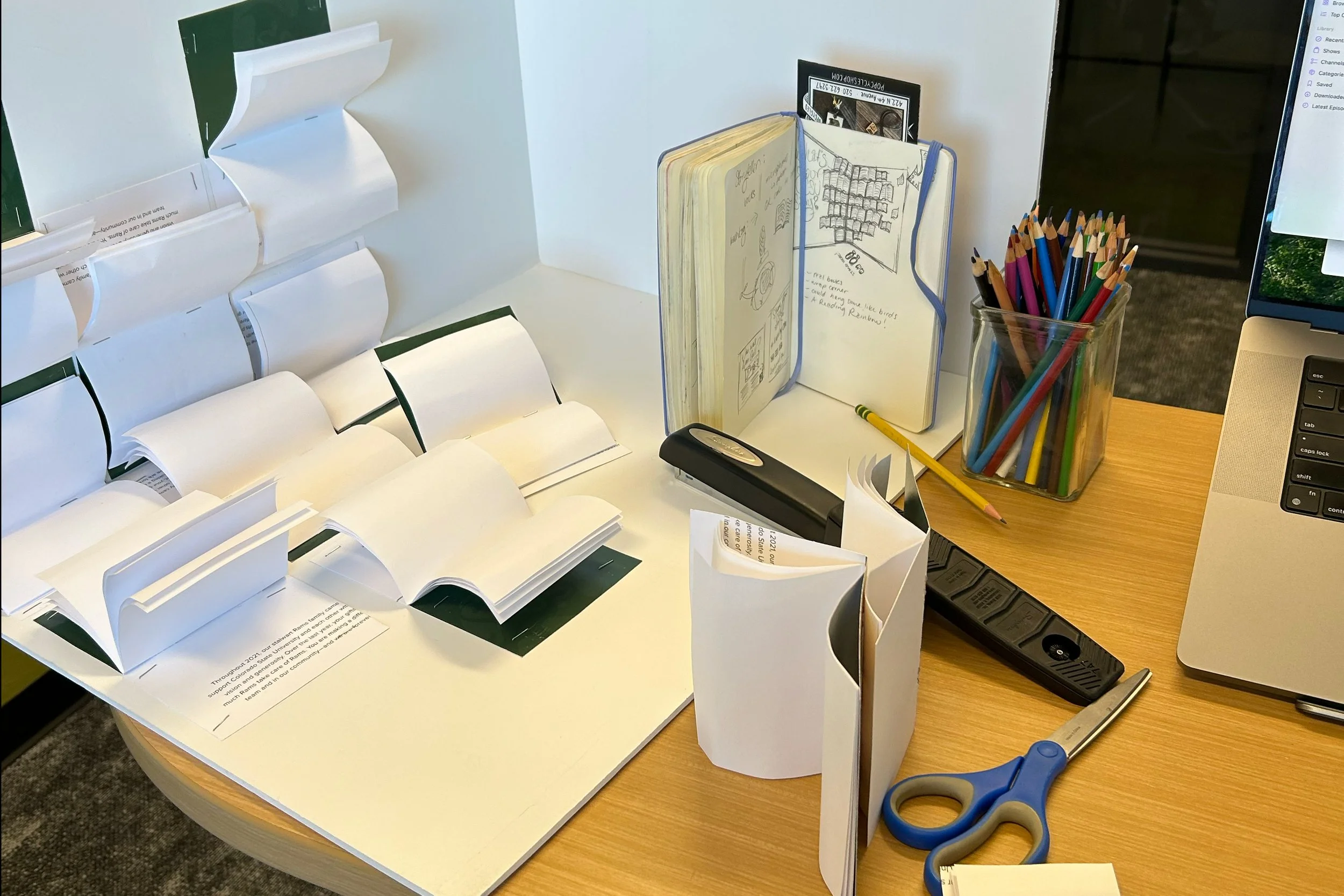
![The Ann Gill Storytelling prototype.]()
Prototyping a proof-of-concept with open books.
-
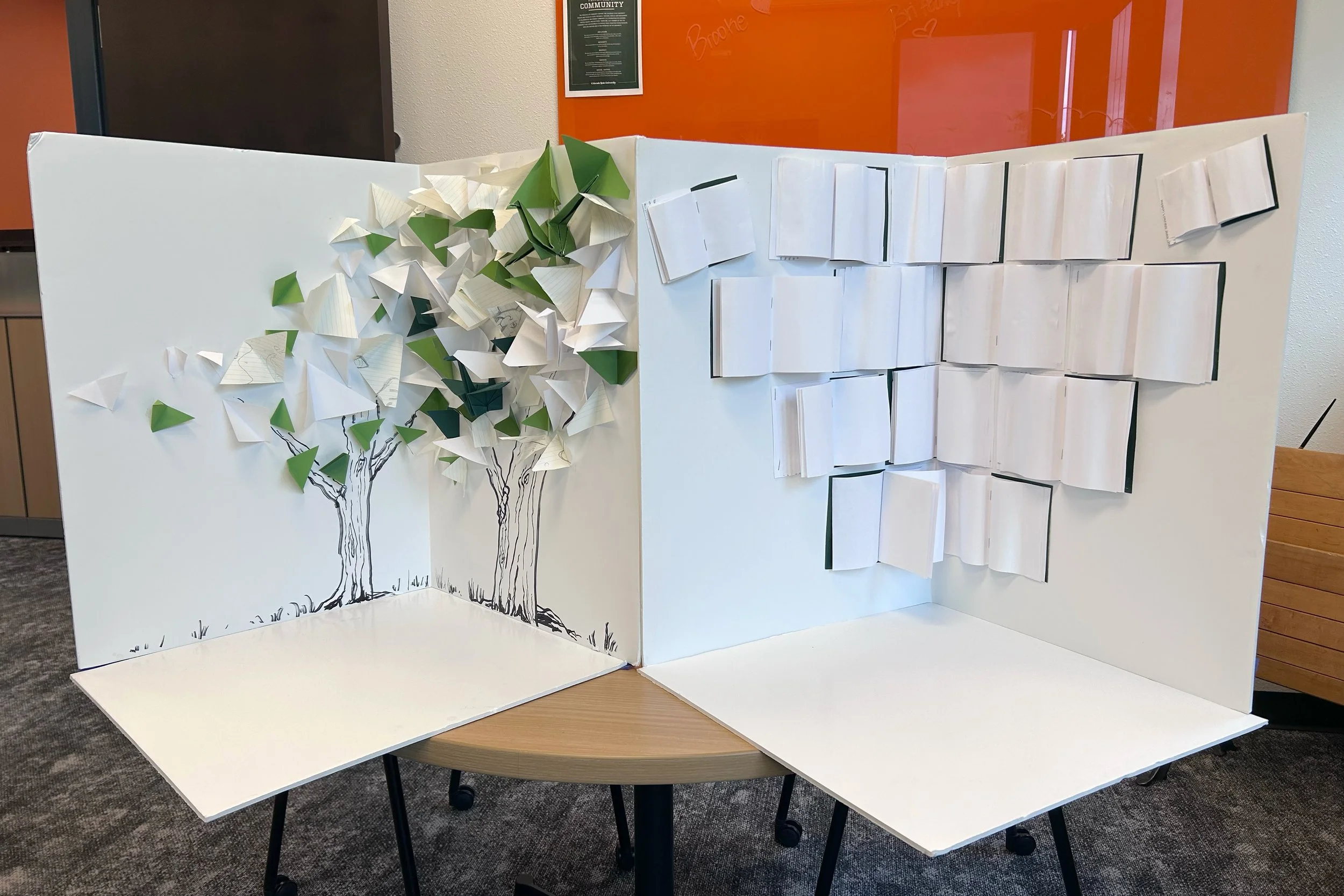
![The Ann Gill Storybooth.]()
Two concept prototypes.
-
![The Ann Gill Storytelling booth.]()
Inspiration pieces from the Boston Public Library, a bookstore, and reading nook.
-
![The Ann Gill Storytelling booth.]()
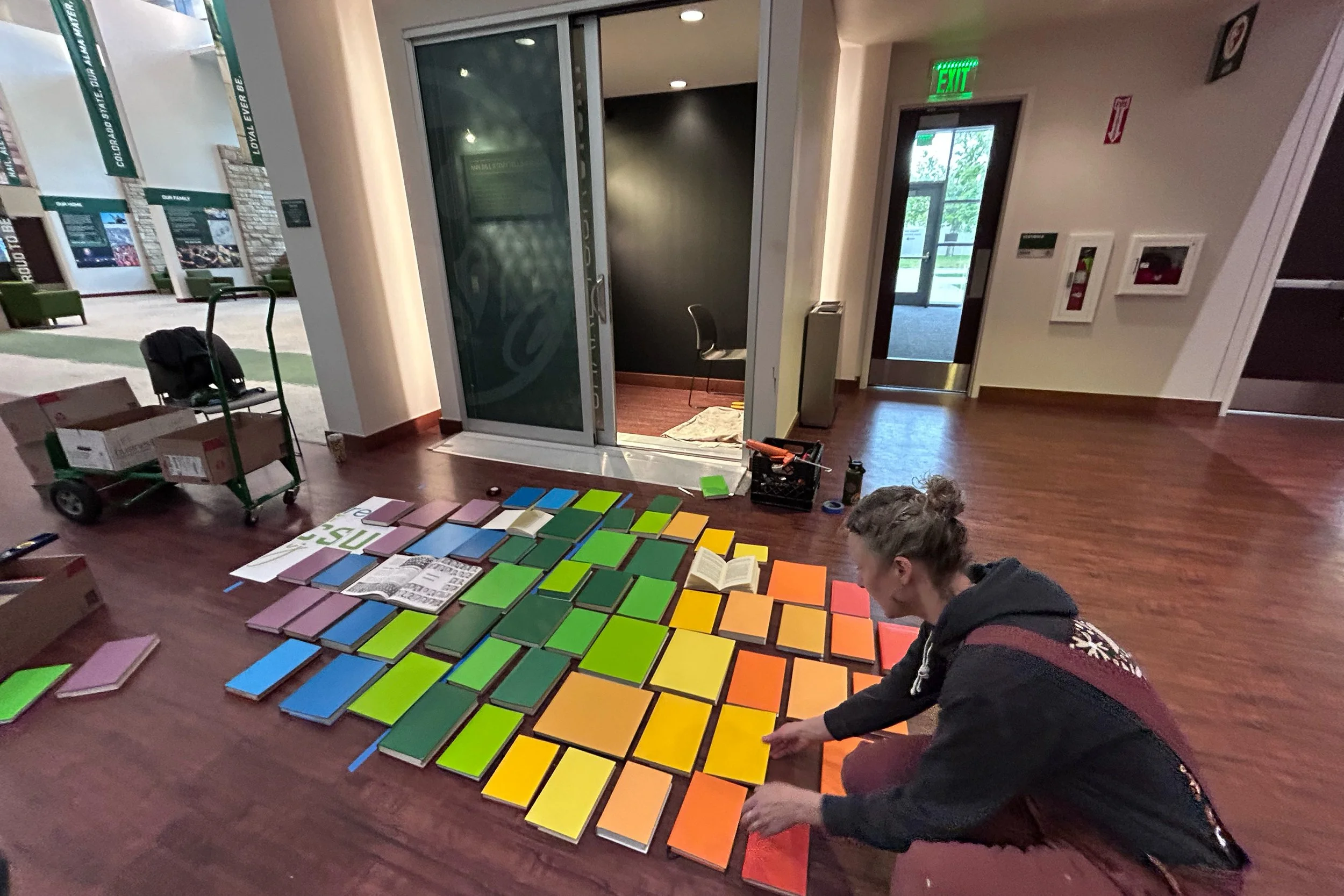
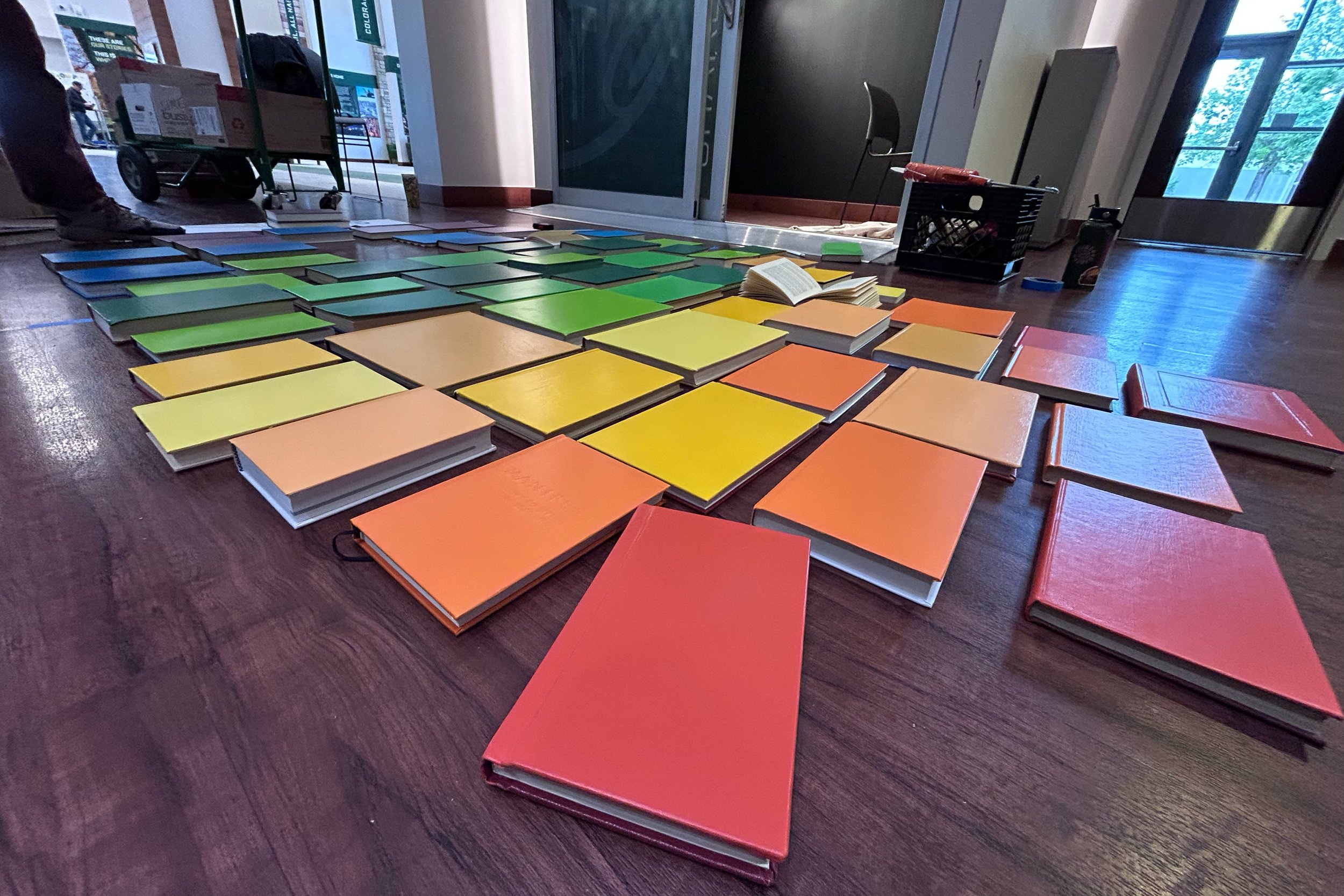
Allie Ogg, artist, illustrator, and maker – laying out books.
-
![The Ann Gill Storytelling booth.]()
Book layout before install.
-
![The Ann Gill Storytelling booth.]()
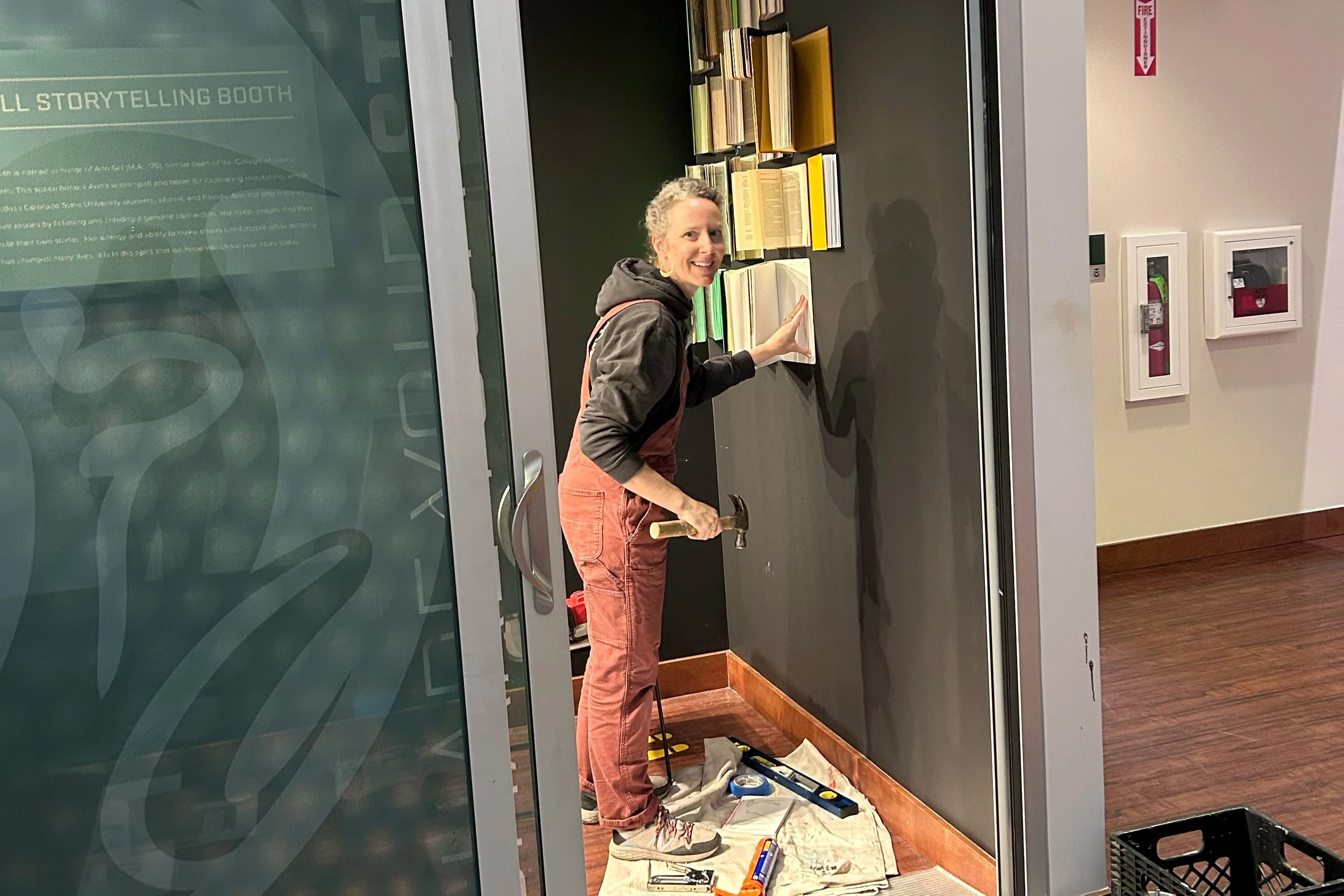
Allie Ogg, using a combo of nails and glue for each book.
-
![The Ann Gill Storytelling booth.]()
Each book had to be secured shut to keep secure.
-
![The Ann Gill Storytelling booth.]()
Pin mount letters to echo the 3-D nature of the books.
-
![The Ann Gill Storytelling booth.]()
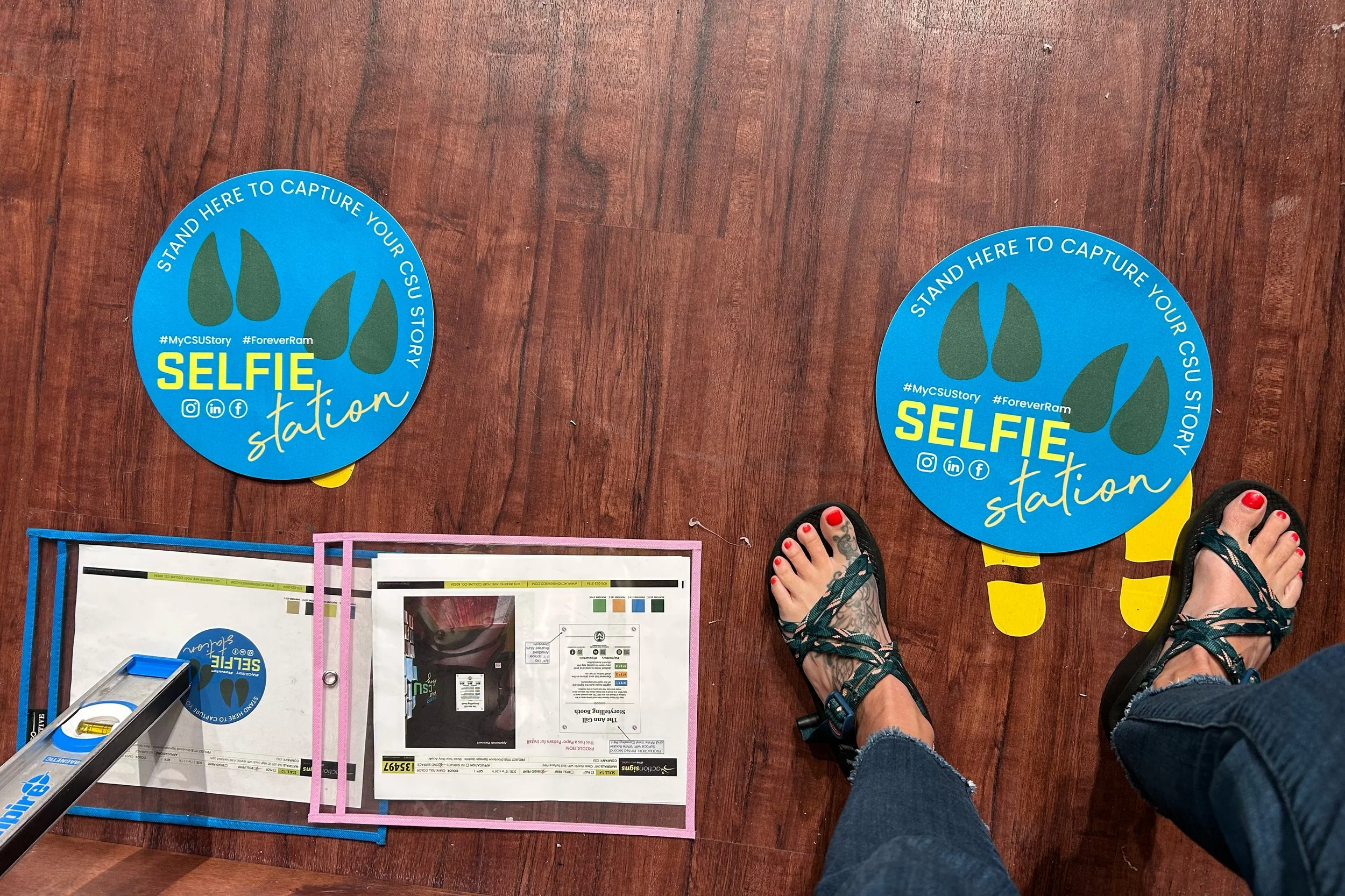
Selfie floor vinyl.
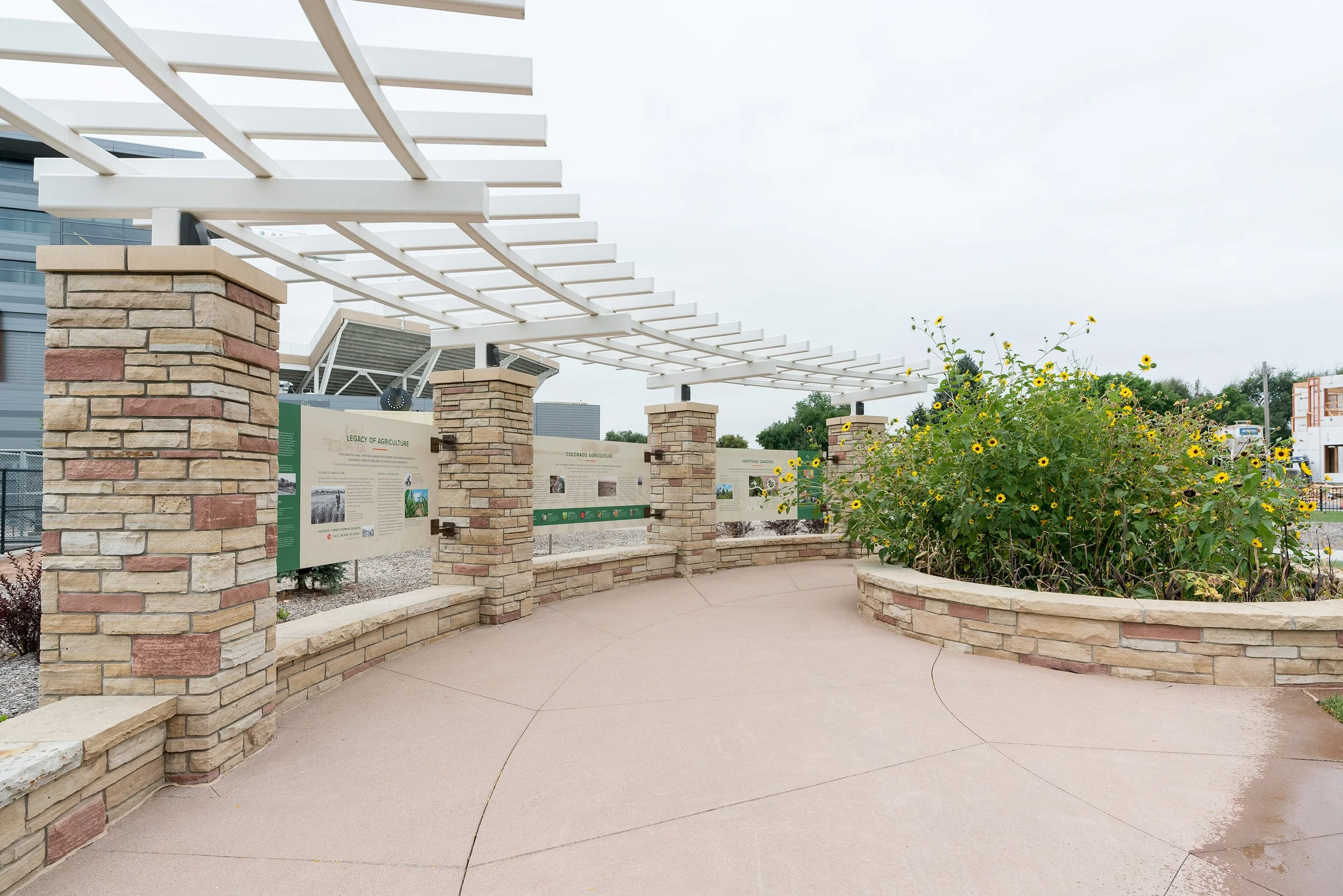
Heritage Garden, Colorado State University main campus
2017
Challenge
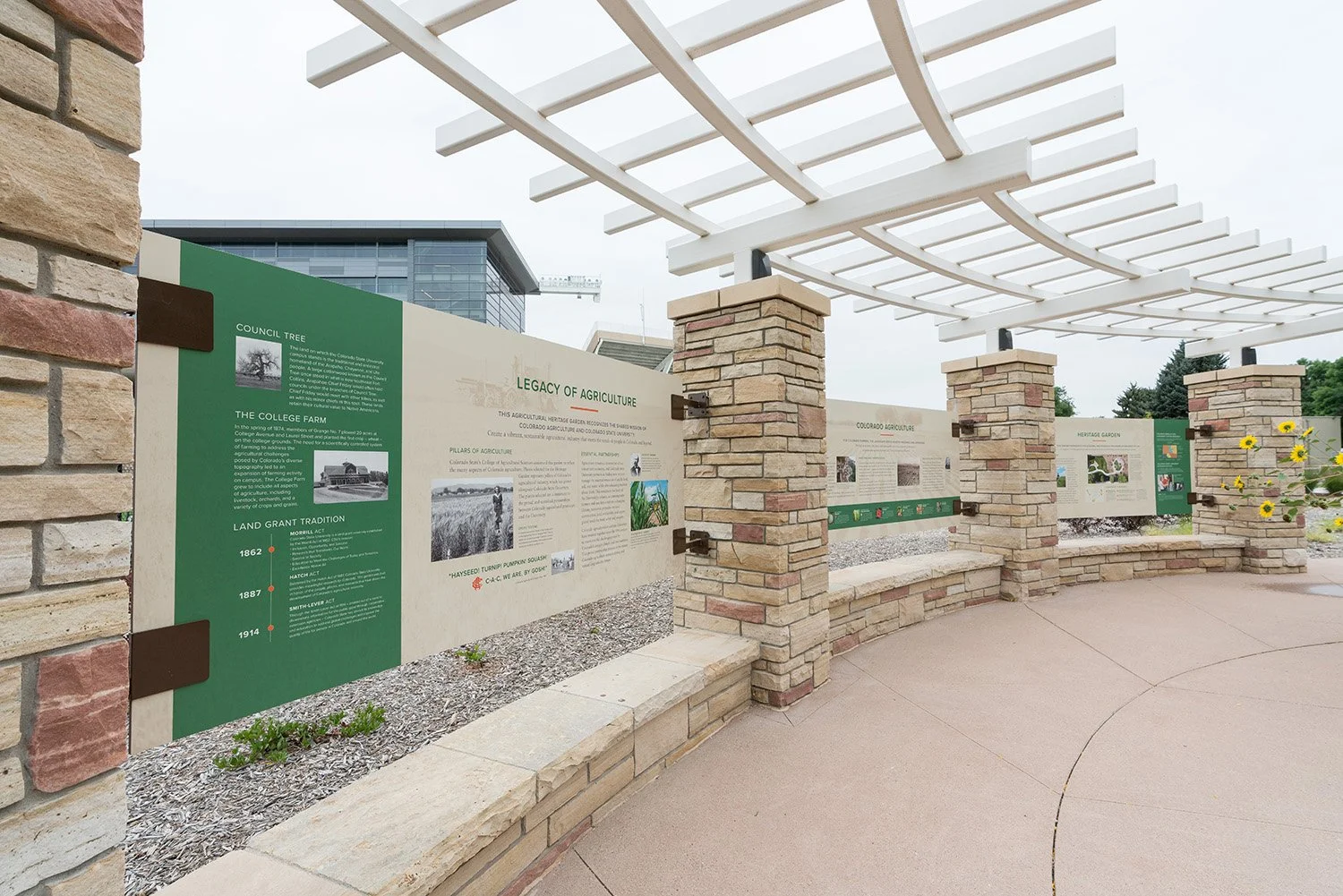
Translate CSU’s agricultural story into a physical, educational garden experience.
Role
Graphic designer collaborating with Facilities, a writer, and landscape architects.
Approach
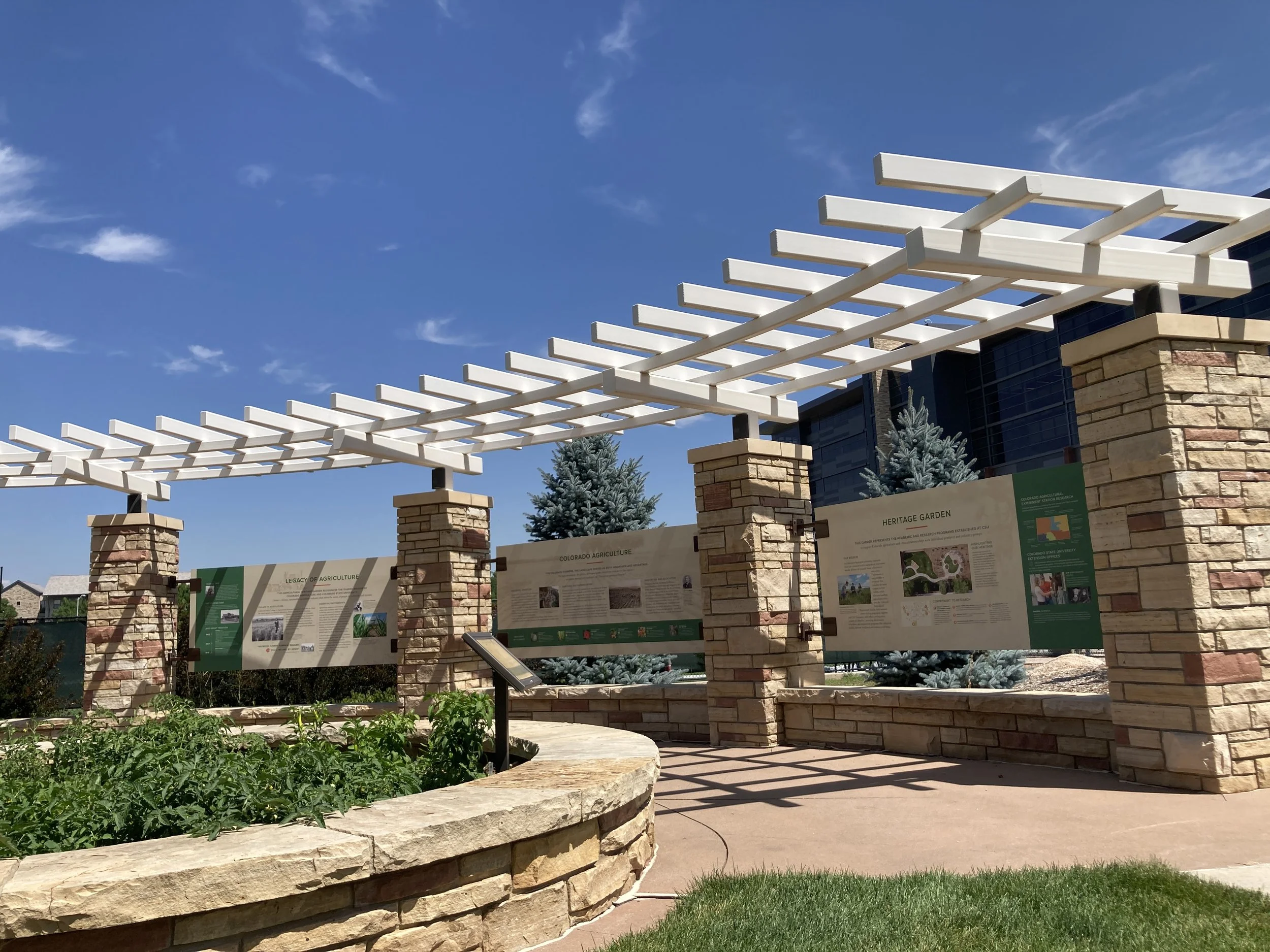
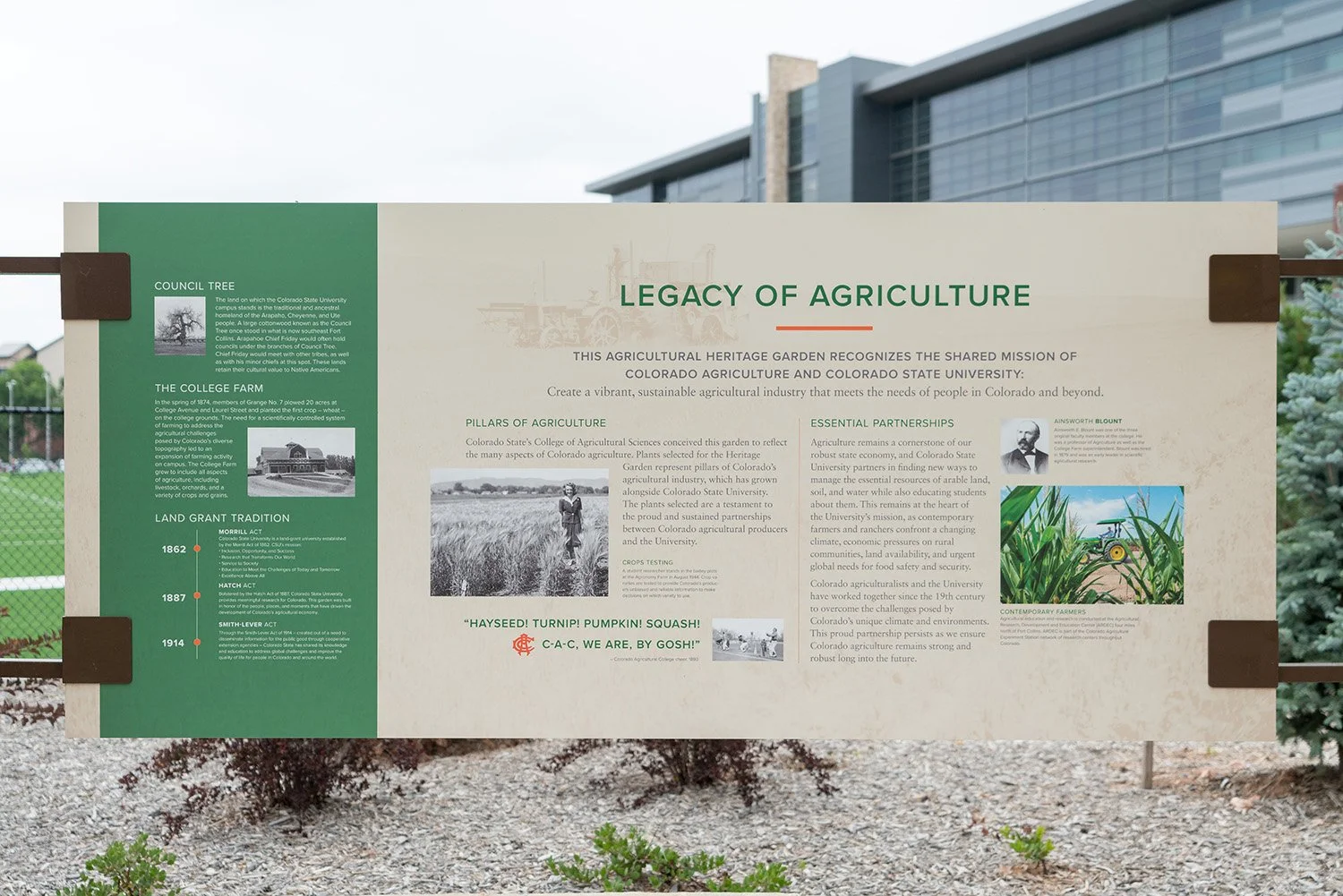
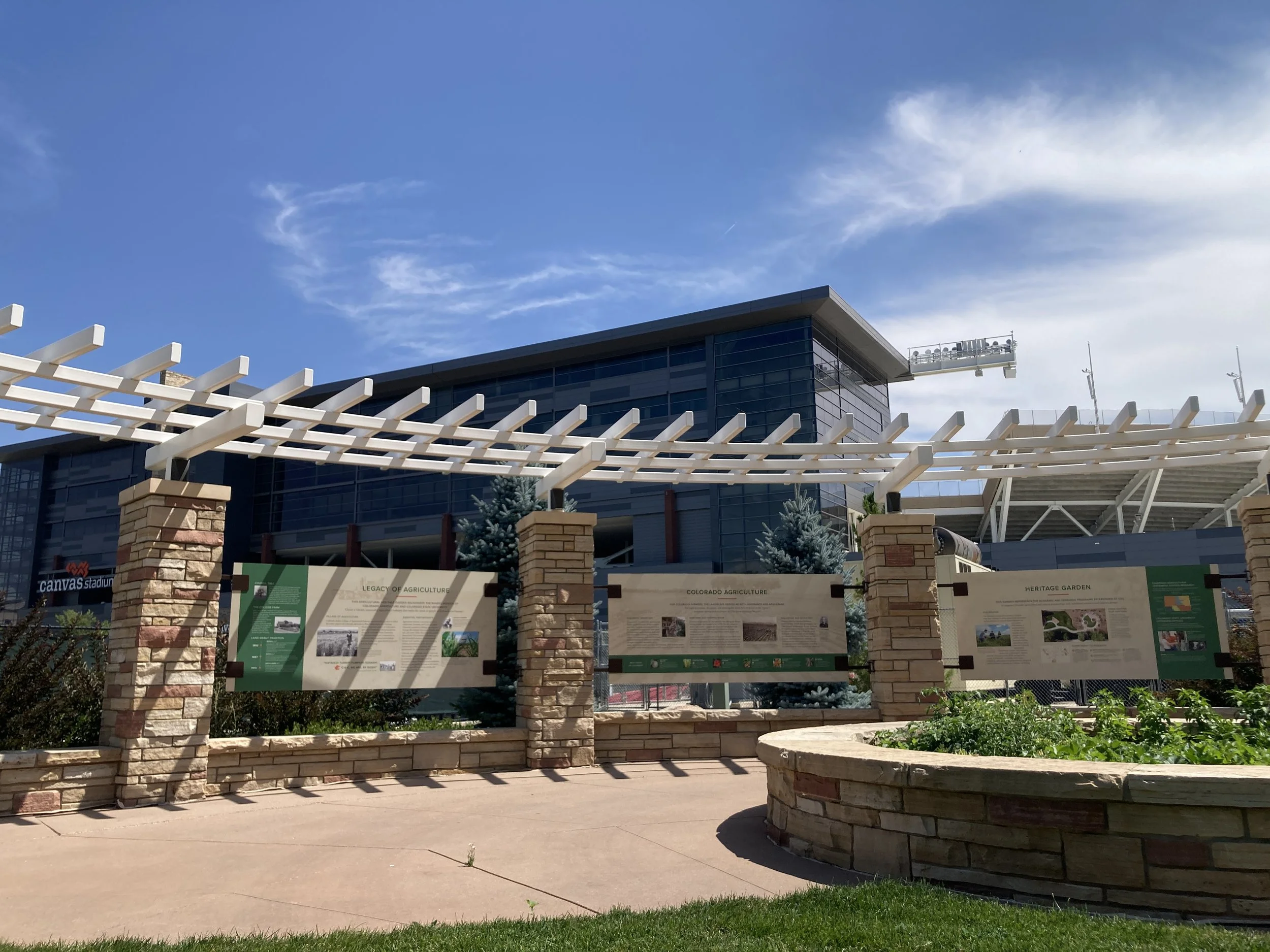
Collaborated with Facilities, a writer, and landscape architects to distill a long narrative into approachable, museum-style panels featuring maps, infographics, and archival photography. Recommended materials and signage systems for long-term outdoor durability.
Impact
Reintroduced a beloved campus space as a living classroom honoring CSU’s land-grant heritage and agricultural diversity.
-
![Heritage Garden sign panel system.]()
Heritage Garden three-panel signage.
-
![Heritage Garden panels.]()
Heritage Garden three-panel system.
-
![Legacy of Agriculture sign.]()
Legacy of Agriculture panel.
-
![Concept drawing.]()
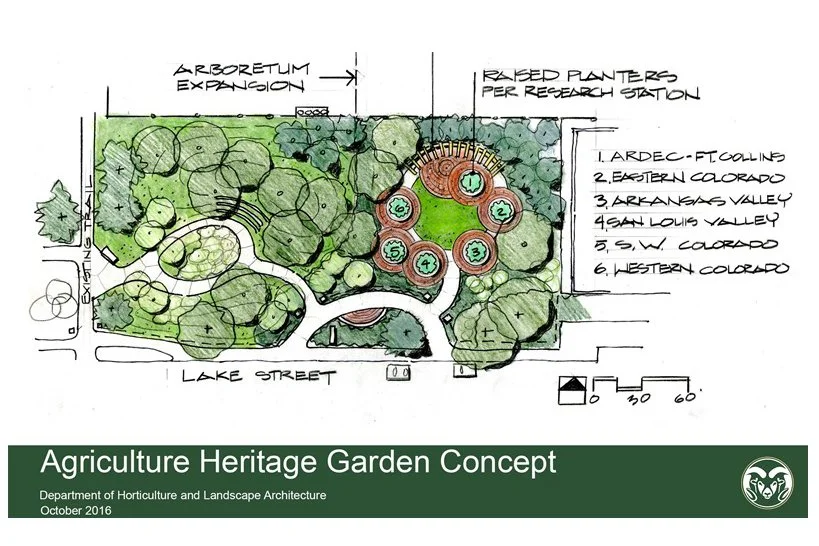
Landscape architecture concept.
-
![Heritage Garden panels.]()
Heritage Garden next to Canvas Stadium.
-
![Heritage Garden panels.]()
Heritage Garden panels.
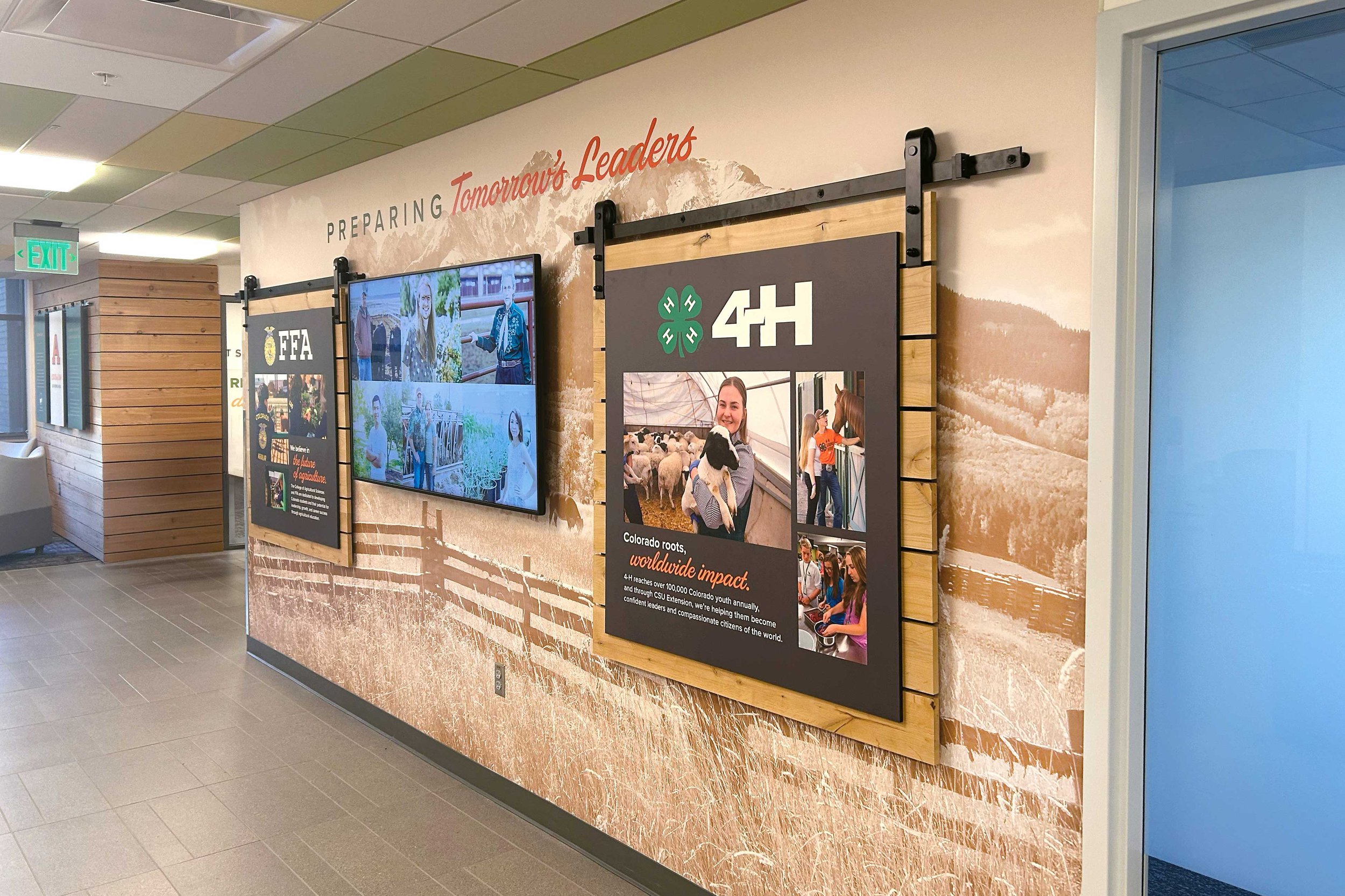
Nutrien Agricultural Sciences Building, 4-H/FFA Youth Legacy Wall, Colorado State University main campus
2025
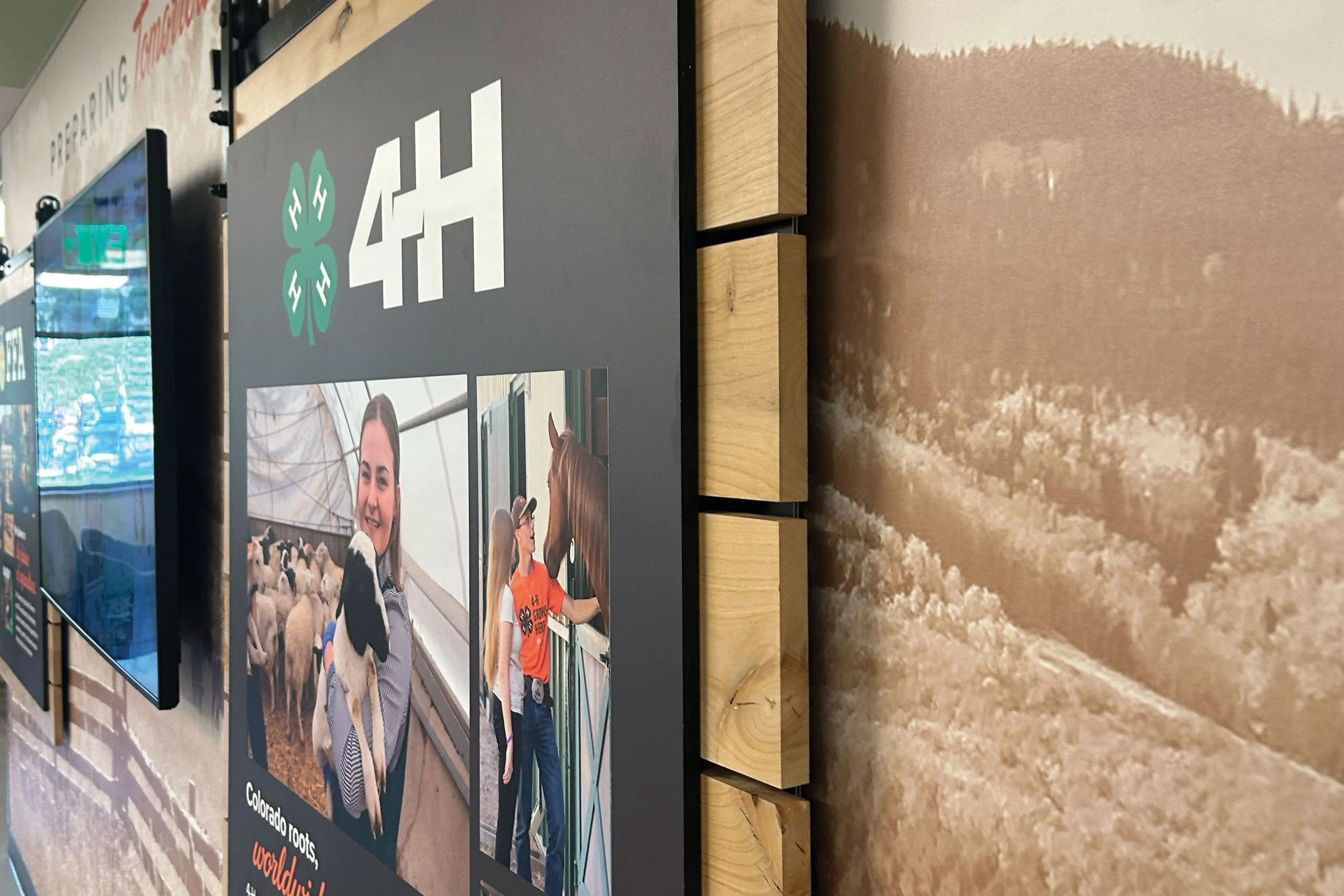
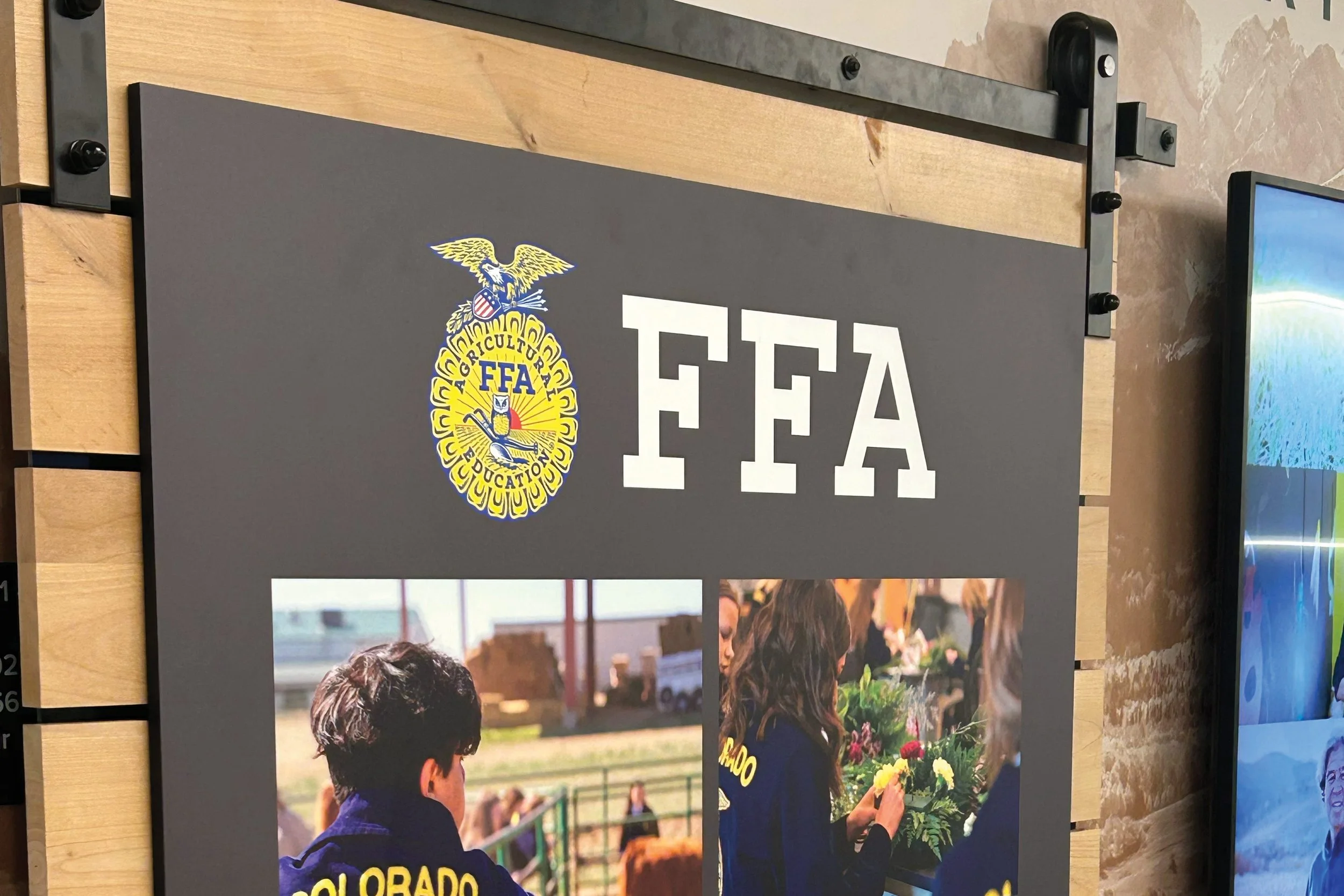
Designed a youth recognition wall celebrating 4-H and FFA participants within the new Nutrien Agricultural Sciences Building. Working within CannonDesign's architectural standards, developed a dynamic, museum-style display honoring youth voices and connecting the building's heritage to future learners. The installation's success led to a follow-up commission for a donor recognition wall.
“Working with Kate on environmental branding projects is always a joy – she brings strategic thinking, creative insight, and genuine collaboration to every step of the process. She’s thorough, thoughtful, and fun, and consistently goes the extra mile to ensure every detail feels just right.”
-
![Nutrien Agricultural Building.]()
Nutrien Agricultural Building 4-H/FFA Youth Legacy wall.
-
![4-H panel.]()
4-H panel.
-
![FFA panel.]()
FFA panel detail.
Aggie Trail (Concept)
Colorado State University
2019
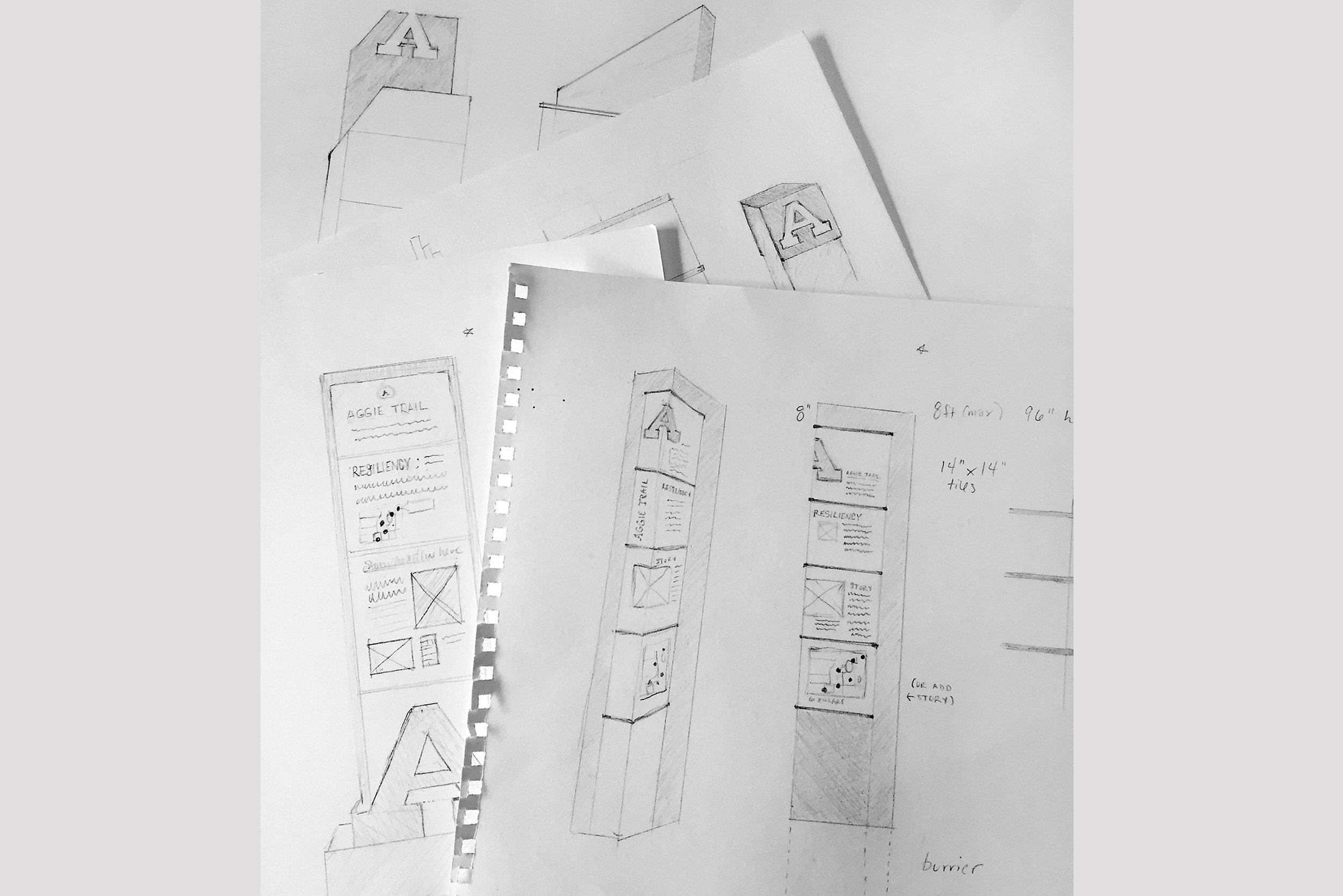
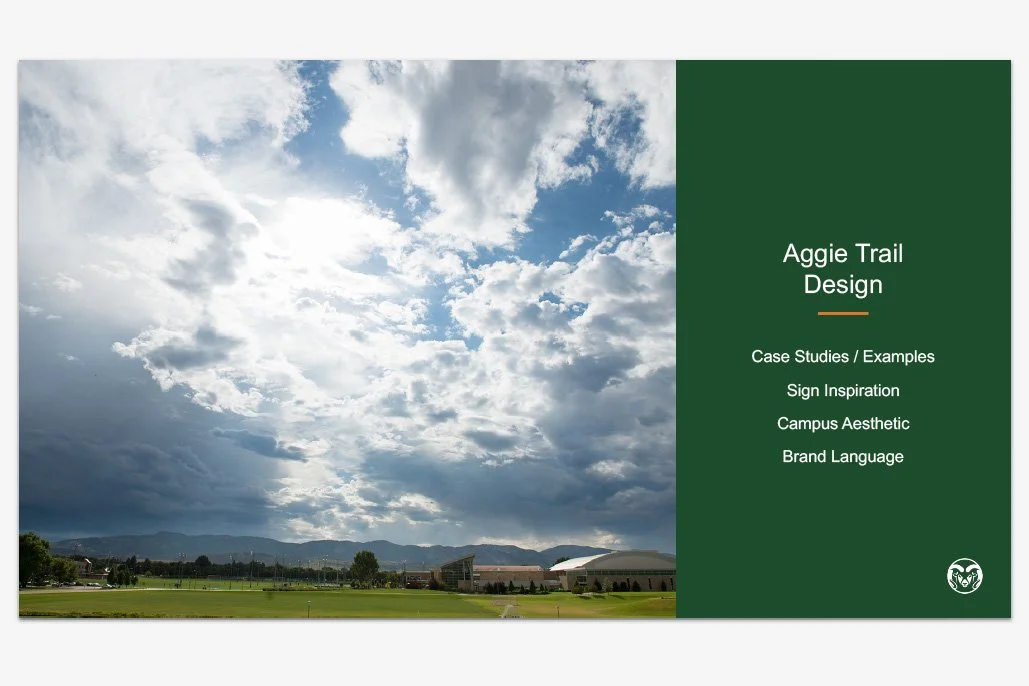
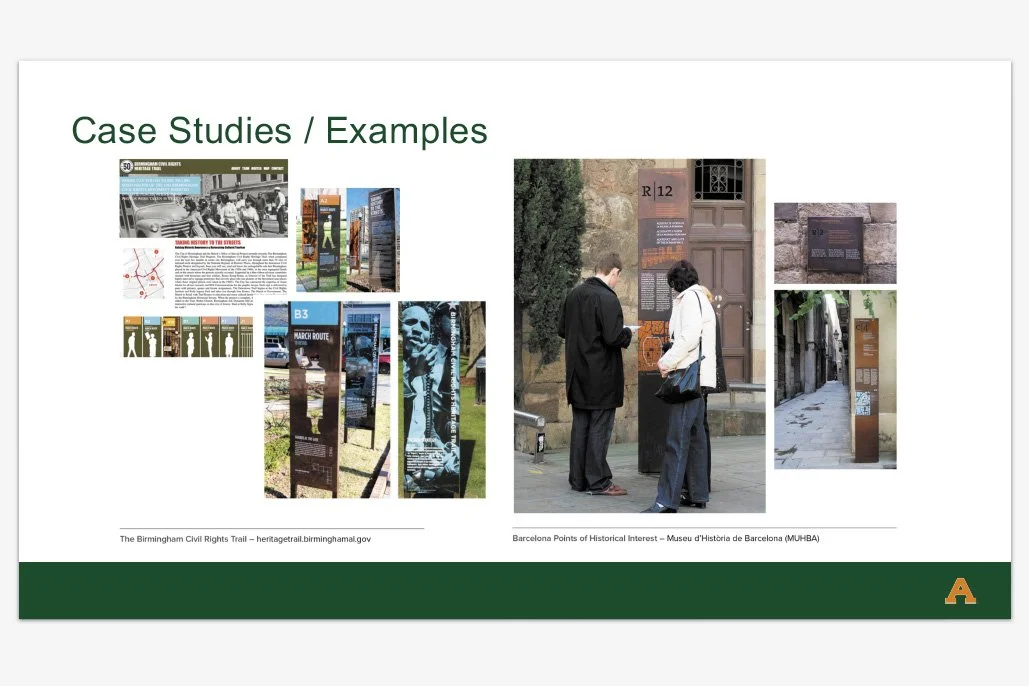
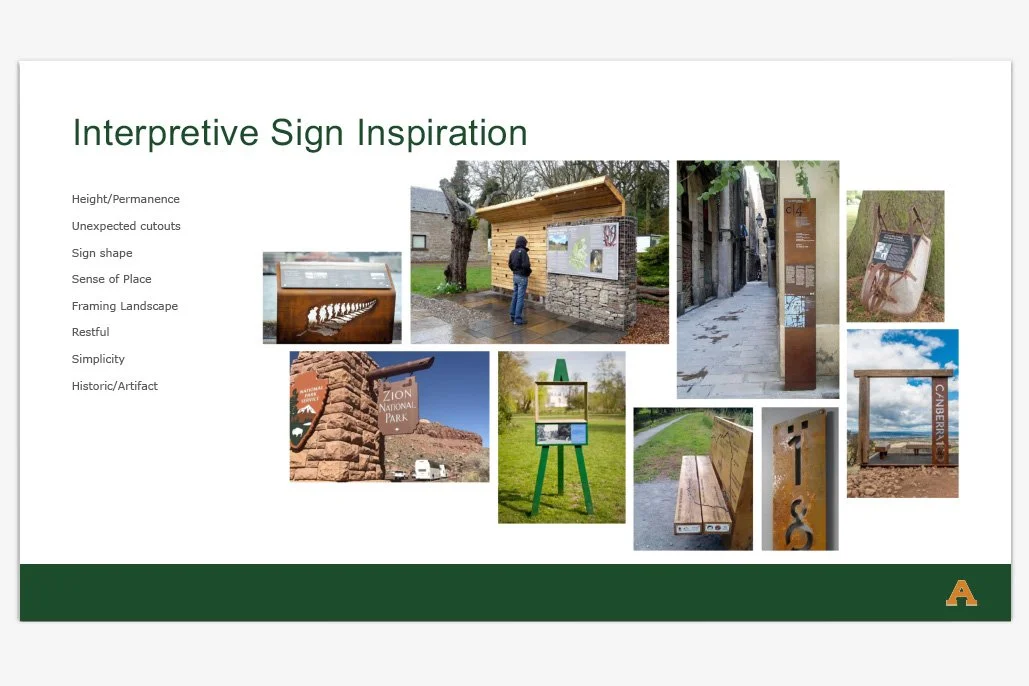
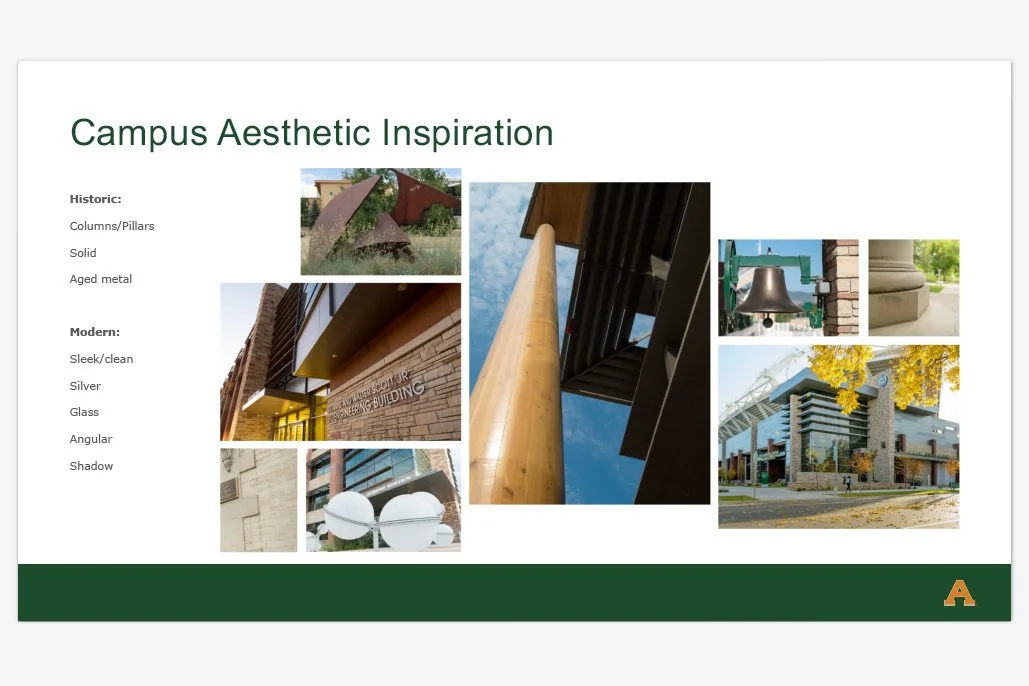
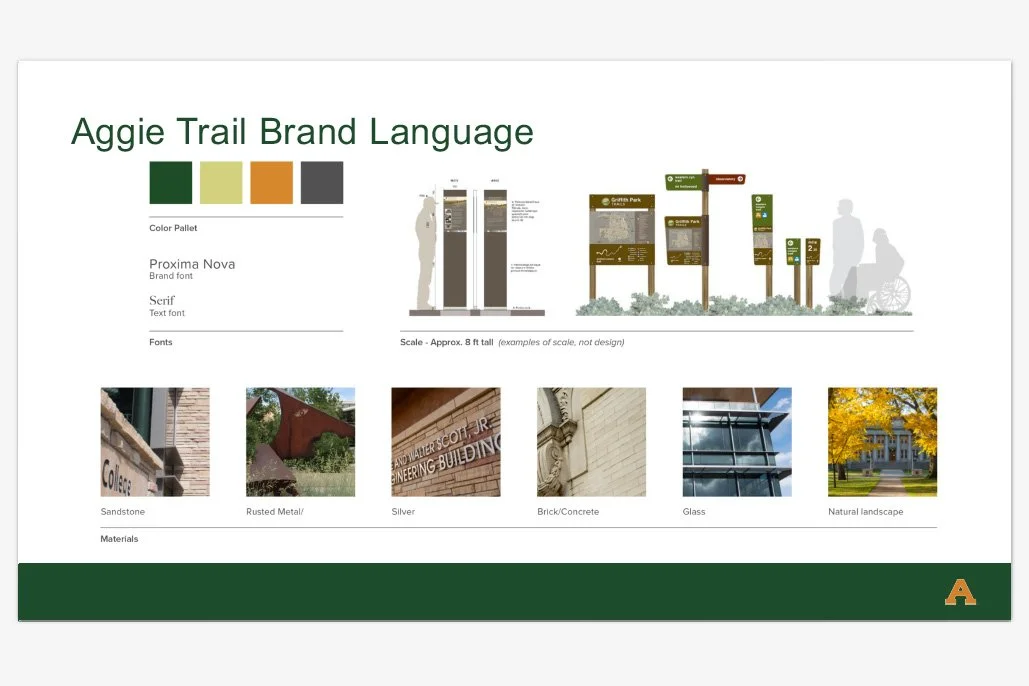
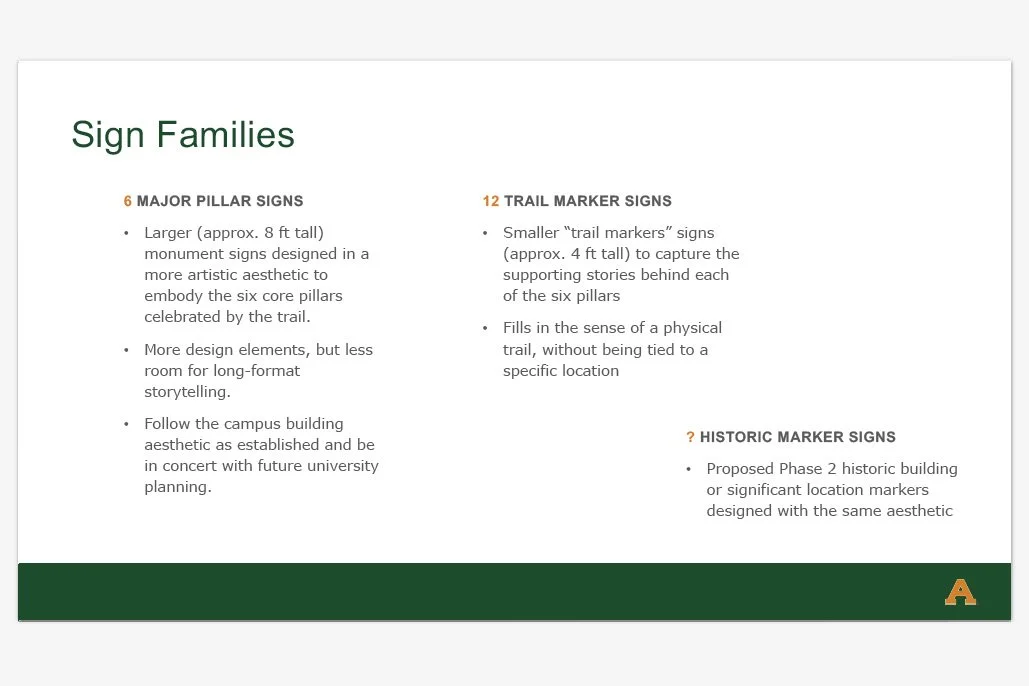
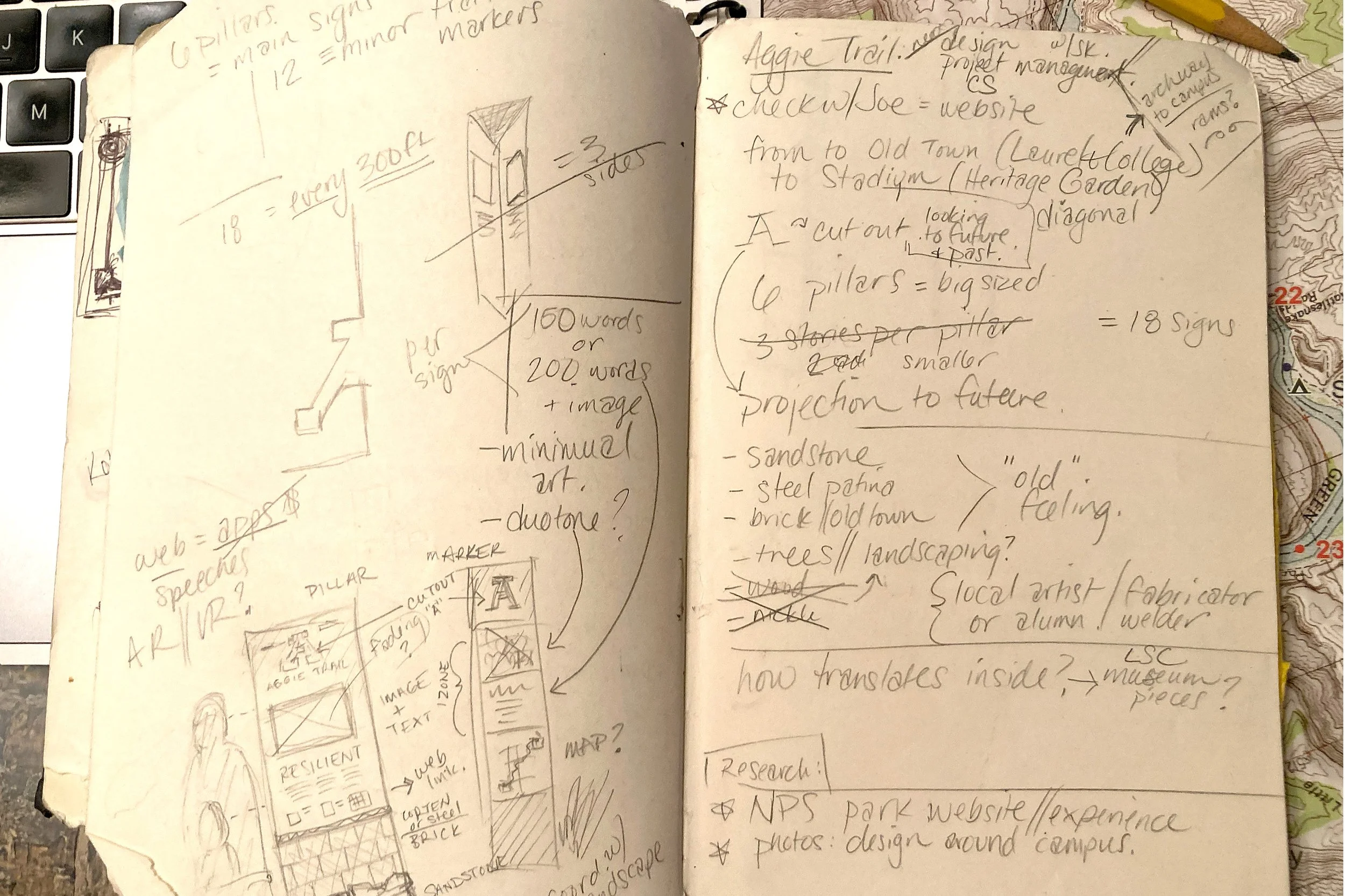
Developed a concept for a campus-wide interpretive wayfinding and signage system, in collaboration with landscape architecture and campus planning teams, to support a “curated campus” strategy. The proposal outlined a walking trail of markers highlighting CSU’s history, culturally significant sites, and land acknowledgment, creating a cohesive narrative experience across the built environment. Explored placemaking, materials, and visual systems to align with campus architecture and unify existing wayfinding. Concept development also included interactive opportunities via QR codes and augmented reality to extend storytelling beyond physical signage. Although not yet realized, the framework informed ongoing campus storytelling and tour experiences.
-
![Aggie Trail sketches.]()
Aggie Trail trail marker sketches.
-
![Aggie Trail concept deck.]()
Aggie Trail concept deck.
-
![Aggie Trail concept deck.]()
Aggie Trail concept deck, exploring inspirations.
-
![Aggie Trail concept deck.]()
Aggie Trail concept deck, inspirations.
-
![Aggie Trail concept deck.]()
Aggie Trail concept deck, campus aesthetic.
-
![Aggie Trail concept deck.]()
Aggie Trail concept deck, brand language and materials.
-
![Aggie Trail concept deck.]()
Aggie Trail concept deck, sign families for pillars and markers.
-
![Aggie Trail sketches, notes.]()
Aggie Trail sketches, notes on material, wayfinding, research.
Other work
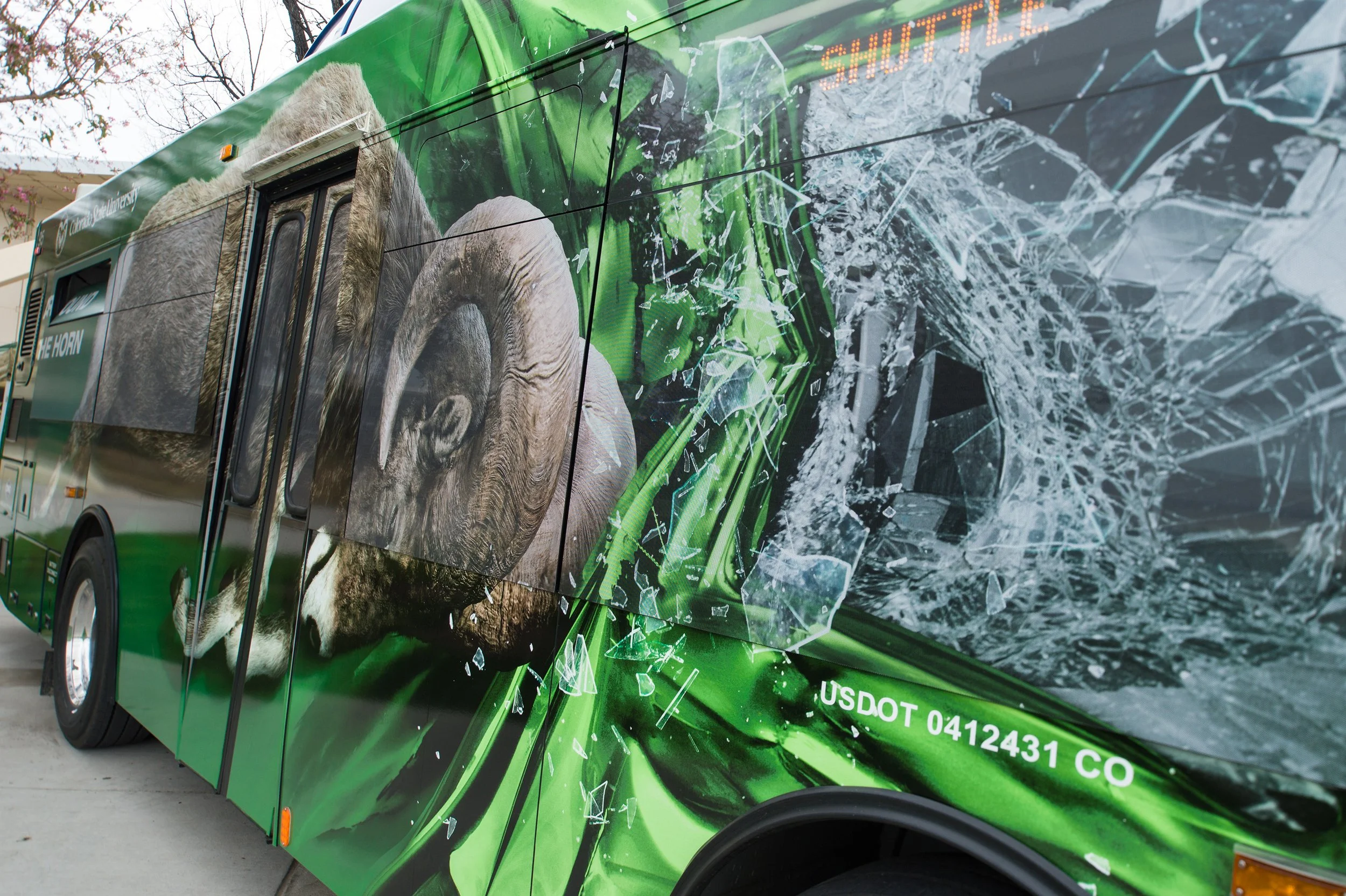
Around the Horn bus wrap– Vehicle branding for CSU high-impact mobile activation. Recognition: University and College Designers Association (UCDA), Award of Excellence, 2016. Outdoor Advertisement “This is Our State” RTD Light Rail Wrap, designers Cameron Nelson and Kate Wyman. (Ram used from Around the Horn bus wrap).
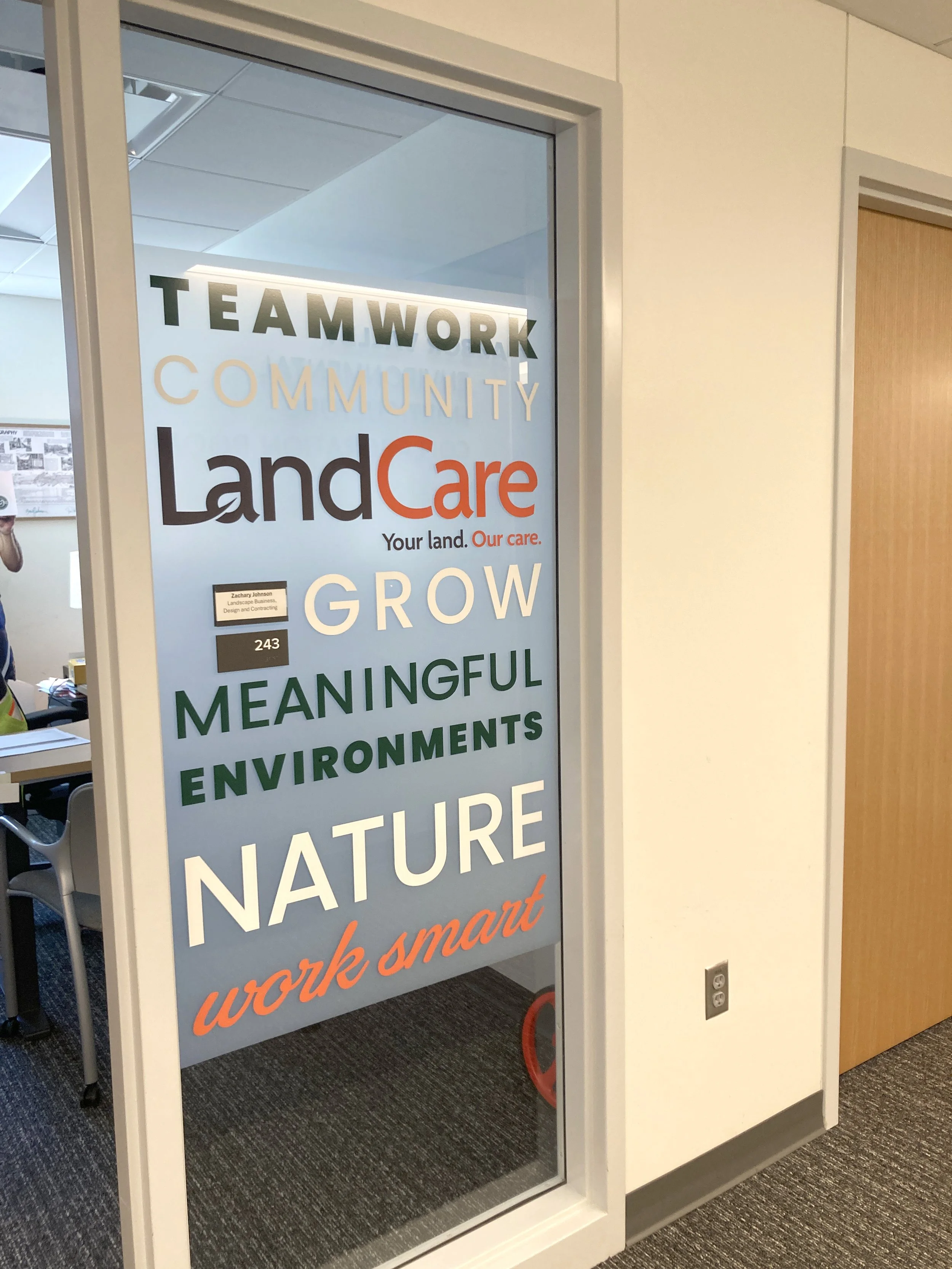
LandCare donor recognition – Environmental graphics celebrating philanthropic partnership.
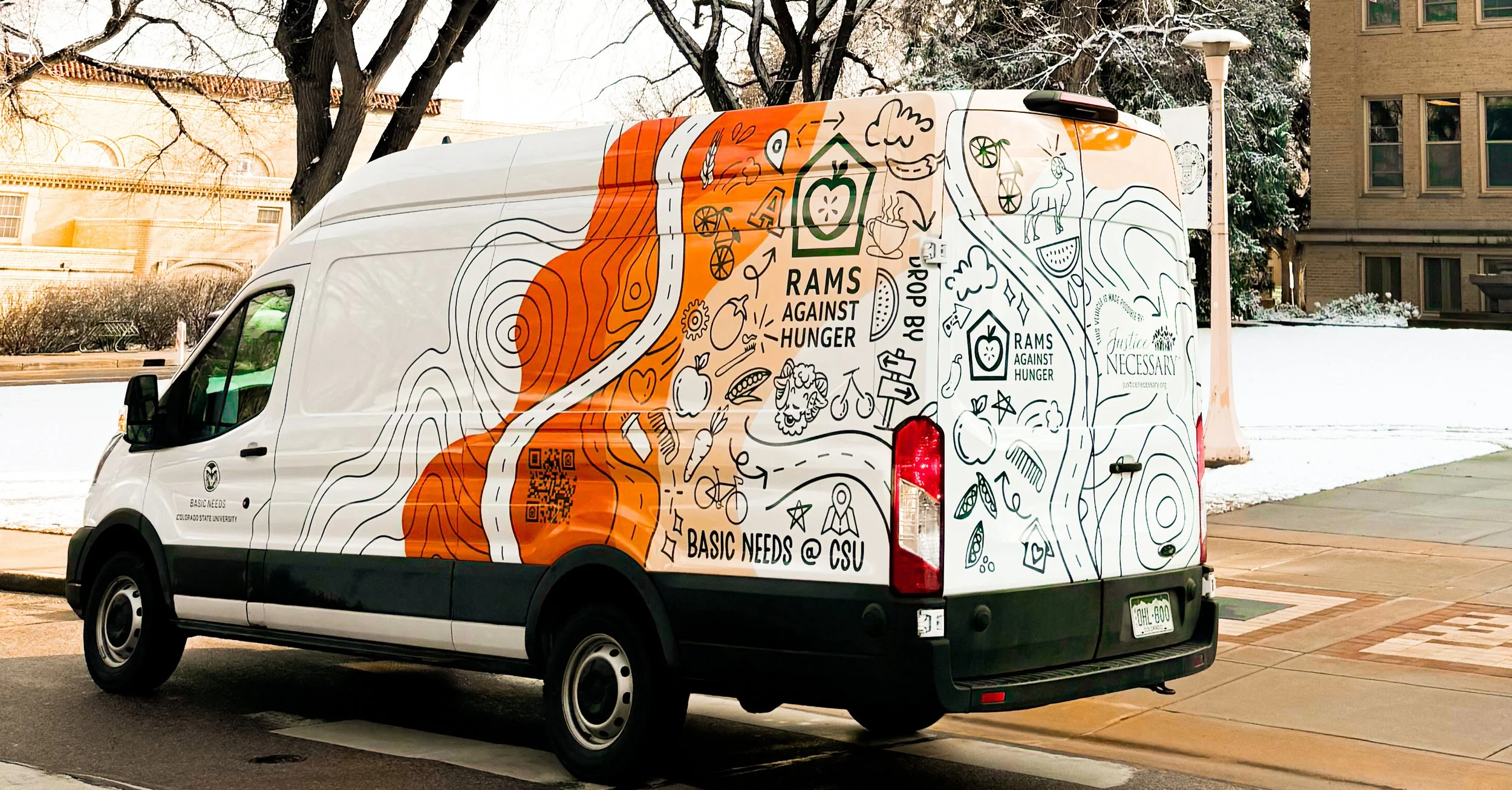
Rams Against Hunger van wrap – Vehicle branding for student food security campaign.
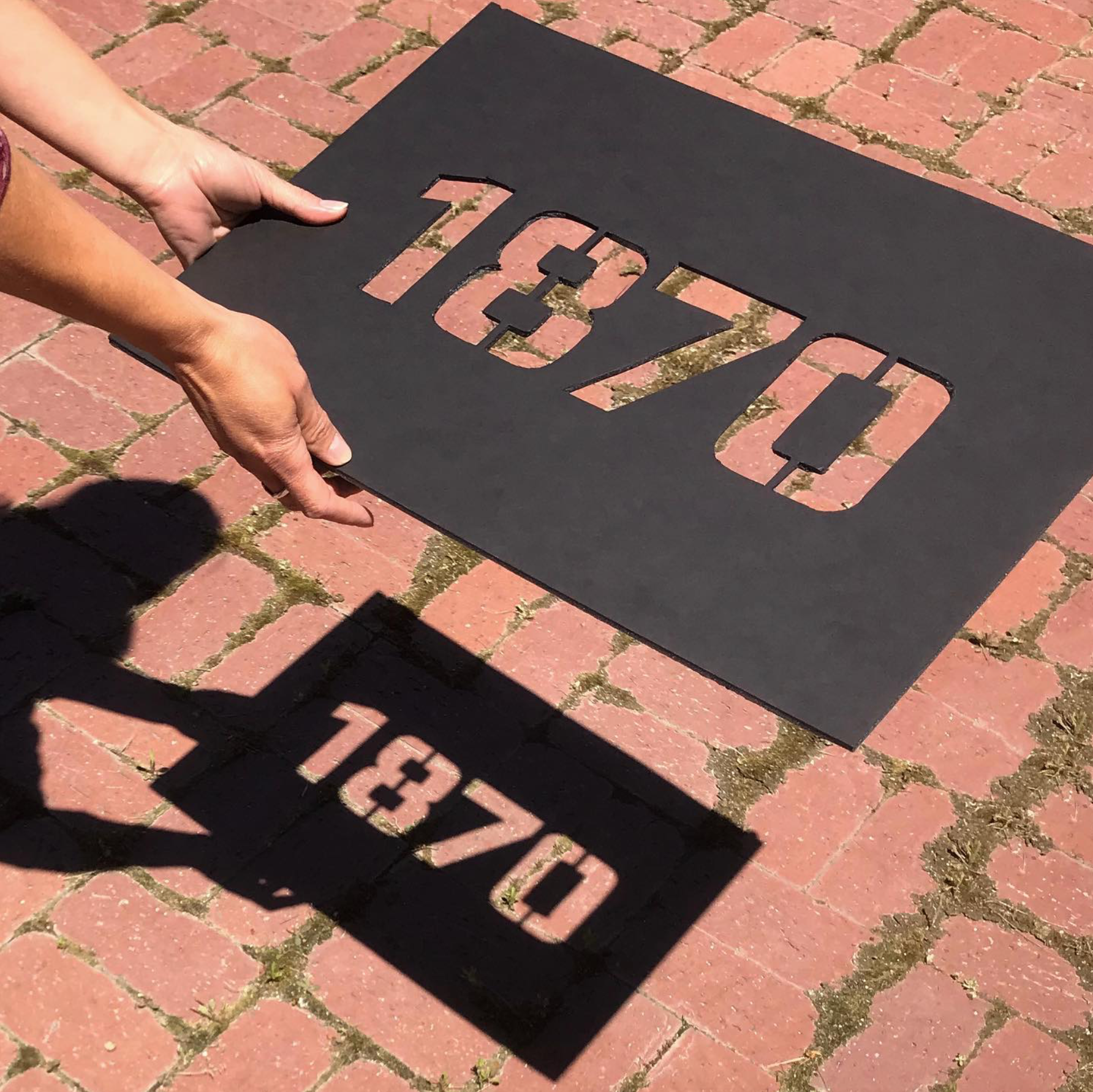
Aggie Trail interpretation exploration – Wayfinding concept development for campus trails.
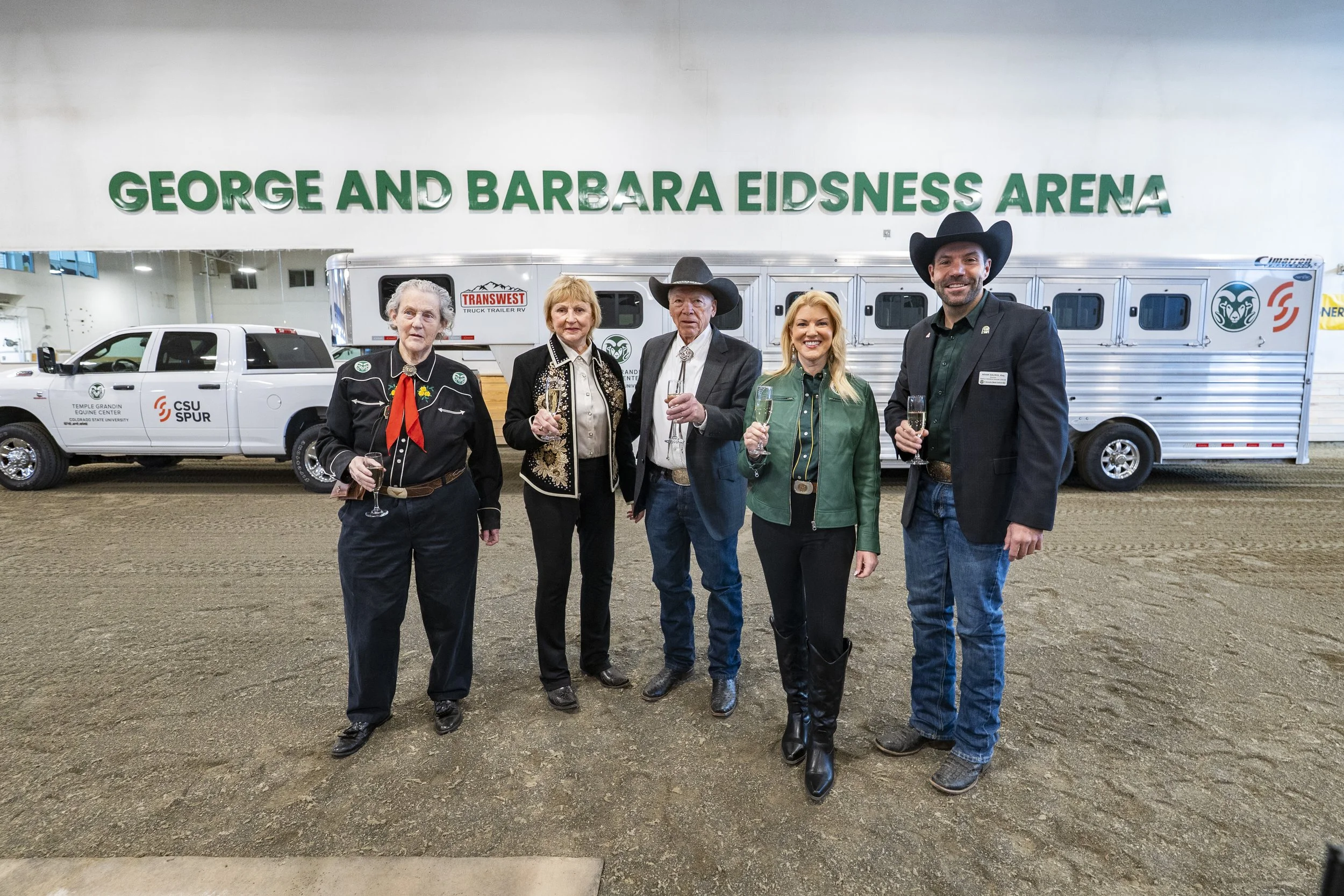
CSU Spur Eidsness Arena donor recognition – Interior recognition wall for major gift donors.
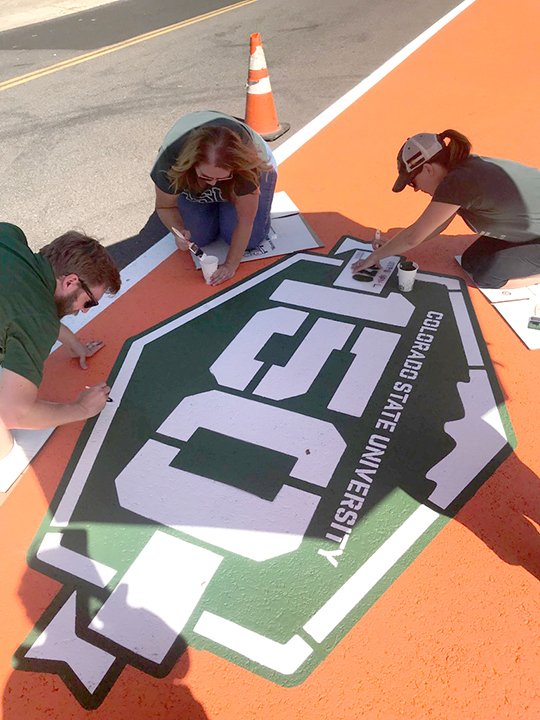
Ram Walk: 150th brandscaping – Anniversary celebration environmental graphics.